
These keto recipes for Instant Pot are designed for busy weeknights when you want a warm, filling meal without standing over the stove. The pressure cooker is especially useful for chicken thighs, beef, soups, and tender vegetables because it can build flavor quickly while keeping cleanup manageable.
This guide gives you five practical recipes, a flexible pressure-cooker formula, ingredient swaps, storage advice, and a simple way to keep the meals low in carbohydrates without relying on specialty products. The recipes are written for North American home kitchens and use common ingredients such as broth, chicken, beef, cauliflower, broccoli, herbs, and unsweetened sauces.
Quick answer: can an Instant Pot fit a keto routine?
Yes. An Instant Pot can fit a keto or low-carb routine when the recipe is built around protein, non-starchy vegetables, flavorful fats, and a sauce without added sugar. The appliance does not make a food ketogenic by itself; the ingredients and portions still determine the nutrition of the finished meal.
- Use a reliable protein: chicken thighs, beef, pork, salmon, eggs, or extra-firm tofu.
- Choose low-carb vegetables: cauliflower, broccoli, cabbage, zucchini, mushrooms, spinach, and green beans.
- Read sauce labels: broth, tomato products, barbecue sauce, marinades, and seasoning mixes may contain added sugar.
- Finish for flavor: herbs, lemon, vinegar, pesto, olive oil, grated cheese, or a measured cream-based sauce can make simple meals satisfying.
For people new to pressure cooking, the easiest approach is to begin with one-pot meals that use a tested amount of liquid. Unlike stovetop cooking, a sealed cooker does not allow much water to evaporate. Too little liquid can prevent the cooker from reaching pressure, while too much can make vegetables soft and dilute the flavor.
Instant Pot basics for low-carb cooking
Use enough thin liquid
Most electric pressure cookers need a minimum amount of thin liquid to create steam. Follow the manual for your model, because minimum liquid requirements vary. Broth, water, and unsweetened cooking liquid work better than thick sauces alone. If you use cream, cheese, or a thick tomato mixture, add the thin liquid first and layer thicker ingredients above it to reduce the risk of scorching.
Choose the right release method
A natural release allows pressure to fall gradually and is useful for soups, large pieces of meat, and dishes that may foam. A quick release vents steam rapidly and can be useful for vegetables that you do not want to overcook. Keep your hands and face away from the steam and use the release method recommended for your appliance.
Do not overfill
Keep the contents below the maximum fill line. Soups, beans, grains, and foods that expand or foam may have special limits in the appliance manual. Even when making low-carb meals, a pot full of meat and vegetables can produce hot liquid and steam, so open the lid only after the pressure indicator has fully dropped.
Brown before pressure cooking
The sauté function is optional, but browning chicken, beef, or mushrooms first can add more flavor. If the bottom of the pot develops browned bits, deglaze with broth and scrape gently before pressure cooking. This also helps prevent a burn warning. If the pot is very hot, turn sauté off before adding liquid.
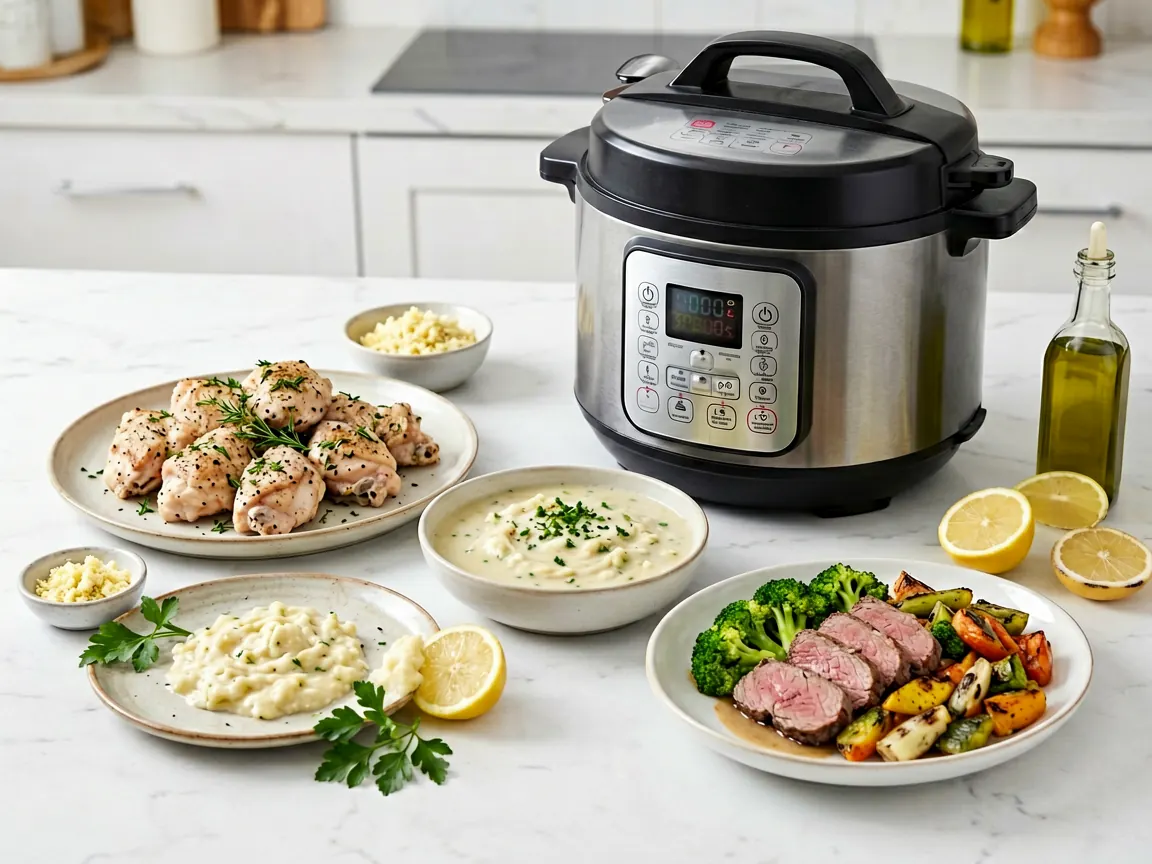
Recipe 1: Instant Pot lemon herb chicken
This lemon herb chicken is a dependable starting point for easy keto Instant Pot recipes. The broth becomes a light pan sauce, while the chicken stays tender enough to use in salads, bowls, or lettuce wraps the next day.
Ingredients for four servings
- 2 pounds boneless, skinless chicken thighs or breasts
- 1 tablespoon olive oil
- 1 teaspoon dried oregano, 1 teaspoon garlic powder, and 1/2 teaspoon smoked paprika
- 1 cup unsalted or low-sodium chicken broth
- 1 lemon, thinly sliced, plus 1 tablespoon lemon juice
- 3 garlic cloves, lightly crushed
- 2 cups broccoli florets or green beans
- 2 tablespoons chopped parsley, black pepper, and salt to taste
Directions
- Pat the chicken dry and season with oregano, garlic powder, paprika, pepper, and a modest amount of salt.
- Set the cooker to sauté. Add oil and brown the chicken in batches for two to three minutes per side. Move it to a plate.
- Turn sauté off. Pour in the broth and scrape the bottom of the pot. Add garlic, lemon slices, and the chicken.
- Seal the lid and cook on high pressure for 8 minutes for boneless thighs. For very thick chicken breasts, use a thermometer to confirm doneness rather than relying only on time.
- Allow a 5-minute natural release, then carefully release the remaining pressure. Transfer the chicken to a plate.
- Add broccoli or green beans to the hot cooking liquid. Use sauté for two to four minutes, or place the vegetables in a steamer basket and cook briefly until crisp-tender.
- Finish the chicken with lemon juice and parsley. Spoon a small amount of the broth over each serving.
Chicken should reach a safe internal temperature of 165°F when measured with a food thermometer. The USDA explains that a thermometer is the reliable way to check poultry safety, rather than judging by color alone. If you are cooking chicken from frozen, use the instructions for your appliance and allow for a longer cooking time.
Serving swaps
Serve the chicken over cauliflower rice, chopped greens, or roasted zucchini. Add pesto after pressure cooking for a more concentrated flavor. To make a dairy-free creamy finish, whisk a spoonful of tahini with lemon juice and warm broth. For meal prep, slice the chicken after it cools and pack it with vegetables and a separate sauce.
Recipe 2: low-carb beef and mushroom stew
This recipe gives you the comfort of a stew without potatoes or flour. Mushrooms, celery, and cabbage provide body, while beef chuck becomes tender in the pressure cooker. It is one of the most useful Instant Pot low carb recipes for a cold evening.
Ingredients for six servings
- 2 pounds beef chuck, cut into 1 1/2-inch cubes
- 1 tablespoon avocado or olive oil
- 8 ounces mushrooms, quartered
- 2 celery stalks, sliced
- 1/2 small head green cabbage, chopped
- 1 tablespoon tomato paste
- 2 cups unsalted beef broth
- 1 teaspoon dried thyme, 1 bay leaf, and 1/2 teaspoon smoked paprika
- 1 tablespoon apple cider vinegar, added after cooking
- Parsley, pepper, and salt to taste
Method
- Season the beef with pepper and a small amount of salt. Use sauté to brown the pieces in batches. Avoid crowding the pot.
- Add mushrooms and celery. Cook for two minutes, then stir in tomato paste and smoked paprika.
- Pour in broth and scrape the bottom. Add cabbage, thyme, and bay leaf.
- Seal and cook on high pressure for 30 minutes. Allow a natural release for at least 15 minutes, then release remaining pressure.
- Remove the bay leaf. Stir in vinegar and adjust the seasoning. If you want a thicker broth, use sauté for a few minutes with the lid off.
Do not add flour directly to the pressure cooker. If you need a thicker texture, reduce the liquid after pressure cooking or use a small amount of a thickener that fits your personal plan. The carbohydrate content changes if you add carrots, potatoes, beans, or sweetened tomato products.
Variations
Use pork shoulder instead of beef, or replace cabbage with chopped kale added after pressure cooking. Add a spoonful of sour cream at serving time if dairy fits your pattern. For a brighter finish, use parsley, lemon zest, and a splash of vinegar. The stew tastes deeper the next day, making it a useful option for batch cooking.
Recipe 3: creamy cauliflower garlic soup
Cauliflower can create a thick, smooth soup without relying on flour or potatoes. This version uses broth, garlic, cream cheese, and optional shredded chicken. It is a practical choice when you want keto pressure cooker recipes that can be portioned for lunch.
Ingredients for four to six servings
- 1 large head cauliflower, cut into florets
- 1 small leek or 1/2 onion, sliced, optional
- 4 garlic cloves, minced
- 4 cups chicken or vegetable broth
- 1 teaspoon dried thyme and 1/2 teaspoon black pepper
- 4 ounces plain cream cheese, softened
- 1/2 cup grated cheddar, optional
- 1 tablespoon lemon juice and chopped chives for serving
- 1 1/2 cups shredded cooked chicken, optional
Cooking steps
- Place cauliflower, leek or onion, garlic, broth, thyme, and pepper in the cooker.
- Seal and cook on high pressure for 5 minutes. Use a quick release carefully after cooking.
- Blend the soup with an immersion blender until smooth. Add cream cheese in small pieces and blend again.
- Stir in cheddar if using. Add chicken after blending and use sauté on low just long enough to warm it.
- Finish with lemon juice and chives. Taste before adding salt because broth, cream cheese, and cheddar vary in sodium.
For a dairy-free soup, replace cream cheese with unsweetened coconut cream or a blended portion of the cauliflower. The flavor and texture will be different, but the soup will remain creamy. For more texture, reserve a cup of cooked cauliflower before blending and stir it back in with the chicken.
Recipe 4: Instant Pot salsa chicken bowls
Salsa chicken is a flexible foundation for keto Instant Pot chicken meals. Use it in lettuce cups, salads, cauliflower rice bowls, or stuffed peppers. Choose a salsa with no added sugar or calculate it as part of the recipe if you use a different product.
Ingredients for six servings
- 2 pounds boneless, skinless chicken thighs or breasts
- 1 cup no-sugar-added tomato salsa
- 1/2 cup chicken broth
- 1 teaspoon ground cumin and 1 teaspoon chili powder
- 1/2 teaspoon garlic powder and 1/2 teaspoon smoked paprika
- 1 bell pepper, sliced, optional
- 1 tablespoon lime juice
- Fresh cilantro, avocado, shredded cheese, and chopped romaine for serving
Directions
- Place broth in the inner pot. Add chicken, spices, and salsa. Keep the thicker salsa above the chicken rather than stirring it into the bottom.
- Seal the lid and cook on high pressure for 10 minutes for boneless chicken pieces. Allow a 5-minute natural release, then release the remaining pressure.
- Transfer the chicken to a bowl and shred it with two forks. Return it to the cooking liquid and add lime juice.
- Serve in romaine cups, over cauliflower rice, or in bowls with avocado, cheese, cilantro, and cucumber.
For a higher-protein meal, increase the chicken portion and use cheese or Greek yogurt as a topping only if it fits your needs. For a dairy-free meal, use avocado and cilantro. If you want more vegetables, add sautéed zucchini, mushrooms, or bell peppers after the pressure cooking step so they keep some texture.
Recipe 5: pressure cooker pork with cabbage and mustard
Pork and cabbage create a simple, budget-conscious meal with a savory mustard finish. The recipe works with pork shoulder or boneless pork loin, but the cooking time and final texture will differ. Shoulder is richer and more shreddable; loin is leaner and should not be overcooked.
Ingredients for four to six servings
- 2 pounds boneless pork shoulder or pork loin
- 1 tablespoon olive oil
- 1 teaspoon dried sage, 1 teaspoon garlic powder, and black pepper
- 1 1/2 cups chicken broth
- 1/2 head green cabbage, cut into wedges
- 2 celery stalks, sliced
- 2 tablespoons Dijon mustard
- 1 tablespoon apple cider vinegar
- Fresh dill or parsley and salt to taste
Method
- Season the pork with sage, garlic powder, pepper, and salt. Brown it in oil using sauté.
- Turn sauté off and add broth. Scrape up browned bits. Place cabbage and celery around the pork.
- For pork shoulder, cook on high pressure for 45 minutes and allow a natural release. For pork loin, follow a tested time for your cut and use a thermometer.
- Remove the pork and let it rest. Stir mustard and vinegar into the cooking liquid. Use sauté briefly if you want to reduce the sauce.
- Slice or shred the pork and serve with cabbage, celery, and mustard sauce.
Ground mustard, herbs, lemon, and vinegar can add flavor without sugar. If you want a creamier sauce, stir a small amount of sour cream into a bowl of cooled cooking liquid, then return it to the serving sauce. Avoid boiling dairy directly in the pressure cooker because it can separate or scorch.
How to build more low-carb pressure cooker meals
Start with a protein and a sauce
Choose a protein first, then decide whether the meal should taste Mediterranean, Mexican-inspired, herby, spicy, or creamy. Chicken with lemon and herbs feels different from chicken with salsa and cumin even when the cooking method is similar. This approach helps you create low carb pressure cooker meals without buying a new set of ingredients every week.
Add vegetables at the right time
Dense vegetables such as cauliflower, cabbage, and mushrooms can cook with the protein. Tender greens, zucchini, herbs, and fresh broccoli may be better added after pressure cooking. A short sauté or a few minutes in the residual heat can preserve more texture.
Finish after the lid comes off
Acid, fresh herbs, grated cheese, pesto, yogurt, and olive oil are usually best added after cooking. Pressure cooking can mute delicate flavors, while finishing ingredients restore brightness. Taste the broth before adding more salt because the liquid reduces slightly during the finishing step.
Use leftovers deliberately
One batch of chicken can become a salad, lettuce cups, soup topping, and cauliflower rice bowl. Beef stew can be served with cabbage one day and reheated with mushrooms another day. Planned leftovers reduce cooking frequency while keeping meals varied.
Macro and portion tips
Recipe nutrition depends on the exact ingredients, brands, and serving sizes. Broth, salsa, cheese, cream cheese, oil, and meat can all change the final numbers. If you track macros, weigh or measure ingredients before cooking, record the full recipe, and divide it by the number of servings you actually create.
Net-carb calculations also depend on the convention you use. Some people subtract fiber from total carbohydrate, while others follow the net-carb value on a specific label or a clinician's recommendation. Keep your method consistent. A recipe described as low-carb should not be treated as a universal medical target.
For weight management, a pressure-cooker meal can be helpful because it makes protein and vegetables easier to prepare. It does not guarantee weight loss. Overall portions, food choices across the day, activity, sleep, medications, and health conditions all influence results.
Storage and food safety
Cool cooked food in shallow containers and refrigerate it promptly. The USDA recommends using cooked leftovers within three to four days or freezing them for longer storage. Reheat only the portion you plan to eat, and use a food thermometer when appropriate. Chicken should reach 165°F, while other meats have their own safe temperature guidance.
Do not use the pressure cooker as a substitute for safe handling. Keep raw meat separate from ready-to-eat foods, wash hands and utensils, and follow the instructions for your specific model. If food has an uncertain temperature history or seems spoiled, discard it rather than tasting it.
Common Instant Pot mistakes
Using thick sauce as the only liquid
Thick salsa, tomato paste, cream sauce, and barbecue sauce can scorch. Add thin broth or water first, keep thick ingredients away from the bottom, and deglaze after browning.
Overcooking vegetables
Broccoli, zucchini, spinach, and herbs usually need less time than meat. Add them after pressure cooking or use a quick release and a short sauté.
Skipping the rest time
Cutting meat immediately after cooking can release juices. Rest chicken, pork, and beef for a few minutes before slicing or shredding.
Adding dairy too early
Cream cheese, sour cream, and grated cheese can separate or stick under pressure. Add them after cooking and use residual heat or low sauté to combine them.
Frequently asked questions
What are the best keto recipes for Instant Pot beginners?
Start with lemon herb chicken or salsa chicken. Both use familiar ingredients, have flexible serving options, and can be turned into leftovers. Once you understand liquid levels and pressure release, try the beef stew or cauliflower soup.
Can I use frozen chicken in an Instant Pot?
Frozen chicken can be cooked in an electric pressure cooker, but the time, thickness, and starting liquid matter. Use a tested recipe for frozen chicken and verify the thickest piece reaches a safe internal temperature. Do not rely on appearance alone.
Can I make keto soup in an Instant Pot?
Yes. Broth-based chicken soup, cauliflower soup, and beef stew are good choices. Add cream cheese, sour cream, or grated cheese after pressure cooking to reduce the chance of separating or scorching.
What vegetables work best in an Instant Pot?
Cauliflower, cabbage, mushrooms, celery, and green beans can work well in pressure-cooked meals. Zucchini, spinach, broccoli florets, and fresh herbs are often better added near the end so they retain texture.
How can I make Instant Pot meals less watery?
Use only the liquid required by your model and recipe, then reduce the broth with the sauté function after pressure cooking. Thickening should happen after the lid comes off. A small amount of cream cheese, blended cauliflower, or a suitable thickener can change the texture.
Are pressure cooker meals good for weight loss?
They can make it easier to prepare filling meals at home, but the appliance does not determine weight loss. Choose portions and ingredients that fit your goals, and seek individualized advice if you have a medical condition or take medication.
Final takeaway
The best keto recipes for Instant Pot are practical recipes you will repeat: tender chicken, hearty beef, creamy cauliflower soup, salsa bowls, and pork with cabbage. Use thin liquid, keep thick sauces off the bottom, add delicate vegetables and dairy at the end, and finish with acid or herbs. With those habits, one pressure cooker can support a flexible low-carb routine without making every meal feel the same.
For more ideas, browse our easy keto recipes, use the high-protein low-carb meal prep guide, or review keto macros and net carbs before setting your own portions.
Nutrition and safety note: This article is general education, not medical advice. Ingredient nutrition varies by brand, preparation, and serving size. If you have diabetes, kidney disease, another medical condition, take medication, are pregnant or breastfeeding, or have a history of disordered eating, consult a qualified healthcare professional before making major dietary changes.
Save the ideas that fit your routine and adapt the rest. Consistency is built through repeatable choices, not perfect days.