
When the weather is cool or you simply want a satisfying bowl, this keto beef vegetable soup recipe gives you a practical one-pot dinner with tender beef, a rich broth, and plenty of non-starchy vegetables. It has the familiar comfort of classic vegetable beef soup without potatoes, pasta, or a flour-based thickener.
The soup is flexible enough for a weeknight, but the method matters. Brown the beef first, build the broth in the same pot, and add vegetables according to how long they need to cook. That keeps the meat savory and the vegetables pleasantly tender instead of turning the entire pot into a soft, flat mixture.
Quick answer: is beef vegetable soup keto?
It can be, depending on the ingredients and serving size. This version uses beef, unsalted or low-sodium broth, tomatoes in a measured amount, mushrooms, zucchini, celery, green beans, spinach, and herbs. It skips potatoes, corn, peas, pasta, and sweetened sauces. Because different products have different labels, calculate the nutrition from the exact ingredients you use if you need precise macros.
For a keto vegetable beef soup recipe that feels substantial, use a flavorful cut of beef and include both broth-friendly vegetables and a finishing green. The beef supplies the main protein, while mushrooms, celery, zucchini, and greens add texture and volume without relying on a large amount of starch.
Ingredients for six servings
- 1 1/2 pounds beef chuck, stew beef, or sirloin, cut into 3/4-inch pieces
- 1 1/2 tablespoons olive oil or avocado oil
- 1 small yellow onion, finely diced, optional and measured to fit your plan
- 3 celery ribs, sliced
- 8 ounces cremini mushrooms, quartered
- 3 garlic cloves, minced
- 1 tablespoon tomato paste
- 6 cups unsalted or reduced-sodium beef broth
- 1 cup crushed tomatoes with no added sugar
- 1 teaspoon kosher salt, plus more only if needed
- 1 teaspoon dried Italian seasoning
- 1/2 teaspoon smoked paprika
- 1/2 teaspoon black pepper
- 1 medium zucchini, cut into half-moons
- 1 cup trimmed green beans, cut into bite-size pieces
- 2 cups baby spinach or chopped kale
- 1 tablespoon red wine vinegar or lemon juice
- Chopped parsley, for serving
The onion and tomatoes add carbohydrates, but they also contribute a lot of flavor to the broth. If you follow a very strict carbohydrate target, reduce the onion and tomatoes and add more celery, mushrooms, or leafy greens. Read broth labels carefully because some cartons include sugar or starch.
Choosing the beef
Chuck for a rich, slow-cooked soup
Beef chuck has enough connective tissue and fat to become tender during a longer simmer. It is the best choice if you want a soup that tastes even better the next day. Cut away only large, firm pieces of surface fat; small amounts can add flavor and body to the broth.
Sirloin for a quicker version
Sirloin cooks faster and is convenient for a weeknight. Use smaller pieces and avoid boiling it hard for an extended period. Once the beef is tender, lower the heat and add the vegetables so the meat does not become dry.
Ground beef as a pantry option
Ground beef works when you want an easy keto beef vegetable soup recipe with minimal chopping. Brown it fully, drain excess fat if needed, and continue with the broth. The texture will be more like a hearty minced-beef soup, but the flavor remains comforting and easy to portion.
How to make keto beef vegetable soup
1. Brown the beef
Pat the beef dry with paper towels and season it lightly with salt and pepper. Heat a large Dutch oven or heavy soup pot over medium-high heat. Add the oil, then brown the beef in two or three batches. Leave space between pieces so they sear instead of steaming.
Each batch needs about two minutes per side. The beef does not need to be cooked through at this stage. Transfer browned pieces to a clean bowl and keep the browned bits in the pot; they will become part of the broth.
2. Soften the aromatic vegetables
Lower the heat to medium. Add the celery, mushrooms, and optional onion. Cook for four to five minutes, stirring occasionally, until the mushrooms release their moisture and begin to brown. Add the garlic and cook for 30 seconds.
If the bottom of the pot looks dry, add a tablespoon of broth and scrape gently with a wooden spoon. Avoid scraping with a sharp utensil that could damage the pot. The browned bits should loosen as the liquid warms.
3. Build the broth
Stir in tomato paste, Italian seasoning, smoked paprika, and black pepper. Cook for one minute so the tomato paste darkens slightly. Add the crushed tomatoes and broth. Return the beef and any collected juices to the pot.
Bring the soup just to a gentle boil, then immediately lower it to a steady simmer. Cover the pot partially. For chuck, simmer for 60 to 90 minutes, or until a fork meets little resistance. For sirloin, begin checking after 30 to 40 minutes.
4. Add vegetables in stages
Once the beef is nearly tender, add the green beans and zucchini. Simmer for 8 to 12 minutes, depending on the size of the pieces. The vegetables should be tender enough to bite but not falling apart.
Stir in spinach or kale during the final two minutes. Turn off the heat when the greens are wilted. Stir in vinegar or lemon juice, taste, and adjust the salt. An acidic finish makes the broth taste brighter without needing more oil or salt.
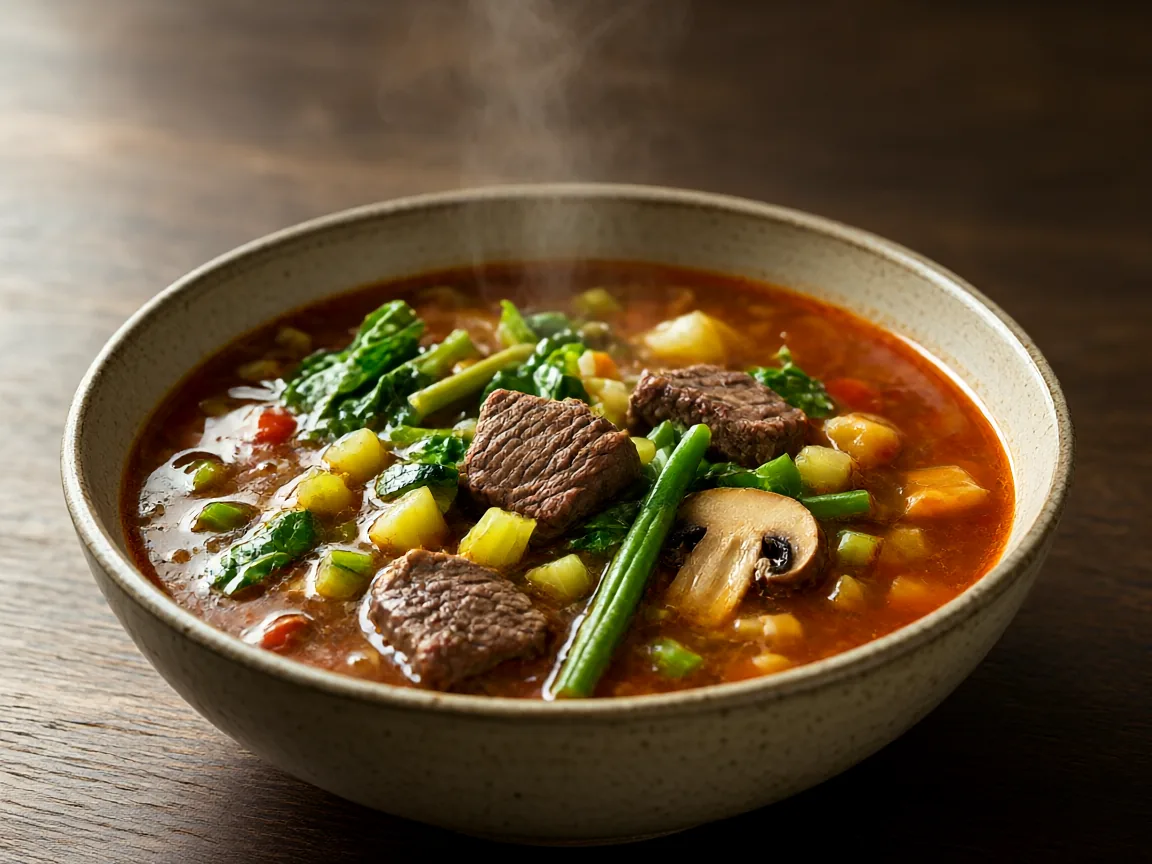
Low-carb vegetables that work well
Mushrooms add a savory, almost meaty quality and hold their shape in broth. Celery brings freshness and a light crunch. Zucchini softens quickly and can become watery if overcooked, so add it near the end. Green beans offer a familiar vegetable soup texture without requiring potatoes.
You can also use cauliflower florets, chopped cabbage, bok choy, radishes, asparagus, or a small amount of turnip. Each has a different cooking time. Add cauliflower and turnip earlier, cabbage in the middle, and asparagus or bok choy toward the end.
Be careful with higher-carbohydrate additions. Corn, potatoes, sweet peas, large amounts of carrots, and pasta can change the carbohydrate profile quickly. If a mixed household wants those ingredients, cook them separately and add them to individual bowls instead of changing the entire pot.
Stovetop, slow cooker, and pressure cooker methods
Slow cooker method
Brown the beef and aromatics in a skillet first, then transfer them to a slow cooker with the broth, tomatoes, and seasonings. Cook on low for six to eight hours or on high for three to four hours. Add zucchini and green beans during the final 30 to 45 minutes, and stir in spinach immediately before serving.
The slow cooker is especially useful for chuck. It gives the connective tissue time to soften while the broth develops a fuller flavor. Do not fill the cooker beyond its recommended level, and use a thermometer or texture check to confirm the beef is fully cooked and tender.
Pressure cooker method
Use the saute function to brown the beef and vegetables. Add the broth and tomatoes, scraping the bottom well. Cook on high pressure for 22 to 28 minutes for chuck, then allow a natural release for at least 10 minutes. Add zucchini, green beans, and greens afterward and use the saute function briefly to finish them.
Pressure cookers vary, so follow the safety instructions for your model. Keep thick ingredients from blocking the pressure valve and do not force the lid open.
Ways to customize the broth
Herb-forward beef soup
Use thyme, rosemary, parsley, and a bay leaf instead of Italian seasoning. Finish with lemon juice and fresh parsley. This version tastes lighter while still having the depth of beef broth.
Smoky tomato version
Add smoked paprika, a pinch of chili powder, and a little extra tomato paste. This creates a stew-like flavor without adding flour. Keep the tomatoes measured if you are tracking carbohydrates.
Ginger garlic variation
Replace Italian seasoning with fresh ginger, extra garlic, and a splash of coconut aminos. Add bok choy and mushrooms, then finish with scallions and lime. Check coconut aminos labels because some brands are sweeter than soy sauce.
Creamy finish without flour
For a creamy texture, remove one cup of soup, blend it with two tablespoons of cream cheese or unsweetened coconut cream, and stir it back into the pot. Keep the heat low after adding dairy so it does not separate. Measure the addition if exact macros matter.
How to serve it
Serve the soup in a wide bowl with parsley, sliced scallions, or a spoonful of grated Parmesan. If you want more fat, add avocado on the side rather than stirring it into the pot. A simple leafy salad with vinegar dressing keeps the meal fresh.
For a larger meal, serve the soup with a measured portion of cauliflower rice or a slice of keto avocado bread. For a lighter meal, use more broth and vegetables and a smaller amount of beef. The best portion depends on hunger, daily needs, and what else you eat.
Storage and meal prep
Cool the soup promptly in shallow containers and refrigerate it within two hours. Use refrigerated leftovers within three to four days. Reheat one portion in a saucepan over medium heat until steaming throughout. Add a splash of broth if the soup has thickened.
The soup freezes well if the vegetables are not overcooked. Leave room in each container for expansion and label it with the date. Thaw overnight in the refrigerator, then reheat gently. If the zucchini becomes soft, add fresh spinach, herbs, or a few quickly cooked mushrooms to restore contrast.
For meal prep, divide the pot into six portions after it cools slightly. Store toppings and any side separately. If you prefer fresher vegetables, freeze only the beef and broth, then add freshly cooked zucchini, green beans, or greens when reheating.
To make weeknight cooking easier, chop the celery, mushrooms, and zucchini in advance. Store them in separate containers because mushrooms release moisture. Measure the herbs and tomato paste into a small bowl so the pot can be assembled without stopping once cooking begins.
If you are planning a full week of lunches, keep two or three portions in the refrigerator and freeze the rest. Moving frozen portions to the refrigerator the night before gives them time to thaw safely and makes the next day easier. Use a leakproof container with enough room for the soup to expand if it freezes. Pack a small container of parsley, scallions, lemon wedges, or grated cheese separately; fresh toppings can make reheated soup taste more like a new meal.
For consistent portions, stir the pot before filling containers so the beef and vegetables are distributed evenly. If one serving contains mostly broth and another contains most of the beef, the estimated nutrition will be less useful. A ladle and a kitchen scale can help when you are tracking portions closely, but visual consistency is enough for many households. Remember that a recipe can be low in carbohydrate without being low in calories, so consider the oil, beef cut, cream, cheese, and side dishes as part of the overall meal.
If the soup is being served to different eaters, keep the base mild and place chili flakes, hot sauce, sour cream, grated cheese, and fresh herbs on the table. That approach lets everyone adjust their bowl without changing the whole batch. You can also reserve a little broth before adding the greens and use it as a cooking liquid for a separate side of cabbage or cauliflower. These small choices make the recipe easier to use repeatedly without making every serving taste identical.
Troubleshooting
The beef is tough
It may simply need more time. Chuck becomes tender when connective tissue has softened, not when it reaches a particular short cooking time. Continue simmering gently and check every 15 minutes. Avoid a hard boil, which can make the outside dry before the center becomes tender.
The soup tastes thin
Let it simmer uncovered for a few minutes after the beef is tender. You can also remove a cup of vegetables and broth, blend it, and stir it back in. This adds body without flour or cornstarch.
The broth is too salty
Add unsalted broth or water, then increase the amount of plain vegetables. A little vinegar or lemon may balance the flavor, but it does not remove sodium. Next time, start with less added salt and season at the end.
The zucchini is mushy
Add it later and cut it into larger pieces. Zucchini usually needs only several minutes. If reheating leftovers, warm them gently rather than simmering the full container for a long time.
The soup tastes flat
Check for acid, herbs, and enough browning. A small amount of vinegar or lemon juice often wakes up a broth that already has enough salt. Fresh parsley, black pepper, and a pinch of smoked paprika can also add lift.
Nutrition and food-safety notes
The nutrition of this keto beef vegetable soup recipe will vary with the cut of beef, broth, tomatoes, onion, oil, and serving size. For a keto beef vegetable soup recipe with macros, enter your exact brands and measured portions into a reliable nutrition calculator. Treat online estimates as approximations rather than guarantees.
Use separate utensils and plates for raw beef and cooked food. Wash hands and work surfaces after handling raw meat. Refrigerate leftovers promptly and reheat until hot throughout. Do not leave a large pot cooling on the counter for an extended period; divide it into shallow containers to help it cool more quickly.
If you manage diabetes, kidney disease, food allergies, pregnancy nutrition, or medication-related food restrictions, ask a qualified healthcare professional how this recipe fits your needs. This article is general cooking education. It does not diagnose, treat, cure, or prevent disease, and it does not guarantee weight loss or another health outcome.
FAQ
Can I make this an easy keto beef vegetable soup recipe in under an hour?
Yes, if you use sirloin or ground beef and cut the vegetables small. Brown the meat, simmer the broth for about 20 minutes, and add the vegetables in stages. Chuck needs longer cooking for tenderness, so it is better for a slow simmer or weekend meal prep.
What is the best beef for soup?
Chuck gives the richest texture and becomes tender with time. Sirloin is faster but should not be simmered for hours. Ground beef is the most convenient option and works well when you want a quick pantry meal.
Can I use frozen vegetables?
Yes. Add frozen green beans or cauliflower after the broth is hot and allow extra time for the soup to return to a simmer. Frozen zucchini can become soft, so fresh zucchini is usually better when texture matters.
Can I leave out tomatoes?
Yes. Replace the crushed tomatoes with extra broth, mushrooms, and a little vinegar. The soup will be lighter in color and flavor, so add herbs, garlic, or a small amount of tomato paste if it fits your plan.
Is this soup suitable for meal prep?
Yes. It reheats well and can be refrigerated for several days or frozen. Keep toppings and side dishes separate, and add delicate greens after reheating if you want a fresher texture.
How do I make a low carb vegetable soup without beef?
Use chicken, turkey, eggs, tofu, or extra mushrooms, depending on your dietary preferences. Adjust the broth and cooking time for the replacement protein. The same staged-vegetable method still works.
Can I thicken it with cornstarch?
Cornstarch adds carbohydrate and is not necessary. Reduce the broth, blend some vegetables, or use a small amount of a thickener that fits your personal plan. Always measure it if you are tracking macros.
Can I add beans?
Beans are nutritious but can add a substantial amount of carbohydrate, so they are not included in this version. If you add them, recalculate the recipe and adjust the serving size according to your goals.
Final takeaways
The best keto beef vegetable soup recipe is built in layers: brown the beef, soften the aromatics, simmer the broth, and add vegetables according to their cooking time. Use chuck for a slow, rich soup, sirloin for a faster bowl, or ground beef for convenience. With careful labels, measured portions, and proper cooling, this one-pot meal can be an easy weeknight dinner and a dependable meal-prep option.
Taste before adding more salt, keep the broth gently simmering, and finish with a little acid and fresh herbs. Those small steps make a low-carb soup feel complete without potatoes, pasta, or a heavy thickener.
Keep the first batch simple, then adjust the vegetable mix to suit your household. Small changes in timing and seasoning can make the same base taste different throughout the week.
Save the ideas that fit your routine and adapt the rest. Consistency is built through repeatable choices, not perfect days.