
If you want plant based low carb recipes that feel like real meals, focus on three things: a reliable protein anchor, plenty of non-starchy vegetables, and enough fat or fiber to make the plate satisfying. That approach is more useful than simply removing bread, pasta, and rice from every meal.
Plant based low carb cooking can work for different eating patterns. Some people include eggs and dairy, while others prefer fully vegan low carb recipes. The recipes below use mostly plant foods and offer flexible swaps so you can choose tofu, tempeh, edamame, unsweetened soy yogurt, nuts, seeds, or eggs according to your needs. They are designed for North American kitchens, common grocery stores, and weeknight prep.
This guide gives you seven recipes, a simple portion framework, make-ahead instructions, and answers to common questions. Nutrition values are estimates because brands, serving sizes, and preparation methods vary. Use the numbers as planning tools, not as medical advice.
What makes a plant based low carb meal satisfying?
A low carb meal does not have to be tiny or built around imitation products. For most plates, start with one palm-sized protein source, two or more cups of non-starchy vegetables, one or two tablespoons of a flavorful fat, and an optional high-fiber topping. This structure keeps the meal substantial while making carbohydrate-heavy ingredients easier to portion.
Choose a protein anchor
Tofu, tempeh, shelled edamame, seitan, hemp hearts, chia, pumpkin seeds, and unsweetened soy products are useful building blocks. Eggs and Greek yogurt can also fit if your version of plant based eating includes animal foods. Read labels on packaged foods because flavored sauces, sweetened plant milks, and some meat alternatives can add more carbohydrate than expected.
Build volume with non-starchy vegetables
Leafy greens, cauliflower, broccoli, mushrooms, zucchini, cabbage, green beans, cucumber, bell peppers, and eggplant add texture and color. Frozen vegetables are convenient and often economical. You can use them in soups, stir-fries, sheet-pan meals, and quick skillet recipes without waiting for a full grocery trip.
Add flavor with measured fats
Tahini, olive oil, avocado, olives, coconut milk, peanut butter, walnuts, and sesame seeds can make plant based low carb meals more enjoyable. They are energy-dense, so a measured serving is useful when your goal includes weight management. Fat is not a free ingredient simply because it is low in carbohydrate.
1. Smoky tofu and cauliflower skillet
This flexible skillet is a good starting point for vegan low carb recipes. The tofu provides a firm, savory center, while cauliflower and mushrooms create volume. A smoked paprika and lime seasoning gives the dish a taco-bowl feel without relying on a sugary sauce.
Ingredients for 3 servings
- 14 ounces extra-firm tofu, pressed and cubed
- 4 cups small cauliflower florets
- 8 ounces sliced mushrooms
- 2 cups baby spinach
- 1 tablespoon olive oil
- 1 tablespoon lime juice
- 1 teaspoon smoked paprika
- 1/2 teaspoon ground cumin
- 1/2 teaspoon garlic powder
- Salt and black pepper to taste
- 2 tablespoons pumpkin seeds for serving
Method
Pat the tofu dry and toss it with paprika, cumin, garlic powder, salt, and pepper. Heat half of the oil in a wide skillet over medium-high heat. Cook the tofu for 6 to 8 minutes, turning occasionally, until the edges are golden. Move it to a plate.
Add the remaining oil, cauliflower, and mushrooms. Cover for 3 minutes to soften the cauliflower, then uncover and cook until the vegetables have browned in spots. Stir in the spinach and lime juice. Return the tofu to the skillet, toss, and divide into three containers. Top with pumpkin seeds after cooling.
Swaps and prep notes
Use shelled edamame instead of half the tofu for a different texture. If you prefer a lower-fat plate, use a nonstick skillet and a tablespoon of vegetable broth to loosen the pan. Refrigerate portions in shallow containers and add seeds just before eating so they stay crisp.
2. Tempeh lettuce cups with peanut-lime sauce
These lettuce cups are a practical low carb vegan dinner when you want something fresh rather than a bowl. Tempeh has a firm bite and works well with a quick sauce. If your tempeh contains grains, check the label and count the carbohydrate amount that fits your plan.
Ingredients for 4 servings
- 8 ounces plain tempeh, crumbled
- 2 teaspoons avocado or olive oil
- 1 cup finely chopped mushrooms
- 1/2 cup diced red bell pepper
- 2 tablespoons low-sodium tamari
- 1 tablespoon natural peanut butter
- 1 tablespoon lime juice
- 1 teaspoon grated ginger
- 1 to 2 tablespoons warm water
- 16 large butter lettuce leaves
- 1/4 cup chopped scallions
- 2 tablespoons chopped peanuts
Method
Whisk the tamari, peanut butter, lime juice, ginger, and warm water until smooth. Heat the oil in a skillet. Cook the tempeh for 4 minutes, then add the mushrooms and pepper. Continue cooking for 5 to 7 minutes, stirring until the vegetables soften and the tempeh is hot.
Pour in half of the sauce and cook for another minute. Spoon the mixture into lettuce leaves and finish with scallions, peanuts, and the remaining sauce. For meal prep, store the filling separately from the washed lettuce. Reheat the filling in the microwave or skillet and assemble at the table.
How to make it more filling
Add a side of cucumber salad, steamed broccoli, or a small serving of shelled edamame. If you need more calories for an active day, add one teaspoon of sesame oil or a few extra peanuts rather than a large sugary dipping sauce.
3. Green shakshuka with spinach and herbs
If your plant based pattern includes eggs, this green shakshuka is a fast plant based breakfast or light dinner. It uses leafy greens and herbs instead of tomatoes, so it stays lower in carbohydrate while still tasting bright and complete.
Ingredients for 2 servings
- 1 tablespoon olive oil
- 2 sliced scallions
- 2 cups chopped zucchini
- 3 packed cups baby spinach
- 1/2 teaspoon ground cumin
- 1/4 teaspoon chili flakes, optional
- 4 large eggs
- 2 tablespoons chopped parsley or cilantro
- 2 tablespoons crumbled feta, optional
- Lemon wedge and black pepper
Method
Warm the oil in a covered skillet. Add scallions and zucchini and cook for 4 minutes. Add spinach, cumin, and chili flakes. Stir until the spinach wilts and the zucchini is tender. Make four wells in the mixture and crack in the eggs.
Cover and cook for 4 to 6 minutes, depending on whether you prefer runny or firm yolks. Finish with herbs, optional feta, lemon, and pepper. Serve with sliced avocado or a small side of roasted mushrooms instead of toast.
Vegan option
Replace the eggs with a chickpea-flour scramble or crumbled tofu seasoned with nutritional yeast. The result will not have the same texture, but it remains a useful base for keto vegan recipes. Check the carbohydrate content of chickpea flour and adjust the portion if you are following a strict daily target.
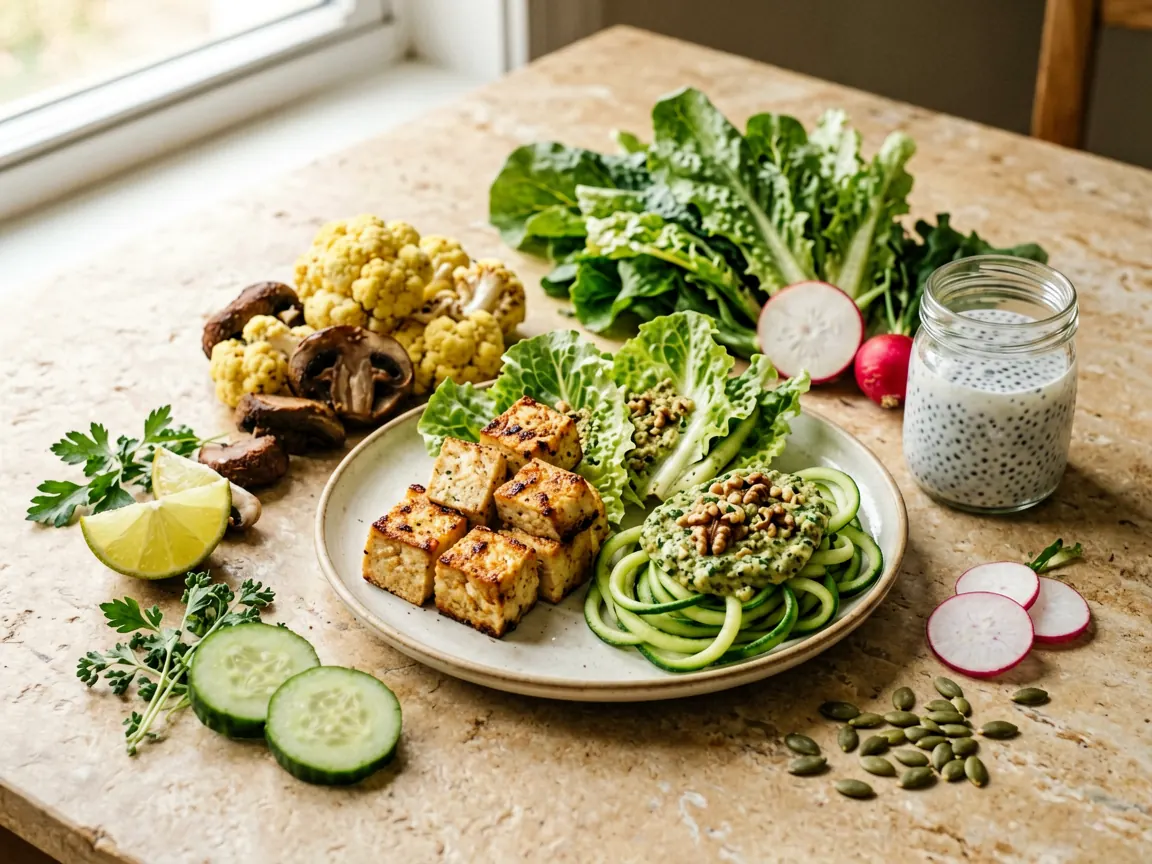
4. Creamy cauliflower and white bean soup
Beans are nutritious, but they contain more carbohydrate than tofu or leafy greens. This recipe uses a modest portion of white beans for body and protein while cauliflower provides most of the volume. It is a good example of how plant based low carb meals can be personalized rather than treated as all-or-nothing.
Ingredients for 4 servings
- 5 cups cauliflower florets
- 1 cup cooked cannellini beans, rinsed
- 4 cups low-sodium vegetable broth
- 1 cup unsweetened soy milk
- 1/2 medium onion, diced
- 2 cloves garlic, minced
- 1 tablespoon olive oil
- 1 teaspoon dried thyme
- 1 tablespoon lemon juice
- Black pepper and salt as needed
- 2 tablespoons hemp hearts for topping
Method
Heat the oil in a soup pot and cook the onion for 4 minutes. Add garlic and thyme for 30 seconds. Add cauliflower, beans, and broth. Bring to a simmer, cover, and cook for 15 to 18 minutes, until the cauliflower is soft.
Blend carefully with an immersion blender, or blend in batches with a countertop blender. Stir in soy milk and lemon juice, then warm gently without boiling. Taste and adjust seasoning. Add hemp hearts to each bowl for texture.
Storage
Cool the soup promptly in shallow containers, label the date, and refrigerate. Reheat only the portion you plan to eat. If you freeze it, leave room for expansion and stir after thawing because the texture may separate slightly. Follow local food-safety guidance and use a clean spoon each time you portion leftovers.
5. Crunchy tofu and cabbage salad jars
Salad jars make low carb meal prep easier because the dressing stays away from delicate greens. This version uses cabbage, cucumber, herbs, and baked tofu. It travels well for office lunches and can be adjusted with whatever vegetables you already have.
Ingredients for 4 jars
- 12 ounces extra-firm tofu, cubed
- 4 cups shredded green cabbage
- 2 cups chopped cucumber
- 1 cup chopped radishes
- 1 cup chopped cilantro or parsley
- 1/4 cup pumpkin seeds
- 1/4 cup tahini
- 2 tablespoons lemon juice
- 1 tablespoon water, plus more as needed
- 1/2 teaspoon garlic powder
- Salt and pepper
Method
Heat the oven to 425 F. Toss tofu with pepper, garlic powder, and a small amount of oil if desired. Bake on a lined sheet for 22 to 28 minutes, turning once, until the edges are firm. Whisk tahini, lemon juice, water, salt, and pepper into a pourable dressing.
Build each jar with dressing first, followed by cabbage, radishes, cucumber, herbs, tofu, and pumpkin seeds. Keep refrigerated and tip the jar into a bowl when ready to eat. For the best texture, use within three days.
Protein variations
Replace tofu with tempeh, edamame, or two boiled eggs if those foods fit your eating pattern. For a nut-free version, use sunflower seed butter in the dressing. For a higher-protein plant based meal, add a side of unsweetened soy yogurt or a measured serving of roasted edamame.
6. Zucchini noodles with walnut herb pesto
Zucchini noodles are one of the simplest ways to make a pasta-style dish with fewer starches. The pesto is intentionally portioned because walnuts and olive oil are satisfying but concentrated sources of energy.
Ingredients for 2 servings
- 4 medium zucchini, spiralized
- 1 cup basil leaves
- 1/4 cup walnuts
- 2 tablespoons hemp hearts
- 1 small garlic clove
- 2 tablespoons olive oil
- 1 tablespoon lemon juice
- 2 tablespoons grated parmesan, optional
- Salt and pepper
- 8 ounces baked tofu or tempeh for serving
Method
Blend basil, walnuts, hemp hearts, garlic, olive oil, lemon juice, salt, and pepper until a coarse pesto forms. Warm the zucchini noodles in a large skillet for 2 to 3 minutes. Do not overcook them or they will release too much water.
Turn off the heat and toss with pesto and optional parmesan. Add baked tofu or tempeh to make the meal more substantial. If preparing ahead, store the pesto separately and combine just before eating.
Prevent watery noodles
Pat spiralized zucchini dry before cooking. You can also salt it lightly, let it sit for 10 minutes, and blot away the moisture. This small step makes the dish more satisfying and keeps the pesto from becoming diluted.
7. Chia-soy breakfast pudding with berries
Many plant based breakfast ideas become high in carbohydrate when sweetened oat milk, granola, and large fruit portions are combined. This pudding uses unsweetened soy milk for protein, chia seeds for texture, and a small amount of berries for flavor.
Ingredients for 2 servings
- 1 cup unsweetened soy milk
- 1/4 cup chia seeds
- 1/2 teaspoon vanilla extract
- Cinnamon to taste
- 1/2 cup plain unsweetened soy yogurt
- 1/2 cup raspberries or blackberries
- 2 tablespoons chopped pecans
- Optional: a small amount of monk fruit or stevia
Method
Whisk soy milk, chia seeds, vanilla, cinnamon, and optional sweetener. Wait 5 minutes, whisk again, and refrigerate for at least 4 hours. Stir in soy yogurt before serving. Divide between two jars and top with berries and pecans.
Make-ahead schedule
Prepare two jars on Sunday night for Monday and Tuesday breakfasts. If the pudding becomes too thick, loosen it with a splash of soy milk. Use fresh toppings just before eating. People who take medication or have digestive issues should discuss major diet changes and large increases in fiber with a qualified clinician.
A simple grocery list for plant based low carb recipes
Keep the list short enough to use. Start with two proteins, five vegetables, one leafy green, one sauce base, and two toppings. A practical weekly list might include extra-firm tofu, tempeh, unsweetened soy milk, cauliflower, zucchini, cabbage, mushrooms, spinach, cucumber, lettuce, lemons, limes, tahini, natural peanut butter, walnuts, pumpkin seeds, hemp hearts, and herbs.
Frozen cauliflower, spinach, and edamame can reduce waste. Choose plain versions when possible. For canned beans, rinse and drain them, then measure the portion rather than eating directly from the can. Check sodium labels on tamari, broth, sauces, and packaged meat alternatives.
How to prep without eating the same meal all week
Use a component system instead of cooking seven complete recipes at once. On one prep day, bake tofu or tempeh, wash greens, chop two vegetables, mix one sauce, and cook one soup or skillet. Store components separately. During the week, combine them in different ways: tofu with cabbage cups, tofu with zucchini noodles, or tofu with cauliflower and spinach.
For food safety, refrigerate perishable foods promptly, use clean containers, and label dates. The USDA food safety basics offers general guidance on handling and storing leftovers. When in doubt about a leftover's safety, discard it rather than tasting it to decide.
You can also pair this article with our keto recipes for Instant Pot when you want a hands-off cooking method, or our keto diet lunch recipe for more portable ideas. If you want a higher-protein approach, see the high protein low carb meal prep recipes guide and adjust plant proteins to your preferences.
Common mistakes with vegan low carb recipes
Relying on nuts as the only protein
Nuts and seeds are useful, but they work better as toppings than as the only protein anchor in every meal. Combine them with tofu, tempeh, edamame, seitan, or unsweetened soy products when appropriate.
Assuming every plant milk is low carb
Unsweetened soy and almond milk are often lower in carbohydrate than oat or rice milk, but brands vary. Read the nutrition panel and look for added sugar. Use the version that fits your needs rather than relying on a product name.
Using unlimited oils and creamy sauces
Low carb does not mean unlimited calories. Measure oil, tahini, coconut milk, and nut butter for a week so you learn what a realistic serving looks like. Flavor can also come from acid, herbs, spices, garlic, ginger, and fermented foods.
Removing too many foods at once
A sudden, very restrictive plan can be difficult to sustain. Start with one low carb meal each day, identify foods you enjoy, and increase variety gradually. If you have diabetes, kidney disease, are pregnant, take glucose-lowering medication, or have a history of disordered eating, get individualized advice before making a major carbohydrate restriction.
FAQ
Are plant based low carb recipes the same as vegan keto recipes?
Not always. Plant based can mean mostly plants with some flexibility, while vegan keto recipes avoid all animal foods and keep carbohydrate very low. A vegan keto pattern may require more label reading and deliberate planning for protein, fiber, and micronutrients. Choose the definition that matches your goals and health needs.
What is the best plant protein for a low carb diet?
There is no single best choice. Tofu, tempeh, edamame, seitan, hemp hearts, and unsweetened soy products each have different textures and nutrition profiles. Compare labels, rotate sources, and use the option you can buy and prepare consistently.
Can I eat beans in a low carb plan?
Many people can include measured portions of beans, but the right amount depends on your overall carbohydrate target and personal response. The white bean soup in this guide uses a modest portion blended with cauliflower. If you follow a very low carbohydrate plan, swap some or all of the beans for tofu, mushrooms, or extra cauliflower.
How do I get enough protein from plant based meals?
Include a protein anchor at each meal and plan the day rather than judging one dish. Tofu, tempeh, edamame, seitan, soy yogurt, eggs, and seeds can help. A registered dietitian can help you set an appropriate protein target, especially if you exercise regularly or have a medical condition.
Are these recipes suitable for weight loss?
They can fit a weight-management pattern when portions, total intake, activity, sleep, and personal preferences are considered. No recipe guarantees weight loss. Use vegetables for volume, measure concentrated fats, and choose portions that leave you comfortably satisfied rather than overly full.
How long can I keep these meals?
Storage life depends on ingredients, cooling, refrigerator temperature, and handling. Use clean, shallow containers, refrigerate promptly, label dates, and reheat only what you will eat. Follow local public-health guidance for leftovers, and discard food that looks or smells questionable.
Final takeaways
The most useful plant based low carb recipes are repeatable. Keep a few dependable proteins, cook vegetables in different ways, and make sauces that work across several meals. Start with the tofu cauliflower skillet, tempeh lettuce cups, and chia-soy pudding, then add the soup, salad jars, zucchini noodles, and green shakshuka as your schedule allows.
This article is for general nutrition education and does not diagnose, treat, or prevent any disease. Nutrition values are estimates and may change by brand and portion. Talk with a qualified healthcare professional before making a major dietary change, especially if you take medication or have a condition affected by food intake.
Save the ideas that fit your routine and adapt the rest. Consistency is built through repeatable choices, not perfect days.