
These keto friendly eggplant recipes show how to turn a mild, meaty vegetable into satisfying low-carb meals for breakfast, lunch, dinner, and meal prep. Eggplant can roast until creamy, brown in a skillet, or act as a sturdy base for a filling. It absorbs seasoning well, which makes it useful for Mediterranean, Italian, Mexican, and spicy Asian-inspired dishes.
This guide includes five practical recipes, a quick method for reducing bitterness, ingredient swaps, storage guidance, and a simple way to estimate macros. The recipes are written for North American home cooks and use ingredients available in a typical grocery store. They are not a promise of weight loss or a substitute for individualized medical advice.
Quick answer: is eggplant keto-friendly?
Eggplant can fit many low-carb and ketogenic eating patterns when the portion and the rest of the recipe fit your personal carbohydrate target. It contains fiber and has a soft, savory texture when cooked, but it is not a zero-carbohydrate food. The total carbohydrate in a serving depends on the size of the eggplant, the amount eaten, and ingredients such as tomato sauce, breadcrumbs, beans, or sweetened sauces.
For a simple low-carb plate, pair roasted eggplant with a protein and a sauce without added sugar. Chicken, ground beef, salmon, eggs, tofu, feta, olives, tahini, and herbs all work well. Instead of coating eggplant in flour or breadcrumbs, use grated parmesan, almond flour, crushed pork rinds, or no coating at all.
- Choose firm eggplant: Look for smooth, shiny skin and a fruit that feels heavy for its size.
- Use enough seasoning: Eggplant has a gentle flavor, so garlic, smoked paprika, cumin, herbs, chili, and acid make a big difference.
- Control added fats: Eggplant absorbs oil quickly. Brush or toss it with a measured amount instead of pouring oil directly into the pan.
- Check packaged ingredients: Pasta sauce, marinades, spice blends, and dressings can add unexpected sugar.
How to prepare eggplant for low-carb recipes
Pick the right size
Small and medium eggplants are often tender and easy to slice. Large eggplants can work well for boats, casseroles, and roasted halves, but they may contain larger seeds and a firmer center. If the flesh feels very spongy or the skin is wrinkled, choose another one.
When to salt eggplant
Modern eggplant varieties are usually less bitter than older varieties, so salting is optional. It can still help draw out some moisture and improve browning. Slice or cube the eggplant, sprinkle lightly with salt, rest it for 20 to 30 minutes, then pat it dry. Do not rinse unless you are trying to reduce the salt, because rinsing can add moisture.
How to prevent oily results
Eggplant acts like a sponge. For roasting, toss the pieces in a bowl with the oil, rather than adding oil to the baking sheet. Use a hot oven and leave space between pieces. For a skillet, start with a measured tablespoon of oil and add a splash of water or broth if the pan becomes dry. This gives you tender eggplant without turning the dish into a heavy pool of fat.
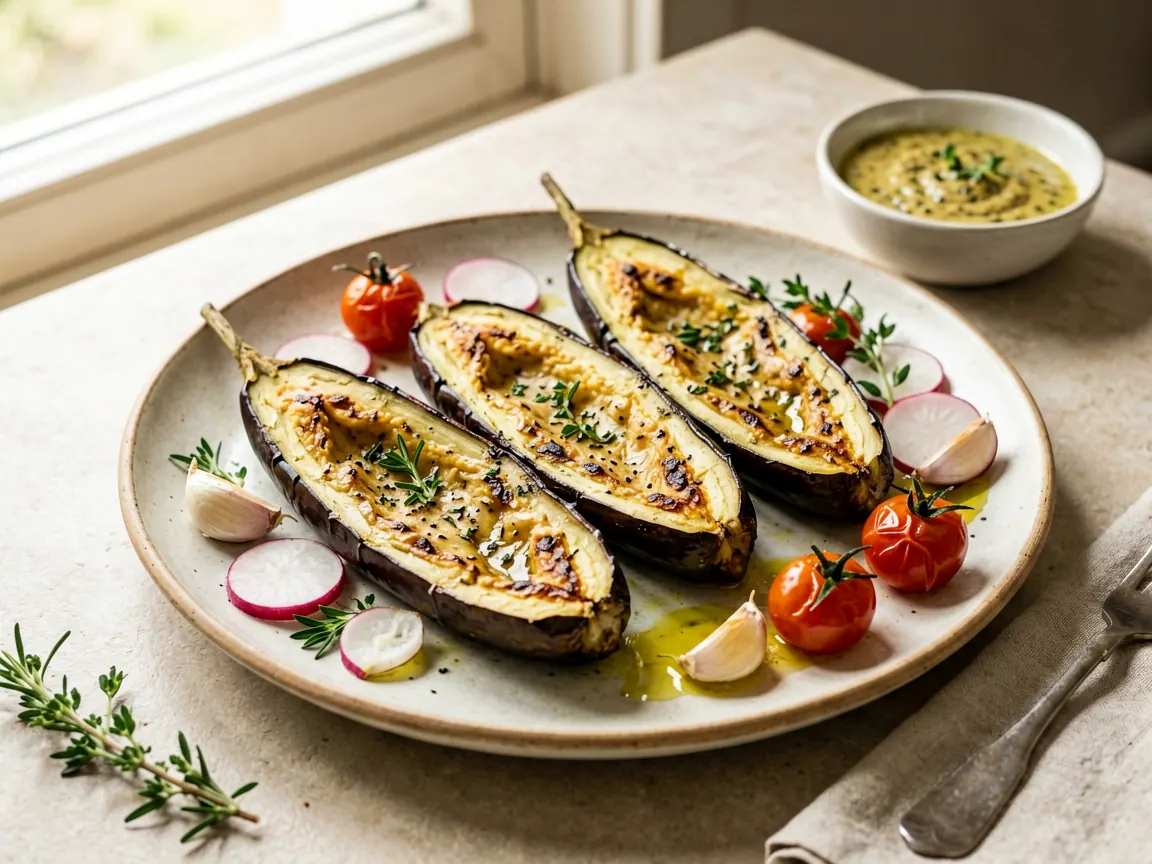
Recipe 1: roasted eggplant boats with garlic beef
These eggplant boats make a complete dinner without a grain-based filling. The eggplant is roasted until soft, then topped with seasoned ground beef, herbs, and a small amount of cheese. If you prefer a meat-free meal, the filling can be replaced with crumbled tofu or chopped mushrooms.
Ingredients for four servings
- 2 large eggplants
- 1 tablespoon olive oil for the eggplant, plus 1 teaspoon for the filling
- 1 pound lean ground beef or ground turkey
- 1/2 small onion, finely chopped, optional
- 2 garlic cloves, minced
- 1 teaspoon smoked paprika, 1 teaspoon ground cumin, and 1/2 teaspoon dried oregano
- 1/2 cup no-sugar-added crushed tomatoes
- 1/2 cup crumbled feta or shredded mozzarella
- Fresh parsley, lemon wedges, black pepper, and salt to taste
Method
- Heat the oven to 425°F. Cut the eggplants in half lengthwise and score the flesh in a crosshatch pattern without cutting through the skin.
- Brush the cut sides with olive oil and place them cut-side down on a lined baking sheet. Roast for 20 to 25 minutes, until the flesh is tender.
- While the eggplant cooks, warm the remaining oil in a skillet. Add beef or turkey and cook, breaking it into small pieces. Add onion, garlic, paprika, cumin, and oregano.
- Stir in crushed tomatoes and simmer for five to eight minutes. Taste before adding salt because feta can be salty.
- Turn the eggplant cut-side up and gently press the center with a spoon. Divide the meat mixture over the boats, sprinkle with cheese, and return to the oven for five minutes.
- Finish with parsley, pepper, and lemon. Serve with cucumber or a green salad.
For a Mediterranean variation, add chopped olives and use feta. For a taco-style version, replace oregano with chili powder and cumin, then top with avocado and cilantro. For a dairy-free version, finish with tahini, lime, and herbs instead of cheese. This recipe is one of the most useful keto friendly eggplant recipes for weight loss when the portion fits your overall plan and you keep the added oil and cheese measured.
Recipe 2: easy eggplant parmesan skillet without breadcrumbs
Eggplant parmesan usually relies on flour, breadcrumbs, and a large amount of oil. This skillet version keeps the familiar tomato, basil, and cheese combination while using roasted eggplant and a light parmesan crust. It is a practical easy keto friendly eggplant recipe for a weeknight.
Ingredients for four servings
- 2 medium eggplants, cut into 1/2-inch rounds
- 2 tablespoons olive oil, divided
- 1 1/2 cups no-sugar-added marinara sauce
- 1/2 cup finely grated parmesan
- 1 cup shredded mozzarella
- 1 teaspoon Italian seasoning and 1/2 teaspoon garlic powder
- Fresh basil, black pepper, and optional red pepper flakes
Cooking steps
- Heat the oven to 425°F. Toss eggplant rounds with one tablespoon of olive oil, Italian seasoning, garlic powder, and pepper. Arrange them in one layer.
- Roast for 18 to 22 minutes, turning once, until the edges are browned and the center is tender.
- Spread a thin layer of marinara in an oven-safe skillet or baking dish. Add half of the roasted eggplant, half of the remaining sauce, half of the mozzarella, and a little parmesan.
- Repeat the layers. Finish with parmesan and the remaining mozzarella. Bake for 12 to 15 minutes, until the cheese is melted and lightly browned.
- Rest for five to ten minutes before serving with basil and red pepper flakes.
To add protein, layer in shredded chicken or browned turkey. To make the dish more vegetable-forward, add mushrooms or spinach, but cook them first so they do not release excess water. Check the marinara label carefully; some sauces contain several grams of added sugar per serving.
Recipe 3: quick spicy eggplant and chicken skillet
This skillet is built for nights when you want a fast meal with bold flavor. Chicken provides a neutral base, while eggplant takes on the flavor of ginger, garlic, chili, and tamari. It is one of the most useful quick keto friendly eggplant recipes because the vegetables and protein cook in the same pan.
Ingredients for four servings
- 1 pound boneless, skinless chicken thighs or breasts, cut into bite-size pieces
- 2 medium eggplants, cut into cubes
- 1 tablespoon avocado or olive oil
- 3 garlic cloves, minced, and 1 tablespoon grated ginger
- 2 tablespoons tamari or low-sodium soy sauce
- 1 tablespoon rice vinegar
- 1 teaspoon chili-garlic paste without added sugar, or red pepper flakes
- 1/2 cup water or unsalted broth
- Green onions, cilantro, sesame seeds, and lime for serving
Method and texture tips
Heat half the oil in a wide skillet. Season the chicken with pepper and cook until browned and cooked through, then transfer it to a plate. Add the remaining oil and cook the eggplant for four to six minutes. Add a splash of water if it begins to stick. Stir in garlic and ginger for 30 seconds.
Return the chicken to the skillet. Whisk tamari, vinegar, chili, and water together, pour the mixture over the pan, and simmer until the eggplant is tender and the sauce lightly coats the pieces. Finish with green onions, cilantro, sesame seeds, and lime.
If you need a lower-sodium meal, use unsalted broth and reduce the tamari. If you do not eat chicken, use shrimp, thinly sliced beef, or extra-firm tofu. Add broccoli or shredded cabbage for more volume. The sauce is also useful over roasted cauliflower, but avoid adding a sweet bottled stir-fry sauce unless you have checked the label.
Recipe 4: eggplant lasagna cups
Eggplant can replace pasta sheets when you want a lasagna-style meal without traditional noodles. These individual cups are easy to portion and can be assembled in a muffin pan or small ramekins. They are especially helpful for meal prep because each serving can be reheated separately.
Ingredients for six cups
- 1 large eggplant, sliced lengthwise into thin strips
- 1 teaspoon olive oil
- 1 1/2 cups cooked ground turkey, beef, or chopped mushrooms
- 1 cup no-sugar-added marinara sauce
- 3/4 cup ricotta cheese
- 1 egg, optional, stirred into the ricotta for a firmer filling
- 1/2 cup shredded mozzarella and 2 tablespoons parmesan
- Italian seasoning, basil, pepper, and garlic powder
Assembly
Heat the oven to 400°F. Brush eggplant strips lightly with oil and roast for eight to ten minutes, just until flexible. Mix ricotta with pepper, Italian seasoning, and the optional egg. Grease six muffin cups or small ramekins. Line each with an eggplant strip, add a spoonful of meat or mushrooms, a spoonful of sauce, and a spoonful of ricotta. Fold the ends over the filling and top with mozzarella and parmesan.
Bake for 18 to 22 minutes, then rest for ten minutes. If the cups contain a lot of moisture, let them rest longer before removing them. Use zucchini strips if eggplant is not available, or use roasted cabbage leaves for a different texture. To make the filling dairy-free, use seasoned ground meat and a spoonful of olive tapenade instead of ricotta.
Recipe 5: roasted eggplant and radish salad with tahini herbs
This chilled salad gives eggplant a lighter role. Roasted eggplant adds softness while radishes, cucumber, and herbs provide crunch. It can be served as a side dish or topped with salmon, chicken, eggs, or tofu for a full meal.
Ingredients for four side servings
- 2 medium eggplants, cut into 1-inch cubes
- 1 tablespoon olive oil
- 6 radishes, thinly sliced
- 1 cucumber, quartered and sliced
- 1/4 cup chopped parsley and 2 tablespoons chopped mint
- 2 tablespoons tahini, 1 tablespoon lemon juice, and 2 to 3 tablespoons water
- 1 small garlic clove, grated, plus cumin and black pepper
Roast the eggplant at 425°F for 20 to 25 minutes, turning once. Let it cool for ten minutes. Whisk tahini, lemon, water, garlic, cumin, and pepper into a pourable dressing. Combine the eggplant, radish, cucumber, parsley, and mint, then add dressing just before serving.
For a higher-protein bowl, add four ounces of cooked salmon or chicken per serving. For a dairy-based variation, use plain Greek yogurt with lemon and herbs instead of tahini. For a spicier salad, add sumac, chili flakes, or a small amount of harissa without added sugar.
How to estimate macros in eggplant recipes
Search results and recipe apps often provide nutrition estimates, but the number can change substantially with the size of the eggplant, the amount of oil, the type of meat, and the brand of sauce. The most reliable approach is to calculate the full recipe from the labels of the ingredients you actually use, then divide by the number of servings.
A practical calculation method
- Record the weight or measured amount of every ingredient, including oil, cheese, sauces, and toppings.
- Use the nutrition label or a consistent food database for total carbohydrate, fiber, protein, fat, and calories.
- Add the values for the complete recipe. If you calculate net carbs, use the method recommended by your clinician or the labeling convention you normally follow.
- Divide the totals by the number of servings. Write down the serving size so the number remains meaningful.
- Recalculate when you make major substitutions, such as changing turkey to beef or adding beans.
These are keto friendly eggplant recipes with macros only when the ingredients and serving sizes have been measured. Avoid presenting a generic online estimate as a medical target. People may have different carbohydrate needs because of medications, activity, health conditions, and personal goals.
Shopping list for a flexible eggplant week
A small shopping list can support several recipes without creating a refrigerator full of unused ingredients. Buy two or three eggplants, a protein such as chicken or ground meat, one jar of no-sugar-added marinara, feta or mozzarella, tahini, garlic, lemons, radishes, cucumber, fresh herbs, and a few low-carb vegetables such as broccoli or leafy greens.
Use the same ingredients in different ways. Ground beef can fill eggplant boats and lasagna cups. Herbs can go into tahini dressing, tomato sauce, and a salad. Lemon can brighten the skillet and the roasted vegetable salad. This kind of ingredient overlap makes keto friendly eggplant recipes for weight loss more practical because it reduces waste and makes home cooking easier to repeat.
Storage, reheating, and meal prep
Refrigerator storage
Let cooked eggplant cool briefly, then store it in shallow airtight containers. Keep sauces, herbs, and crunchy vegetables separate when possible. Roasted eggplant can soften further as it sits, so it is often best reheated in an oven, toaster oven, or air fryer rather than a covered microwave.
Freezer considerations
Eggplant dishes with tomato sauce and cheese generally freeze better than plain roasted cubes. Allow a casserole to cool, portion it, and label the container with the date. Thaw safely in the refrigerator and reheat until hot. Fresh cucumber, radish, and herb salads should be made after thawing because their texture will not hold up well in the freezer.
Lunch-box planning
Pack eggplant boats or lasagna cups with a cold pack if they will be eaten later. Add a side of greens, cucumber, or a small salad. Keep tahini dressing in a leakproof container. If there is no refrigerator, use a properly insulated lunch bag and do not leave perishable foods at room temperature for extended periods.
Ingredient substitutions
Low dairy
Replace mozzarella and feta with tahini, olive tapenade, avocado, or nutritional yeast if it suits your eating pattern. The texture will change, but the recipes will still have a savory finish.
Nut-free
Tahini is made from sesame, not tree nuts, but sesame is a major allergen and should be avoided if needed. Use an olive oil and lemon dressing or a plain yogurt sauce instead. Check all packaged ingredients for shared-facility statements according to your allergy plan.
Vegetarian
Use tofu, tempeh, eggs, mushrooms, or a mixture of walnuts and cauliflower as the filling. Read labels on meat substitutes because some products contain starches or added sugar that affect the carbohydrate count.
Vegan
Use tofu, mushrooms, lentils only if they fit your carbohydrate target, or a seasoned mixture of walnuts and chopped vegetables. Replace cheese with tahini, cashew-free seed cream, or a dairy-free product that fits your ingredients and allergy needs.
Frequently asked questions
What is the best keto friendly eggplant recipe for beginners?
Start with roasted eggplant boats. The recipe has a short ingredient list, does not require thin slicing, and makes it easy to adjust the protein, cheese, and sauce. If you want a vegetarian option, use mushrooms or tofu in the filling.
How do I make eggplant taste less bitter?
Choose a firm, fresh eggplant, salt it lightly for 20 to 30 minutes if desired, and pat it dry. Strong seasoning, browning, garlic, herbs, lemon, and a balanced sauce also help. If the eggplant tastes unusually bitter after cooking, discard it rather than trying to cover the flavor.
Can I eat eggplant on a strict keto plan?
It depends on your personal carbohydrate target and serving size. Weigh the eggplant, account for the other ingredients, and divide the recipe accurately. If you are following a therapeutic ketogenic diet, use the plan provided by your healthcare team.
Can eggplant recipes support weight loss?
They can be part of a weight-management pattern when portions, total energy intake, protein, and overall food quality fit your needs. No single vegetable or recipe guarantees weight loss. A sustainable routine should also consider enjoyment, budget, activity, sleep, and medical factors.
Why does my roasted eggplant become soggy?
Overcrowding, low oven temperature, excess moisture, or too much oil can cause sogginess. Pat salted eggplant dry, leave space between pieces, use a hot oven, and toss with measured oil before roasting.
How can I add more protein?
Top eggplant with chicken, turkey, beef, fish, eggs, tofu, or a protein serving that fits your diet. Keep the vegetables as the base and adjust the protein portion rather than adding large amounts of cheese alone.
Final takeaway
Eggplant is flexible enough to become a roasted boat, a parmesan-style casserole, a spicy skillet, a lasagna cup, or a fresh herb salad. Start with the cooking method you enjoy, measure the oil and packaged sauces, and pair the vegetable with a satisfying protein. The goal is not to make every meal perfect; it is to create a few repeatable dishes that make lower-carb eating easier on ordinary days.
For more ideas, browse our easy keto recipes, pair the dishes with the high-protein low-carb meal prep guide, or review keto macros and net carbs before calculating your own portions.
Nutrition and safety note: This article is general education, not medical advice. Nutrition varies by ingredient brand, preparation, and serving size. If you have diabetes, kidney disease, another medical condition, take medication, are pregnant or breastfeeding, or have a history of disordered eating, consult a qualified healthcare professional before making major dietary changes.
Save the ideas that fit your routine and adapt the rest. Consistency is built through repeatable choices, not perfect days.