
Editorial note: This article is general nutrition education, not an individualized diet prescription. Calorie, carbohydrate, and protein needs vary. If you have kidney disease, diabetes, are pregnant, take glucose-lowering medication, or have another condition affected by diet, consult a qualified healthcare professional before changing your eating pattern.
High Protein Low Carb Meal Prep for Weight Loss: A 5-Day Plan
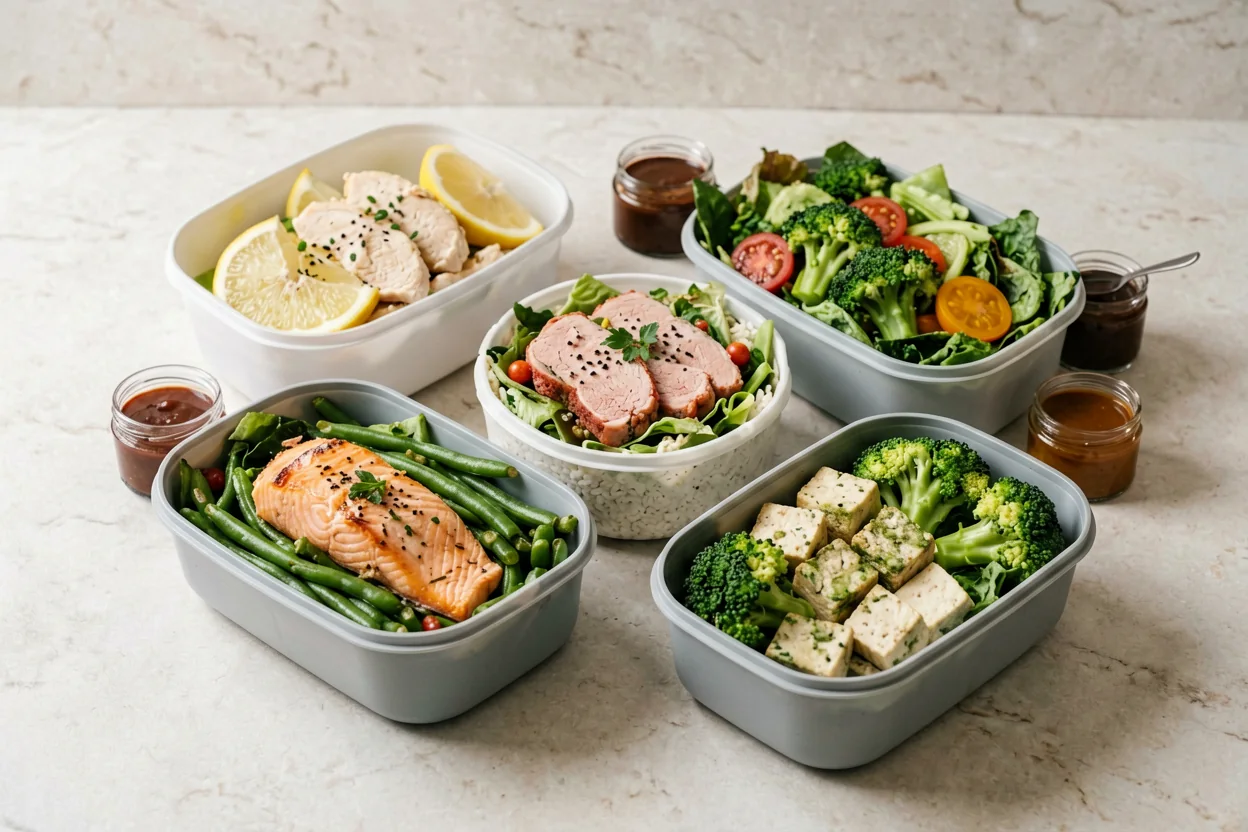
High protein low carb meal prep for weight loss is easier when you prepare flexible components instead of five identical containers. The practical goal is to have a protein source, colorful vegetables, a flavorful sauce, and an optional energy food ready when the week becomes busy. This approach can support consistent meals without requiring perfect tracking or complicated recipes.
This five-day framework includes breakfast, lunch, dinner, and snack options. It is designed for adults who want high protein low carb meal prep ideas that can be adjusted for appetite, activity, food preferences, and household size. Use the portions as a starting point, not as a fixed prescription.
Why meal prep can support weight management
Meal prep reduces the number of decisions you need to make when you are hungry. It also makes ingredients visible, helps you use food before it spoils, and creates an alternative to relying on convenience meals every day. Preparation does not guarantee weight loss, but it can make a balanced routine easier to repeat.
A strong meal-prep plan also leaves room for imperfect days. Keep one freezer meal, canned fish, Greek yogurt, eggs, or prewashed vegetables available for the day when cooking is not realistic. The most sustainable plan is not the one that assumes every day will go perfectly. It is the one that has a simple backup.
The basic meal-prep formula
- Protein: chicken, turkey, eggs, fish, lean beef, Greek yogurt, cottage cheese, tofu, tempeh, or edamame.
- Low-carb vegetables: broccoli, cauliflower, cabbage, zucchini, mushrooms, peppers, leafy greens, cucumber, or green beans.
- Flavor: salsa, lemon, herbs, mustard, garlic, yogurt sauce, vinegar, or a measured amount of pesto.
- Optional energy food: beans, lentils, berries, fruit, oats, potatoes, rice, or a small portion of whole grains based on your needs.
- Texture: include something crisp, creamy, roasted, or crunchy so leftovers do not feel repetitive.
One-hour prep session
Step 1: Choose two proteins
Cook one protein that reheats well, such as chicken thighs, lean ground turkey, or turkey meatballs. Add one no-cook or quick protein such as Greek yogurt, cottage cheese, boiled eggs, tuna, or tofu. Two different textures make the week more enjoyable.
Step 2: Cook two vegetable trays
Roast broccoli, cauliflower, peppers, zucchini, and mushrooms with garlic, pepper, and a measured amount of oil. Keep a fresh vegetable such as cucumber or cabbage for crunch. Cooked vegetables are convenient, while fresh vegetables keep bowls from becoming soft.
Step 3: Prepare two sauces
Mix a lemon-yogurt sauce with plain Greek yogurt, lemon juice, herbs, and pepper. Make a second sauce with salsa, lime, garlic, and a little hot sauce. Store sauces separately and add them just before eating.
Step 4: Portion with flexibility
Put protein and vegetables into containers, but do not force every container to be identical. You may want a larger lunch on an active day and a lighter meal when you are less hungry. Add optional carbohydrates or fats when they help your energy and satisfaction.
Five-day high protein low carb meal prep plan
Day 1: Chicken, broccoli, and lemon yogurt sauce
Serve roasted chicken with broccoli, cucumber, and lemon-yogurt sauce. Add herbs or chili flakes for contrast. This simple combination works warm or cold. If you need more energy, add a small serving of potatoes, beans, or rice rather than increasing the sauce and oil automatically.
Day 2: Turkey taco bowl
Use lean ground turkey cooked with cumin, paprika, garlic, onion, and tomato. Serve with shredded lettuce, cabbage, salsa, and plain yogurt. Add avocado or beans in a measured portion if preferred. The turkey mixture can also be used in lettuce wraps or an omelet.
Day 3: Tuna crunch salad
Combine tuna with Greek yogurt, mustard, celery, cucumber, green onion, and lemon. Serve on greens with roasted vegetables on the side. Keep the tuna mixture chilled and use it within the time recommended by local food-safety guidance.
Day 4: Tofu and edamame stir-fry
Combine baked tofu and edamame with cabbage, mushrooms, broccoli, and peppers. Season with ginger, garlic, rice vinegar, and a modest amount of soy sauce. Serve over cauliflower rice, or add a small serving of rice if you want a more substantial meal.
Day 5: Salmon and vegetable plate
Roast salmon with green beans and zucchini. Finish with lemon and dill. Since salmon and oil are energy-dense, portion them intentionally while keeping vegetables generous. Use leftovers in a salad or a yogurt-based salmon bowl.
High protein breakfast options
Greek yogurt prep cups
Prepare plain Greek yogurt with berries, cinnamon, and chia. Keep crunchy toppings in a separate container. You can vary the flavor with cocoa, vanilla, lemon zest, or grated apple.
Egg and vegetable muffins
Whisk eggs with spinach, mushrooms, peppers, and herbs, then bake in a muffin pan. Cool completely before storing. Pair two muffins with fruit or yogurt depending on your hunger.
Cottage cheese breakfast plate
Serve cottage cheese with cucumber, tomatoes, herbs, and toast or a small fruit portion. This option requires little cooking and works well on mornings when you prefer savory food.
High protein low calorie meal prep options
High protein low calorie meal prep recipes are most satisfying when they include volume and texture. Use broth-based soups, vegetables, salads, fruit, and yogurt to make meals feel complete. Avoid turning every container into a tiny portion of dry protein. If you feel hungry soon after eating, review the amount of produce, fiber, and total energy before simply adding another scoop of protein powder.
Protein powders and bars can be convenient, but they do not need to be the foundation of a meal plan. Compare serving size, sweetness, fiber, and cost. Whole foods such as eggs, yogurt, tofu, beans, lentils, fish, and poultry can provide variety and useful nutrients.
How to keep high protein low carb meal prep from getting boring
- Use one protein in a soup and another in a salad.
- Change the sauce rather than cooking a completely different meal.
- Add fresh cabbage, cucumber, herbs, or pickles for crunch.
- Rotate cooking methods: roast, skillet, soup, grill, or no-cook bowl.
- Freeze two portions so you are not eating the same leftovers in a row.
- Keep a flexible carbohydrate option available for training or higher-hunger days.
Food safety and storage
Cool cooked foods promptly and store them in shallow containers. Keep cold foods chilled, label the date, and follow local food-safety recommendations for refrigerator and freezer storage. Reheat leftovers thoroughly and discard food that looks, smells, or tastes unsafe. Meal prep should reduce stress, not create pressure to eat food that has passed its safe storage window.
Grocery list for a five-day plan
- Chicken, lean ground turkey, salmon, tuna, tofu, and edamame.
- Plain Greek yogurt, cottage cheese, and eggs.
- Broccoli, cauliflower, cabbage, zucchini, mushrooms, peppers, cucumber, spinach, and greens.
- Lemons, limes, garlic, herbs, salsa, mustard, vinegar, and low-sodium soy sauce.
- Berries, one flexible carbohydrate, and optional beans or lentils.
- Reusable containers, small sauce cups, labels, and an insulated lunch bag if needed.
Common mistakes
Making carbohydrates too low for your needs
Some people feel good on a low-carb pattern, while others need more carbohydrate for training, work, or overall satisfaction. A meal plan should support your daily life. Adjust portions instead of treating one macro target as universal.
Using too much sauce or oil
Healthy fats can fit in a balanced plan, but free-pouring oil or dressing can change the energy content quickly. Measure at first and adjust based on taste and satisfaction.
Preparing more food than you can safely eat
Five days of identical food is not required. Prepare enough for the first few days, freeze extra portions, and keep quick proteins available for later in the week.
Frequently asked questions
Is high protein low carb meal prep good for weight loss?
It can help create consistent, filling meals, but weight change depends on total intake and many personal factors. It is not a guarantee and should not require extreme restriction.
Can I use this plan for muscle gain?
The foods can be adapted, but muscle gain often requires different total energy and carbohydrate needs. Increase portions with guidance from a qualified professional if appropriate.
How many meals should I prep?
Start with two breakfasts, three lunches, and two dinners. Preparing every meal at once is not necessary. A smaller system is often easier to maintain.
Bottom line
High protein low carb meal prep for weight loss works best as a flexible system: prepare two proteins, plenty of vegetables, two sauces, and a few backup foods. Use the five-day plan as a framework, adjust portions to your needs, and keep the meals flavorful enough to repeat.
Explore more ideas in our High-Protein Meals, Keto Recipes, and Keto Meal Plans sections.
Save the ideas that fit your routine and adapt the rest. Consistency is built through repeatable choices, not perfect days.