
Looking for a keto diet lunch recipe that feels like a real meal rather than a handful of cheese and a few leaves of lettuce? A good low-carb lunch should be satisfying, portable, easy to repeat, and flexible enough for an ordinary workday. This guide gives you a simple lunch formula plus several complete recipes, swaps, storage tips, and a practical way to build keto diet recipes for lunch without spending your entire Sunday in the kitchen.
The recipes here are designed for adults in the United States and Canada who want straightforward low-carb meals. They emphasize protein, non-starchy vegetables, flavorful fats, and sauces that make lunch enjoyable. You can adjust portions to your energy needs and use the carb information on the labels of the ingredients you buy.
Quick answer: what makes a keto lunch work?
The easiest keto lunch combines four parts: a protein, two or more non-starchy vegetables, a satisfying fat or sauce, and an optional crunchy or fresh topping. For example, grilled chicken with romaine, cucumber, avocado, and lemon-tahini dressing is more complete than a plain protein snack. The goal is not to chase a perfect number at every meal. The goal is to make a lunch you can enjoy, portion, store, and repeat.
- Protein: chicken, turkey, salmon, tuna, eggs, beef, tofu, or another option that fits your eating pattern.
- Vegetables: leafy greens, cucumber, zucchini, broccoli, cauliflower, peppers, mushrooms, celery, or green beans.
- Flavor and fat: olive oil, avocado, olives, pesto, mayonnaise, full-fat Greek yogurt, cheese, or a measured dressing.
- Texture: toasted seeds, chopped nuts, pickles, fresh herbs, or crisp vegetables.
If you are new to low-carb eating, start with a lunch you already like and replace only the high-carb component. A taco bowl can use cauliflower rice instead of rice. A sandwich can become a lettuce wrap. A pasta salad can become a chopped chicken salad with a creamy herb dressing. These small changes are often easier to maintain than an entirely new menu.
The lunch formula for busy North American schedules
1. Choose a dependable protein
Pick one protein that can be prepared in batches. Cooked chicken breast or thighs, turkey meatballs, canned tuna, salmon, eggs, and leftover steak all work. For a vegetarian version, use extra-firm tofu, tempeh if it fits your carbohydrate target, or eggs and cheese. If you buy deli meat, compare labels because sodium, added sugar, and serving sizes vary between brands.
2. Add volume with vegetables
Vegetables help give lunch color, crunch, and volume. Raw vegetables are convenient for wraps and salads, while roasted vegetables are useful in bowls. Keep a container of washed greens, sliced cucumbers, celery, and bell pepper in the refrigerator. When vegetables are ready to use, assembling a lunch takes less time and you are less likely to rely on highly processed convenience foods.
3. Use sauce strategically
A flavorful sauce can turn the same chicken into several different lunches. Try lemon-herb yogurt sauce, avocado-lime dressing, pesto, buffalo sauce, olive tapenade, or a simple vinaigrette. Make sauces separately so greens stay crisp and portions are easier to control. If a bottled dressing is convenient, look for a short ingredient list and check the added sugar and serving size.
4. Plan for texture and temperature
Cold lunches are not the only option. Warm chicken, beef, or vegetables can be packed in a microwave-safe container and finished at work. For a cold lunch, combine crisp vegetables with a creamy element and something salty or acidic. Texture is one reason people get bored with repetitive low carb lunch recipes, so use herbs, seeds, pickles, and toasted nuts to create contrast.
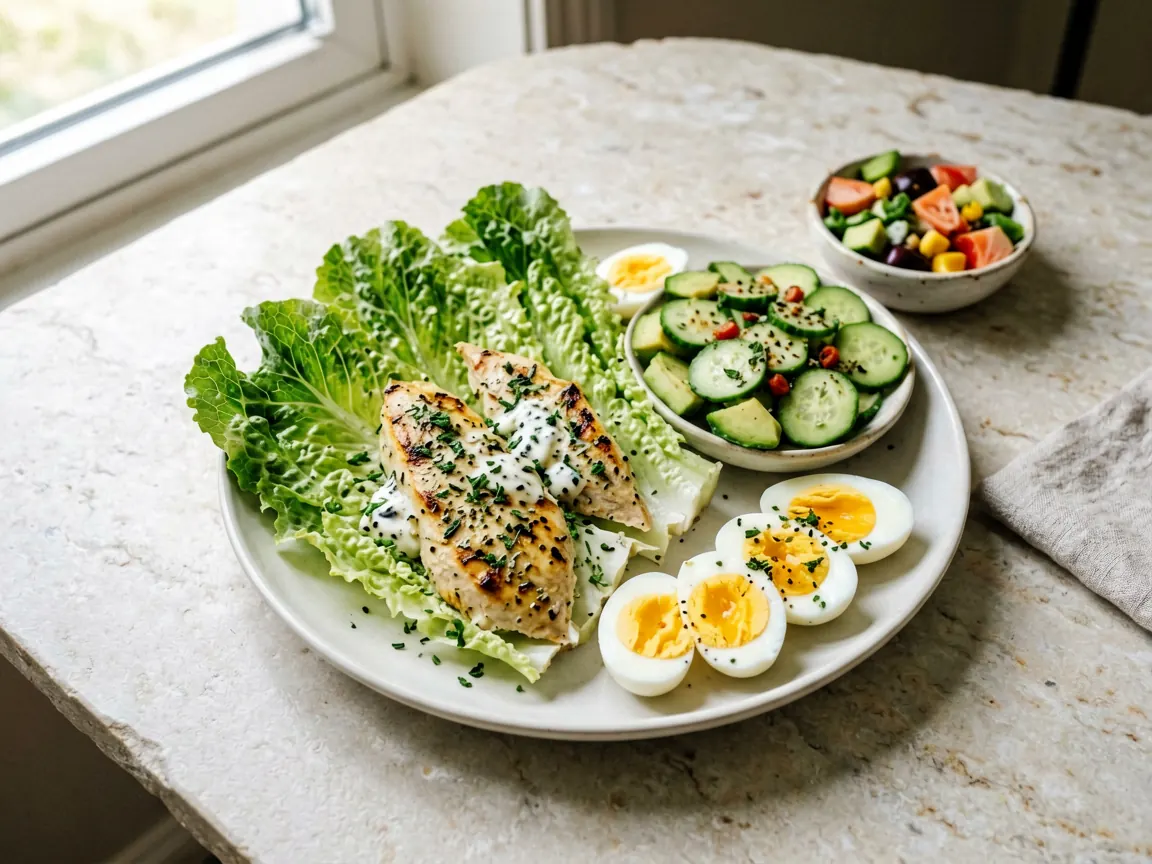
Recipe 1: lemon chicken lettuce wraps
These wraps are a useful starting point when you want an easy keto lunch that can be eaten cold. The chicken can be prepared ahead, and the filling can be served over greens if you do not want to assemble wraps at work.
Ingredients for four servings
- 1 1/2 pounds boneless, skinless chicken thighs or breasts
- 2 tablespoons olive oil, divided
- 1 tablespoon lemon juice and 1 teaspoon lemon zest
- 1 teaspoon dried oregano, 1/2 teaspoon garlic powder, and black pepper
- 8 to 12 large romaine or butter lettuce leaves
- 1 cucumber, diced, and 1/2 cup chopped tomatoes
- 1/2 avocado, sliced
- 1/3 cup plain Greek yogurt
- 1 tablespoon chopped parsley and a pinch of salt
How to make it
- Whisk one tablespoon of olive oil with lemon juice, zest, oregano, garlic powder, and pepper. Coat the chicken and let it stand for 15 to 30 minutes in the refrigerator.
- Cook the chicken in a skillet over medium heat or on a grill until the thickest piece reaches a safe internal temperature. Let it rest, then slice it thinly.
- Stir yogurt, parsley, the remaining olive oil, and a pinch of salt into a quick sauce. Add lemon juice if you want a sharper flavor.
- Fill lettuce leaves with chicken, cucumber, tomato, avocado, and sauce. Pack the components separately if lunch will be eaten later.
For a dairy-free version, replace the yogurt sauce with mashed avocado, olive oil, lemon, and herbs. For a higher-volume lunch, add shredded cabbage or a side of roasted zucchini. For a workplace meal, pack two or three wraps in a rigid container and keep the sauce in a small leakproof cup.
Recipe 2: salmon cucumber avocado bowl
This bowl is fresh, rich, and quick when you use leftover baked salmon or a quality pouch of salmon. It is one of the most convenient keto friendly lunch ideas for days when you want a meal without reheating.
Ingredients for two servings
- 8 ounces cooked salmon, flaked
- 1 large cucumber, sliced or quartered
- 1 avocado, diced
- 2 cups chopped romaine or mixed greens
- 2 tablespoons pumpkin seeds or chopped walnuts
- 2 tablespoons olive oil, 1 tablespoon lemon juice, and 1 teaspoon Dijon mustard
- Fresh dill, black pepper, and a small pinch of salt
Assembly and variations
Whisk the olive oil, lemon juice, mustard, dill, pepper, and salt. Layer the greens, cucumber, salmon, avocado, and seeds in a bowl, then add dressing just before eating. If salmon is not available, use tuna, cooked shrimp, or shredded chicken. If you need more crunch, add celery, radish, or a small amount of pickled onion. Check the label on flavored salmon or tuna products for added sugar.
Keep the avocado whole or toss it with lemon if the bowl will be stored for several hours. Store seeds in a separate container so they remain crisp. This bowl works well for a no-cook lunch when the salmon has already been cooked, but basic food-safety rules still apply: keep perishable ingredients cold and do not leave them at room temperature for extended periods.
Recipe 3: turkey taco salad with creamy lime dressing
This salad has the familiar flavor of a taco bowl without the tortilla chips or rice. It is a good way to use ground turkey, leftover taco-seasoned meat, or a small amount of shredded chicken.
Ingredients for four servings
- 1 pound lean ground turkey
- 1 tablespoon olive oil
- 2 teaspoons chili powder, 1 teaspoon ground cumin, and 1/2 teaspoon smoked paprika
- 6 cups chopped romaine
- 1 cup chopped cucumber, 1/2 cup cherry tomatoes, and 1/2 cup shredded cheese
- 1/2 avocado, sliced, plus optional cilantro
- 1/3 cup plain Greek yogurt, juice of one lime, and 1 tablespoon water
Method
Warm the oil in a skillet, add the turkey, and break it into small pieces. Stir in the spices and cook until no longer pink. Let the turkey cool slightly before placing it over the lettuce. Combine the yogurt, lime juice, and water to make the dressing. Divide the vegetables, cheese, avocado, turkey, and dressing into containers.
To keep this lunch crisp, cool the turkey completely before packing it and keep the dressing separate. A small serving of black beans or corn can be added if it fits your personal carbohydrate plan, but those ingredients change the carbohydrate content. You can also use shredded cabbage instead of romaine or swap turkey for lean ground beef.
Recipe 4: egg salad crunch cups
Egg salad is affordable, portable, and easy to prepare. This version uses Greek yogurt for tang and celery for crunch. It can be spooned into lettuce cups, served over greens, or packed with cucumber slices.
Ingredients for four servings
- 8 large eggs, hard-boiled, peeled, and chopped
- 1/4 cup mayonnaise or half mayonnaise and half plain Greek yogurt
- 1 teaspoon Dijon mustard
- 1/3 cup finely chopped celery
- 2 tablespoons chopped dill pickle or fresh herbs
- Black pepper, paprika, and salt to taste
- Romaine leaves, cucumber rounds, or bell pepper strips for serving
Stir the mayonnaise, yogurt, mustard, celery, and pickle together before folding in the chopped eggs. Taste and season. Refrigerate the salad before packing. For a stronger flavor, add curry powder, smoked paprika, or chopped chives. For more protein, mix in diced chicken or canned tuna, but consider how the texture changes.
Egg salad is best made in a clean container and kept chilled. Pack the lettuce or vegetables separately so they do not become watery. If you use store-bought mayonnaise or pickles, check labels for added sugar and choose products that suit your needs.
Recipe 5: warm cauliflower rice chicken bowl
A warm bowl can be more satisfying in colder months and still fit a low-carb pattern. Cauliflower rice gives the bowl a familiar rice-like base, while chicken, vegetables, and a sauce provide flavor.
Ingredients for four servings
- 1 1/2 pounds cooked chicken, sliced or shredded
- 5 cups cauliflower rice, fresh or frozen
- 1 tablespoon olive oil
- 1 cup sliced mushrooms and 1 cup chopped broccoli
- 2 tablespoons pesto or a lemon-herb dressing
- 1/2 cup crumbled feta or shredded cheddar, optional
- Parsley, pepper, and lemon wedges
Cooking steps
- Heat the oil in a wide skillet. Cook the mushrooms until their moisture reduces, then add the broccoli and cauliflower rice.
- Cook until the vegetables are tender but not mushy. Frozen cauliflower rice may release water, so keep the pan uncovered for part of the cooking time.
- Fold in the cooked chicken and pesto. Warm everything through and finish with cheese, parsley, pepper, and lemon.
Pack the bowl in four containers and let it cool before sealing tightly. Reheat until steaming hot, stir, and add a fresh squeeze of lemon after reheating. You can replace chicken with shrimp, turkey, tofu, or leftover steak. You can also use shredded cabbage or zucchini noodles when cauliflower is not available.
How to make keto lunches for work
Use a two-container system
Pack the main food in one container and the dressing, crunchy toppings, or avocado in another. This simple separation prevents soggy salads and makes portioning easier. A small insulated lunch bag with a cold pack is useful when there is no refrigerator nearby. If you use a microwave, choose glass or microwave-safe containers and remove any lid that is not designed for heating.
Build a three-day prep rhythm
You do not need to prepare seven identical lunches. On the first prep day, cook a protein and two vegetables. On the second day, assemble fresh salad ingredients. On the third day, use leftovers in wraps or bowls. This keeps ingredients fresher and gives you more variety than a single large batch.
Keep an emergency lunch kit
Busy schedules are easier when you have backups. Consider shelf-stable tuna or salmon pouches, olives, single-serve nuts, seed crackers that fit your plan, and a packet of plain seasoning. These foods are not a substitute for a balanced lunch every day, but they can prevent an unexpected meeting or commute from turning into an all-or-nothing decision.
Seven easy lunch combinations
Use the following combinations as a quick menu when you need more keto lunch meal prep ideas. Adjust portions and ingredients to your preferences.
- Chicken lettuce wraps with cucumber, avocado, and lemon yogurt sauce.
- Salmon, greens, cucumber, olives, pumpkin seeds, and vinaigrette.
- Turkey taco salad with romaine, cheese, avocado, and lime dressing.
- Egg salad cups with celery, pickles, and sliced bell pepper.
- Cauliflower rice chicken bowl with broccoli, mushrooms, and pesto.
- Tuna salad over greens with celery, olives, and a mustard dressing.
- Leftover steak with arugula, roasted zucchini, feta, and chimichurri.
If your household eats different foods, keep the base ingredients separate. You can add rice, beans, tortillas, or fruit to another family member's meal without changing the low-carb portion. This makes the routine more practical and reduces the pressure to cook separate recipes for every person.
Ingredient substitutions for different needs
Dairy-free
Use avocado, tahini, olive oil, or a dairy-free unsweetened dressing instead of yogurt, feta, or cheese. Read labels on prepared sauces because some contain milk solids or sweeteners.
Egg-free
Replace egg salad with chicken salad, salmon salad, tuna, tofu, or a turkey bowl. For a creamy texture, use avocado or a dairy-free mayonnaise that fits your ingredient preferences.
Lower-cost
Eggs, canned tuna, chicken thighs, cabbage, frozen broccoli, and frozen cauliflower are often more budget-friendly than specialty keto products. Buy herbs in small quantities or use dried herbs to reduce waste. Use leftovers intentionally: roasted chicken can become wraps, salad, and a warm bowl across several meals.
Higher-protein
Add an extra portion of chicken, turkey, fish, eggs, or tofu rather than relying on large amounts of cheese or nuts. If you track protein, use the nutrition label or a trusted food database and remember that cooked weight and raw weight are different.
Storage and food-safety checklist
Let hot food cool briefly before sealing, but do not leave perishable food sitting out while you finish other tasks. Refrigerate prepared lunches promptly in shallow containers so they cool evenly. Keep salads and sauces separate, label containers with the prep date, and use your own local food-safety guidance for storage times. When in doubt about smell, texture, or temperature history, discard the food instead of tasting it to test whether it is safe.
For best texture, assemble lettuce wraps on the day you eat them. Cooked chicken bowls and egg salad can be prepared ahead, but fresh greens, avocado, and crunchy toppings are usually better added later. If you freeze a meal, avoid freezing watery vegetables and creamy sauces unless you already know the recipe reheats well.
How to estimate portions and carbs
The carbohydrate level of a lunch depends on the exact ingredients and portion sizes, so online estimates are only starting points. Read the labels on sauces, yogurt, deli meat, canned products, and flavored seasonings. To estimate net carbs, many people subtract fiber from total carbohydrate, but labeling conventions and personal responses can vary. Use the method recommended by your clinician or the approach that matches your goals.
Keep the focus on the whole meal. A low-carb lunch made mostly of processed meat, cheese, and a large amount of calorie-dense dressing may not be as nourishing or satisfying as a lunch that includes protein, vegetables, and a measured sauce. If weight management is your goal, your overall eating pattern, activity, sleep, and portions matter more than any single ingredient.
Frequently asked questions
What is the best keto diet lunch recipe for beginners?
Chicken lettuce wraps are a friendly place to start because the ingredients are familiar, the preparation is simple, and the recipe can be adjusted with different vegetables and sauces. If you prefer a warm meal, try the cauliflower rice chicken bowl.
Can I make keto lunch the night before?
Yes. Cooked proteins, roasted vegetables, egg salad, and dressings can usually be prepared the night before. Keep wet ingredients separate from greens and wraps. Refrigerate the food promptly and transport it in a cold bag when needed.
What can I pack for a keto lunch without reheating?
Try salmon cucumber avocado bowls, egg salad cups, tuna salad, chicken lettuce wraps, or turkey roll-ups with a crunchy vegetable side. These are useful no cook keto lunch options when the protein is already prepared or purchased in a convenient form.
Are keto lunches good for weight loss?
A low-carb lunch may support a weight-management routine when it helps you feel satisfied and maintain an eating pattern that fits your preferences. It does not guarantee weight loss. Portion size, total energy intake, food quality, activity, sleep, medications, and health conditions all matter.
How many carbs should lunch have on keto?
There is no single lunch target that fits everyone. Some people follow a strict ketogenic plan, while others use a more flexible low-carb approach. Your target may depend on your goals, activity, medications, and medical history. If you manage diabetes, take glucose-lowering medication, are pregnant or breastfeeding, or have a history of an eating disorder, speak with a qualified healthcare professional before making major dietary changes.
How can I avoid getting bored with low carb lunch recipes?
Rotate sauces and textures instead of buying entirely different ingredients every week. Use the same chicken in wraps, a salad, and a warm bowl. Alternate cold lunches with reheatable meals, and keep a list of five favorite combinations. Variety in herbs, dressings, and vegetables can make a simple plan feel new.
Final takeaway
The most useful keto diet lunch recipe is the one you will actually prepare and enjoy. Start with a dependable protein, add colorful non-starchy vegetables, use a flavorful sauce, and plan how the meal will be stored and eaten. The five recipes in this guide can be mixed and matched with the lunch combinations above, making it easier to create a realistic routine for workdays, travel, and busy family schedules.
For more meal ideas, browse our easy keto recipes, review the practical high-protein low-carb meal prep guide, or learn how to think about keto macros and net carbs.
Nutrition and safety note: This article is for general education and is not medical advice. Ingredient nutrition varies by brand, preparation, and serving size. Do not use a low-carb or ketogenic diet to replace individualized care. If you have a medical condition, take medication, or are pregnant or breastfeeding, consult a qualified healthcare professional before changing your diet.
Save the ideas that fit your routine and adapt the rest. Consistency is built through repeatable choices, not perfect days.