
This keto banana muffins recipe is designed for the familiar aroma of banana bread without relying on a large amount of ripe banana or added sugar. Almond flour, a small amount of coconut flour, eggs, and banana extract create a tender muffin with a lightly sweet flavor. You can add a measured spoonful of mashed banana for a more natural fruit note, but the recipe is written so the banana flavor does not depend on a high-carbohydrate fruit.
The muffins are useful for breakfast, coffee breaks, lunch boxes, and weekend meal prep. They are soft enough to eat plain and sturdy enough to freeze. The most important details are to measure coconut flour carefully, let the batter rest briefly, and cool the muffins completely before storing them. Those simple steps help prevent a wet center or a crumbly texture.
Quick answer: are banana muffins keto?
Traditional banana muffins are usually not keto because they contain wheat flour, sugar, and a larger amount of banana. A lower-carbohydrate version can use banana extract, a small amount of mashed banana, and a flour blend that provides structure without conventional flour. The final carbohydrate count still depends on the brands, sweetener, optional chocolate, and serving size.
If you need precise numbers, calculate the recipe with the labels of your ingredients and divide the batch by the number of muffins. Do not assume that a product labeled “keto” or “low carb” has the same carbohydrate content as another brand. This recipe is a flexible baking template, not a medical prescription.
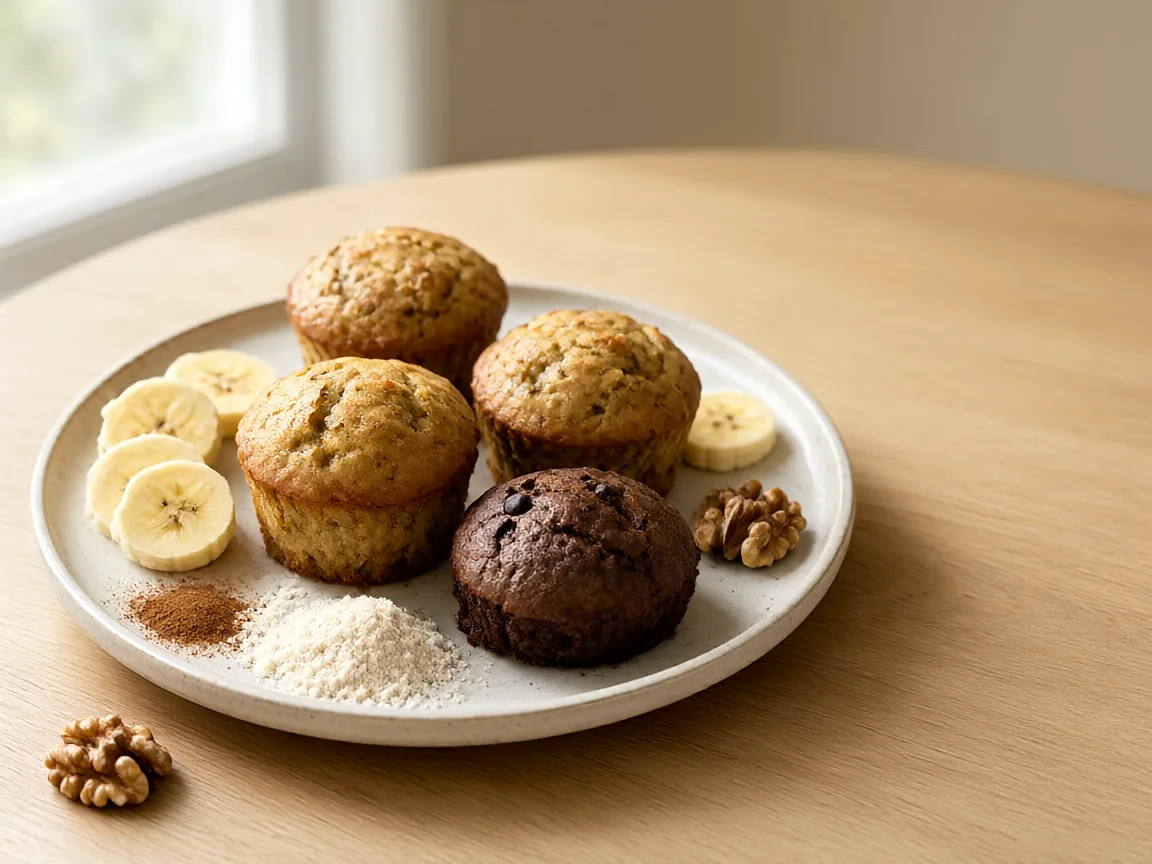
How the recipe gets banana flavor
Banana extract does the heavy lifting
Banana extract gives a clear fruit aroma without adding the amount of carbohydrate found in several whole bananas. Start with the measured amount in the recipe because extracts vary in strength. Too much can taste artificial or bitter after baking.
A little real banana is optional
For a more natural flavor, add two tablespoons of mashed ripe banana to the wet ingredients. That amount is spread across the full batch rather than concentrated in one serving. If you omit it, add one extra tablespoon of unsweetened almond milk only if the batter seems unusually thick.
Warm spices make the flavor fuller
Cinnamon, nutmeg, vanilla, and a pinch of salt help the muffins taste more like banana bread. You can also add toasted walnuts or pecans. Keep the mix-ins moderate so they do not weigh down the batter.
Ingredients for 12 muffins
- 2 cups fine almond flour
- 2 tablespoons coconut flour
- 2 teaspoons baking powder
- 1 teaspoon ground cinnamon
- 1/4 teaspoon ground nutmeg, optional
- 1/2 teaspoon fine salt
- 3 large eggs, room temperature
- 1/3 cup granular allulose or another baking sweetener that you use successfully
- 1/3 cup melted unsalted butter or neutral oil
- 2 teaspoons banana extract
- 1 teaspoon vanilla extract
- 2 tablespoons mashed ripe banana, optional
- 1/4 cup unsweetened almond milk, plus more only if needed
- 1/3 cup chopped walnuts or pecans, optional
- 1/3 cup sugar-free dark chocolate chips, optional
Sweetener notes
Use a sweetener that is suitable for your eating pattern and that behaves well in baked goods. Some granulated sweeteners can cool the mouth or leave a gritty texture. If you use a concentrated liquid sweetener, the batter may need a small adjustment because the dry volume changes. Do not replace a granulated sweetener with an equal volume of liquid without testing the recipe.
Flour notes
Fine almond flour creates a soft crumb. Coconut flour absorbs much more liquid, which is why this recipe uses only two tablespoons. If you need a nut-free recipe for low carb muffins, use a tested sunflower-seed flour blend with a similar baking conversion. Do not substitute coconut flour for the almond flour one-to-one.
Step-by-step instructions
1. Prepare the pan and oven
Heat the oven to 350°F. Line a 12-cup muffin pan with paper liners or grease the cups well. If using silicone liners, place them on a sturdy baking sheet so the batter does not spill during transfer.
2. Mix the dry ingredients
Whisk almond flour, coconut flour, baking powder, cinnamon, nutmeg, and salt in a medium bowl. Break up any clumps. Even distribution matters because coconut flour can form small pockets that remain dry in the finished muffin.
3. Mix the wet ingredients
In a second bowl, whisk eggs, sweetener, melted butter, banana extract, vanilla, and optional mashed banana. The melted butter should be warm, not hot. If it is very hot, let it cool for a few minutes before adding it to the eggs.
4. Combine and rest
Fold the dry ingredients into the wet mixture. Add almond milk and stir until no dry streaks remain. Let the batter rest for five minutes. Coconut flour will absorb moisture during this pause and help you judge whether another teaspoon of milk is needed.
5. Add mix-ins
Fold in walnuts, pecans, or sugar-free chocolate chips if using. Reserve a few pieces for the tops. Do not overmix. The batter will be thicker than wheat muffin batter but should still be scoopable.
6. Portion and bake
Divide the batter between the muffin cups, filling each about three-quarters full. Add reserved nuts or chocolate. Bake for 18 to 23 minutes, until the tops are lightly golden and a toothpick comes out with a few moist crumbs.
7. Cool before serving
Let the muffins cool in the pan for 10 minutes, then transfer them to a rack. They may feel very soft while hot. The crumb becomes more stable as it cools. Wait until they are mostly cool before peeling the liners.
How to prevent a wet center
A wet center usually comes from too much banana, too much liquid, an inaccurate measure of coconut flour, or cutting the muffins while they are still hot. If you add real banana, measure it rather than using an entire fruit. One banana can vary widely in size and water content.
Spoon coconut flour into a dry measuring cup and level it. Do not pack it down. If the batter looks loose after the five-minute rest, add one teaspoon of almond flour at a time and wait briefly before adding more. If it looks extremely stiff, add almond milk by the teaspoon.
Bake the muffins until the center springs back lightly when touched. A toothpick should show moist crumbs, not liquid batter. If the tops brown quickly, cover the pan loosely with foil for the last few minutes. A lower oven temperature for a longer bake can also help if your oven runs hot.
Easy flavor variations
Chocolate banana muffins
Add sugar-free dark chocolate chips and one tablespoon of unsweetened cocoa powder. If the cocoa makes the batter thick, add one tablespoon of almond milk. This variation can also serve as an easy keto chocolate muffins recipe when you use the banana extract as a background flavor rather than the main flavor.
Walnut banana bread muffins
Use toasted walnuts, cinnamon, and a small amount of vanilla. Toast nuts in a dry skillet over low heat, cool them completely, and then fold them into the batter. Warm nuts can soften the batter and make the muffins bake unevenly.
Pumpkin spice muffins
Replace the optional banana with two tablespoons of unsweetened pumpkin puree. Add cinnamon, ginger, and a small pinch of cloves. This creates a useful recipe for low carb pumpkin muffins, but check the puree label and do not use pumpkin pie filling, which may contain sugar.
Coconut pecan muffins
Add two tablespoons of unsweetened shredded coconut and chopped pecans. Coconut can absorb liquid, so let the batter rest before deciding whether it needs more milk. Choose unsweetened coconut because sweetened flakes can raise the carbohydrate content.
Blueberry-style muffins
Fold in a small amount of fresh or frozen blueberries. They are not carbohydrate-free, so keep the portion measured. Frozen berries can release water; add them while still frozen and bake the muffins promptly.
Serving ideas
Serve one muffin with Greek yogurt, cottage cheese, eggs, or another protein if you want a more complete breakfast. The muffin can be a convenient carbohydrate-controlled baked item, but it does not need to serve as the whole meal. A side of berries or a few slices of cucumber can add freshness.
For coffee breaks, warm a muffin for a few seconds and add a little butter. For a lunch box, pack the muffin in a rigid container so the top does not crumble. If you are serving children or a mixed household, put regular fruit or toast on the table separately so everyone can build a plate that suits them.
These muffins also work as a base for a yogurt cup. Split one muffin, add plain yogurt and chopped pecans, and finish with cinnamon. Keep the yogurt separate until serving if you are packing the meal ahead.
Storage and freezing
Cool the muffins completely before placing them in a sealed container. Store them at room temperature for one day if your kitchen is cool, or refrigerate them for up to four days. Refrigeration can make almond-flour muffins firmer, so warm them briefly before serving.
To freeze, wrap individual muffins and place them in a freezer-safe bag for up to two months. Label the bag with the date and flavor. Thaw in the refrigerator overnight or warm gently from frozen. Let steam escape before sealing a warm muffin again, or the surface can become damp.
For meal prep, keep two or three muffins in the refrigerator and freeze the rest. This prevents the whole batch from drying out before you can eat it. Store toppings and dairy separately. If a muffin smells sour, shows mold, or has been left warm for too long, discard it.
Using the recipe for low carb meal prep
Make the batter while the oven is preheating and bake the full batch on the weekend. Once cooled, count the muffins and package them in groups that match your schedule. A two-muffin container may be useful for a longer morning, while a single muffin may work better with a larger breakfast.
Write the flour blend and sweetener on a small label. Baking outcomes change between brands, especially when one blend contains coconut, fiber, or starch. A short note about bake time and texture makes the next batch easier to adjust.
You can use the muffins as part of several different meals rather than eating them in the same way every day. Pair them with eggs on Monday, yogurt on Tuesday, a cheese stick on Wednesday, and a packed salad on Thursday. Variety helps the recipe stay useful instead of becoming a food you avoid after a week.
Nutrition and label checks
The nutrition of these muffins depends on the flour, sweetener, butter, nuts, chocolate, optional banana, and number of servings. If you need exact values, enter the ingredient labels into a calculator and divide by the actual number of muffins. The optional additions can change the final result more than the banana extract does.
Banana flavor does not mean the muffins have the same nutrition as muffins made with several bananas. At the same time, a small amount of real banana still contributes carbohydrate. Choose the version that fits your preferences and goals. If you manage diabetes, kidney disease, food allergies, pregnancy nutrition, or medication-related food restrictions, ask a qualified healthcare professional how this recipe fits your plan.
Lower carbohydrate baking can be useful, but it is not automatically lower calorie or appropriate for everyone. Include protein, vegetables, fluids, and other foods you enjoy. No muffin recipe guarantees weight loss or a specific health outcome.
Troubleshooting
The muffins are crumbly
They may have been overbaked, overmixed, or sliced while hot. Let them cool fully and check the next batch a few minutes earlier. Measure the almond flour by spooning it into the cup rather than packing it.
The muffins taste too strongly of extract
Extracts vary in strength. Reduce the banana extract slightly next time and keep the cinnamon and vanilla. A small amount of real banana can provide a softer flavor, but account for the change in carbohydrate.
The batter is too thick
Let it rest first because coconut flour continues to absorb liquid. If it remains stiff, add almond milk by the teaspoon. Do not add a large splash at once because a batter that is too wet can produce a gummy center.
The liners stick
Almond-flour batters can cling to paper. Use parchment-style liners, grease the liners lightly, and let the muffins cool before peeling. Silicone liners can help, but they should sit in a rigid pan for even support.
The tops did not rise
Check the freshness of the baking powder and avoid overmixing. Fill the cups evenly and make sure the oven is fully preheated. Low-carb muffins are naturally denser than wheat muffins, so a modest rise is normal.
FAQ
Can I use a whole banana?
Using a whole banana changes the carbohydrate, moisture, and sweetness significantly. It may also make the centers wet. For this recipe, use the measured amount of mashed banana or rely on banana extract for flavor.
Can I make these without almond flour?
Use a tested sunflower-seed flour blend designed for baking. Coconut flour is not an equal replacement. A different flour may require changes to the eggs and liquid, so test a small batch first.
Are these a recipe for low carb muffins?
They are designed as a lower-carbohydrate muffin using almond flour, coconut flour, and a baking sweetener. Check your own ingredient labels because the final carbohydrate content varies by brand and mix-ins.
Can I make a dairy-free batch?
Use neutral oil or a dairy-free baking stick instead of butter. Check the chocolate chips and sweetener labels as well. The crumb may be slightly different but should still be tender.
Can I replace the eggs?
Eggs provide much of the structure and moisture balance. A commercial egg replacer may work, but it has not been tested in every brand. For reliable results, use a muffin formula developed specifically to be egg-free.
Can I make mini muffins?
Yes. Portion the batter into a mini muffin pan and begin checking after 10 to 13 minutes. Cool them completely because small muffins can dry out quickly after they are fully baked.
Do these muffins guarantee weight loss?
No. A baked recipe cannot guarantee weight change. Use a portion that fits your needs and include other foods and habits that support your overall routine.
Baking notes for more consistent batches
Muffin pans differ in depth, color, and material. A dark metal pan can brown the bottoms faster than a pale aluminum pan, while silicone may need a few extra minutes. If your muffins are frequently dark underneath, place the muffin pan on a second baking sheet or reduce the oven temperature slightly. If the centers stay soft, check that the pan was not overfilled and that the oven had reached temperature before baking.
Sweeteners also affect the final result. Allulose can brown quickly and may leave a softer center while the muffins are warm. Erythritol-based blends can create a firmer crumb as they cool. Neither result is automatically wrong, but the same recipe may feel different with a different product. Write down the sweetener and flour brand whenever you test a batch so you can repeat the version you like.
Do not judge doneness only by color. Look at the center of a muffin and use a toothpick in the thickest part. A few moist crumbs are useful; shiny liquid batter means more baking is needed. If the muffins need extra time but the tops are already brown, cover them loosely with foil. Let them cool in the pan briefly, then move them to a rack so steam does not collect under the liners.
For the neatest meal-prep portions, cool the muffins before cutting or packing them. A warm muffin releases steam into the container, which can make the tops damp. Once cool, place a small paper towel under the muffins if your container tends to collect condensation. Remove the towel before reheating or eating.
Final takeaways
This keto banana muffins recipe uses banana extract, measured almond flour, and a short list of practical ingredients to create soft muffins with a familiar breakfast flavor. A small amount of real banana is optional, not required. Measure coconut flour, rest the batter, bake until the center is set, and cool before storing.
Try the chocolate, walnut, pumpkin, coconut, or berry variations one at a time so you can learn how each addition changes moisture. Freeze part of the batch, calculate nutrition from the products you use, and remember that “keto” is a planning description rather than a guarantee. This article is general education, not individualized medical advice, and it does not diagnose, treat, cure, or prevent disease.
Save the ideas that fit your routine and adapt the rest. Consistency is built through repeatable choices, not perfect days.