
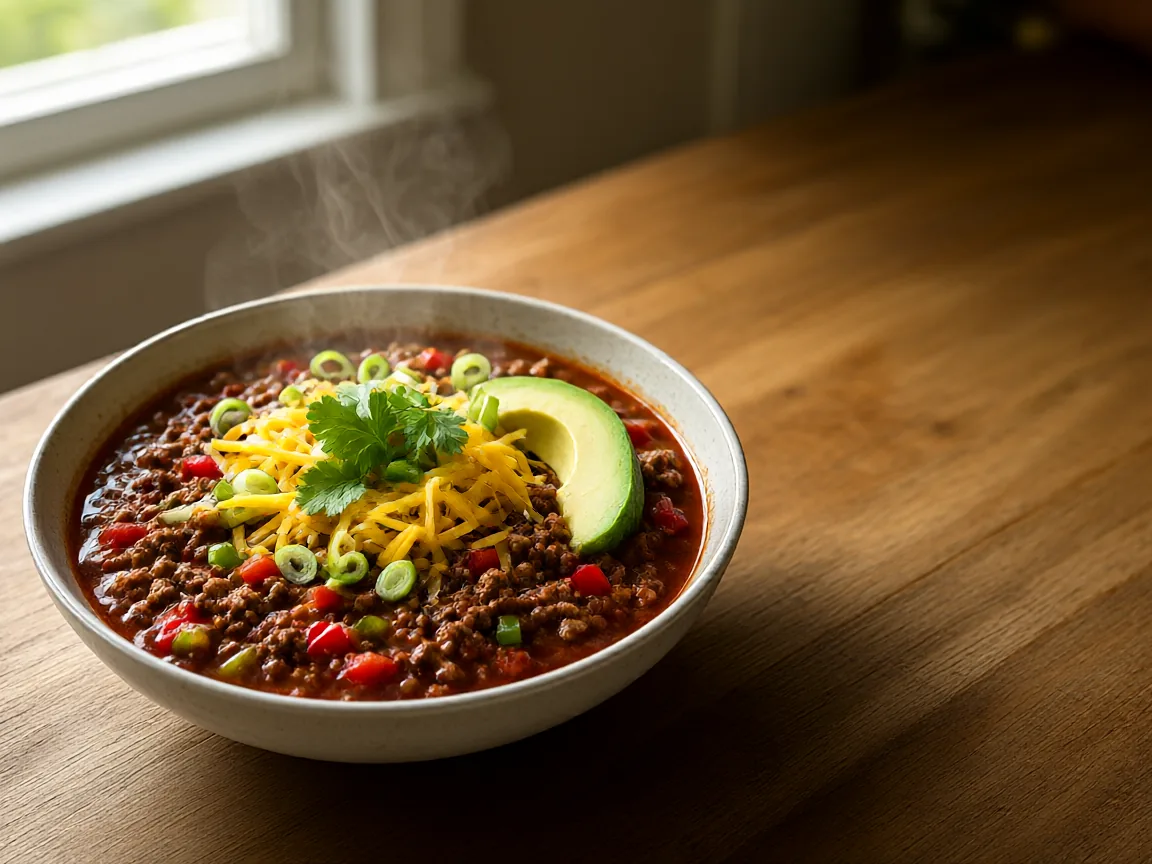
This keto beef chili recipe is a hearty, no-bean dinner made with ground beef, tomatoes, peppers, broth, and warm spices. It cooks in one pot, tastes even better after a short rest, and can be portioned for several lunches. The recipe focuses on deep flavor without relying on beans, flour, sugar, or a premade chili seasoning packet.
The best bowl of low-carb chili is not necessarily the one with the most ingredients. Browning the beef well, cooking the aromatics until soft, and simmering long enough for the sauce to reduce will do most of the work. You can keep the base mild for a family meal and add heat to individual bowls with jalapeno, hot sauce, or chili oil.
Quick answer: can beef chili be keto?
Yes, beef chili can fit a lower-carbohydrate pattern when you control the beans, sweeteners, and thickening ingredients. This version uses ground beef, a measured amount of crushed tomatoes, bell pepper, onion, garlic, broth, and spices. The tomatoes and vegetables contribute carbohydrate, so the final amount depends on the products and serving size.
Traditional chili often includes kidney beans, corn, sugar, or a thickener. Omitting beans changes the texture but not the comfort-food appeal. Diced mushrooms, chopped zucchini, or extra ground beef can add bulk. If you need exact macro information, calculate the batch using your ingredient labels and divide by the number of servings.
Ingredients for six servings
- 2 pounds ground beef, 80 to 90 percent lean
- 1 tablespoon avocado oil, only if the pot needs it
- 1 medium yellow onion, finely diced
- 1 green bell pepper, diced
- 1 red bell pepper, diced
- 4 cloves garlic, minced
- 2 tablespoons tomato paste
- 1 can, 14 ounces, crushed tomatoes with no added sugar
- 1 can, 14 ounces, diced tomatoes, preferably no-salt-added
- 1 1/2 cups unsalted beef broth
- 2 tablespoons chili powder, adjusted to taste
- 2 teaspoons ground cumin
- 1 teaspoon smoked paprika
- 1 teaspoon dried oregano
- 1/2 teaspoon ground coriander, optional
- 1/4 teaspoon cayenne pepper, optional
- 1 1/2 teaspoons kosher salt, divided and adjusted to taste
- 1/2 teaspoon black pepper
- 1 tablespoon apple cider vinegar or lime juice, added at the end
- Optional toppings: shredded cheddar, sour cream, avocado, scallions, cilantro, jalapeno, or sliced radish
Choose chili powder carefully. Some blends contain sugar, flour, or a large amount of salt. Read the label, especially if you are trying to keep the recipe low in carbohydrates or need to limit sodium. Fire-roasted tomatoes work well, but confirm that the can does not contain added sugar.
How to make this keto beef chili recipe
1. Prepare before heating the pot
Dice the onion and peppers into similar-sized pieces so they soften evenly. Measure the spices into a small bowl. Open the tomatoes and broth before you begin browning the meat. Once the beef is hot, the recipe moves quickly through the first stages.
If you have time, bring the ground beef close to room temperature for 10 to 15 minutes. Do not leave raw meat out for a long period. Patting the surface dry can help browning, but ground beef usually has enough moisture that the main improvement comes from using a wide pot and not stirring constantly.
2. Brown the beef thoroughly
Heat a large Dutch oven or heavy soup pot over medium-high heat. Add the beef in chunks and let it sit for a minute before breaking it apart. Cook for 7 to 10 minutes, stirring occasionally, until the meat is browned and no longer pink.
If the pot is crowded, brown the beef in two batches. Browning creates savory flavor; boiling the meat in its own liquid can leave the chili flat. If there is a large amount of rendered fat, carefully spoon some out, leaving enough to cook the vegetables.
3. Cook the onion and peppers
Add the onion and peppers to the pot. If the bottom looks dry, add the tablespoon of oil. Cook for 5 to 7 minutes, stirring often, until the onion is translucent and the peppers begin to soften.
Add the garlic and cook for about 30 seconds. Garlic can become bitter if it sits on the bottom of a hot pot for too long, so stir it quickly into the beef and vegetables.
4. Toast the spices and tomato paste
Add tomato paste, chili powder, cumin, smoked paprika, oregano, coriander if using, cayenne if using, black pepper, and half of the salt. Stir for 60 to 90 seconds. The tomato paste should darken slightly and the spices should smell fragrant.
This brief step is useful because fat carries the flavor of dried spices through the chili. Do not let the mixture scorch. If the pot is very hot, lower the heat before adding the spices.
5. Add the liquids and scrape the pot
Pour in the crushed tomatoes, diced tomatoes, and beef broth. Use the broth to loosen browned bits from the bottom. Stir until the tomato paste is fully incorporated. Bring the mixture to a gentle boil, then reduce the heat to low.
Cover the pot slightly, leaving a small opening for steam to escape. Simmer for 35 to 45 minutes, stirring every 10 minutes. If the chili looks too thick early in the simmer, add a small splash of broth. If it is too thin near the end, remove the lid and let it reduce.
6. Balance the flavor
Turn off the heat and stir in the apple cider vinegar or lime juice. Taste before adding the remaining salt. Acid helps the tomatoes taste brighter and can make the chili seem less heavy.
Let the pot rest for 10 minutes before serving. The sauce will settle, the meat will absorb some liquid, and the chili will be easier to portion. Add extra broth if you prefer a soupier bowl.
How to build deeper chili flavor
Brown the meat in a wide pot
A wide base gives moisture room to evaporate. Let the beef touch the hot surface before stirring. You do not need a hard crust on every piece, but a few browned areas create more flavor than uniformly gray meat.
Toast the tomato paste
Tomato paste becomes sweeter and more savory when it cooks briefly with the spices. Watch it closely. If it sticks, add the tomatoes or broth immediately and scrape the pot.
Use more than one type of chili
Chili powder provides a familiar base. Smoked paprika adds warmth, while cayenne adds direct heat. You can also add one minced chipotle pepper in adobo, but check the label because adobo sauce may contain sugar. Start with a small amount and taste after simmering.
Add acid at the end
Vinegar or lime juice is better added after cooking than at the beginning. A little acid at the finish prevents the chili from tasting dull without making the whole pot sharply sour.
Let it rest
Ten minutes is enough for a weeknight meal, but chili often tastes even better the next day. Refrigeration gives the spices time to blend. Reheat gently with a splash of broth.
No-bean swaps for texture
Mushrooms
Finely chopped mushrooms add a meaty bite and absorb the sauce. Saute them after the beef is browned and before adding tomatoes. Cook until their moisture evaporates so the chili does not become watery.
Zucchini
Diced zucchini softens quickly. Add it during the last 15 minutes of simmering so it keeps some shape. If you add it at the beginning, it may dissolve into the sauce.
Cauliflower
Small cauliflower florets or riced cauliflower can add bulk. Use a measured amount and cook until tender. Frozen cauliflower may release water, so reduce the broth slightly at first.
Extra beef
The simplest swap is more ground beef. You can also combine ground beef with diced leftover steak or shredded chuck. Fully cook any leftover meat before adding it to the pot.
Chopped cabbage
A small amount of cabbage softens into the chili and adds volume. Slice it thinly and add it with the tomatoes. Keep the portion measured if you track carbohydrate.
Heat levels for a mixed household
Make the main pot mild by using chili powder without added cayenne. Put sliced jalapeno, hot sauce, crushed red pepper, and chili oil on the table. This lets each person adjust the bowl without changing the entire batch.
For medium heat, add one minced jalapeno with the bell peppers. Remove the seeds for a gentler result or keep some for more heat. For a smoky spicy bowl, add chipotle and smoked paprika together, but use less cayenne because the flavors can become intense.
For a very mild chili, replace some of the chili powder with smoked paprika and add a little extra cumin. The color will remain rich even when the heat is low.
Toppings that fit a low-carb bowl
Shredded cheddar or Monterey Jack melts into the hot chili. Sour cream adds cooling contrast. Diced avocado provides a creamy texture, while scallions and cilantro add freshness. Radish slices give a crisp bite without needing a high-sugar garnish.
Use toppings as part of the serving rather than treating them as unlimited extras. Cheese, sour cream, avocado, and nuts can all change the energy content. If you need exact macros, weigh or measure the toppings and include them in your calculation.
Serve the chili with cauliflower rice, a simple green salad, roasted zucchini, or steamed broccoli. It can also be spooned into lettuce cups. If some diners want regular crackers or cornbread, serve those separately so the base recipe stays flexible.
Storage and reheating
Cool the chili in shallow containers and refrigerate it promptly. Use refrigerated leftovers within three to four days. Reheat one serving in a saucepan over medium-low heat or in the microwave in short intervals, stirring between intervals.
Add a splash of broth if the chili has thickened. Taste after reheating because the spice level can become stronger overnight. Add fresh lime, scallions, or sour cream after warming rather than cooking them into the pot.
To freeze, portion the cooled chili into freezer-safe containers and leave a little room for expansion. Label the date and number of servings. Use within two to three months for best quality. Thaw in the refrigerator overnight, then reheat until hot throughout.
Do not seal a hot container immediately if steam will collect under the lid. Excess condensation can dilute the surface and make the texture uneven. Let the chili cool briefly, then refrigerate in a covered container.
Meal-prep ideas
Cook the full batch on the weekend and divide it into six portions. Pack toppings separately. One container can become a simple lunch with avocado, another can be served over cauliflower rice, and a third can be used in lettuce cups.
For a quick dinner, freeze two portions and refrigerate the rest. Write the heat level on the label. If you use different tomato brands or spice blends, record those details too. Chili is forgiving, but small notes make it easier to repeat a batch that worked well.
You can also prepare the vegetables and spice bowl one day ahead. Keep the diced onion and peppers refrigerated, and store the spice mixture in a covered container. Do not mix raw meat with the vegetables before cooking. This make-ahead step reduces the work needed on a busy evening.
For a smoother weeknight routine, place the toppings in small containers while the chili simmers. Grate the cheese, wash and dry the herbs, and cut the avocado just before serving. If you plan to freeze portions, leave toppings out of the freezer containers because dairy and fresh herbs can lose their best texture. A simple label with the date, heat level, and suggested topping makes a reheated bowl feel more like a planned meal and less like an unmarked leftover.
Common mistakes and fixes
The chili tastes bland
Add salt gradually, then add acid. Many bland pots need more salt, but too much tomato can also make the flavor seem flat. Try cumin, smoked paprika, black pepper, or a small amount of hot sauce before adding another large spoonful of chili powder.
The chili is too watery
Remove the lid and simmer for 10 to 15 minutes. Stir frequently so the bottom does not scorch. If the vegetables released extra water, the chili may need more reduction. Avoid adding a large amount of starch if you want to keep it lower in carbohydrate.
The chili is too thick
Add unsalted broth a few tablespoons at a time. Stir and let it warm before deciding whether it needs more. A thick pot can be useful for lettuce cups, while a thinner version works better over cauliflower rice.
The tomatoes taste sharp
Simmer longer and add a small amount of sweetener only if needed. A little allulose can soften sharpness, but it will not fix undercooked onions or insufficient salt. A spoonful of sour cream in the bowl can also balance acidity.
The beef feels greasy
Use a leaner ground beef or spoon off some fat after browning. Keep enough fat to carry flavor. Adding watery vegetables before removing excess fat can make the texture seem oily and thin at the same time.
The vegetables disappeared
Add delicate vegetables later in the simmer. Zucchini and cauliflower need less time than onion and pepper. If you want visible pieces, reserve a portion and add them during the last 15 minutes.
Nutrition and food-safety notes
The nutrition of this keto beef chili recipe varies with the beef percentage, tomato products, broth, toppings, and serving size. Beans are not the only source of carbohydrate; tomatoes, peppers, onion, and optional toppings also contribute. Use the package labels and your actual portion count for a more precise estimate.
Handle raw ground beef with clean utensils and wash hands after contact. Cook it thoroughly before tasting the chili. Keep leftovers cold and reheat them until hot throughout. If you manage diabetes, kidney disease, food allergies, pregnancy nutrition, or medication-related food restrictions, ask a qualified healthcare professional how this recipe fits your personal plan.
This recipe is general cooking education. It does not diagnose, treat, cure, or prevent disease, and no chili recipe guarantees weight loss or a specific health result.
FAQ
Is this a keto beef chili recipe without beans?
Yes. It is designed without beans and uses beef, tomatoes, peppers, onions, broth, and spices. The vegetables and tomatoes still contribute carbohydrate, so check your own labels and serving size.
Can I use ground turkey?
Yes. Ground turkey is leaner and may need a little oil to prevent sticking. The flavor will be lighter, so consider adding extra smoked paprika, broth, or a small amount of beef-flavored seasoning that fits your needs.
Can I use a slow cooker?
Brown the beef and cook the onion, peppers, garlic, tomato paste, and spices in a skillet first. Transfer that mixture to the slow cooker with tomatoes and broth. Cook on low until the vegetables are tender, then add the finishing acid before serving. Slow cookers vary, so avoid overfilling and check the texture before the full cooking time ends.
Can I make this chili dairy-free?
The base recipe is dairy-free. Use avocado, scallions, cilantro, or radish instead of cheese and sour cream. Check packaged broth, spice blends, and hot sauces for allergen information.
What can I serve instead of cauliflower rice?
Try sauteed cabbage, zucchini noodles, roasted vegetables, salad greens, or lettuce cups. You can also serve the chili on its own in a bowl. Keep any regular rice or crackers on the side for diners who want them.
How can I make the chili less spicy?
Use a mild chili powder, omit cayenne, remove jalapeno seeds, and serve hot sauce separately. If the finished pot is too hot, add more plain beef, broth, or tomatoes and then adjust salt and acid.
Can I add beans occasionally?
You can add beans if they fit your personal eating pattern, but the nutrition and texture will change. Add cooked beans near the end so they warm without breaking apart. Recalculate the recipe if you need exact carbohydrate information.
Does chili get better the next day?
Many people enjoy the flavor after an overnight rest because the spices blend. Cool and refrigerate it promptly, then reheat gently. Add fresh toppings after warming for better contrast.
Final takeaways
This keto beef chili recipe uses a simple one-pot method: brown the beef, soften the vegetables, toast the spices, add tomatoes and broth, and simmer until the sauce is rich. Leaving out beans keeps the base lower in carbohydrate while mushrooms, zucchini, cauliflower, cabbage, or extra beef can provide bulk.
Start with a mild batch and let everyone customize the heat. Measure toppings if you track macros, refrigerate leftovers promptly, and freeze extra portions for busy days. The recipe is general education and practical cooking guidance rather than individualized medical advice.
Save the ideas that fit your routine and adapt the rest. Consistency is built through repeatable choices, not perfect days.