
This keto avocado bread recipe makes a soft, lightly savory loaf that works for toast, breakfast sandwiches, and simple lunches. Mashed avocado adds moisture and a gentle green color, while eggs help the loaf set. A small amount of lemon juice keeps the flavor fresh, and herbs or seeds can make the finished bread more interesting without adding a sugary topping.
Avocado bread is not meant to behave exactly like wheat bread. It is more tender, slightly denser, and best sliced after it cools completely. The key is to control moisture: use a measured amount of avocado, drain any watery puree, and avoid cutting the loaf while it is hot. With those steps, the loaf can be prepared ahead and stored in portions.
The loaf is especially useful for people who miss the routine of spreading something on toast. You can make the base savory and add different toppings through the week. Try eggs and greens in the morning, tuna and cucumber at lunch, or soup on the side in the evening. That flexibility is more important than making one slice carry the entire nutrition of a meal.
If you are new to low-carb baking, expect a short learning curve. Different almond flours absorb liquid differently, and avocados are not identical. The first loaf is a test of your oven and ingredients. Record what worked, including pan size and bake time, so the next loaf becomes predictable.
Quick answer: can avocado be used in keto bread?
Yes. Avocado is naturally low in carbohydrate compared with many bread ingredients and contributes fat, fiber, and moisture. It does not provide the elastic structure that gluten provides, so it needs support from eggs and a tested flour blend. The exact carbohydrate content depends on the avocado size, flour, and number of slices.
For a lower-carb pattern, measure the avocado and divide the loaf consistently. Choose an unsweetened baking flour and check labels for added starch. If you count carbohydrates for medical reasons, calculate the recipe with the exact brands you use rather than relying on a general estimate.
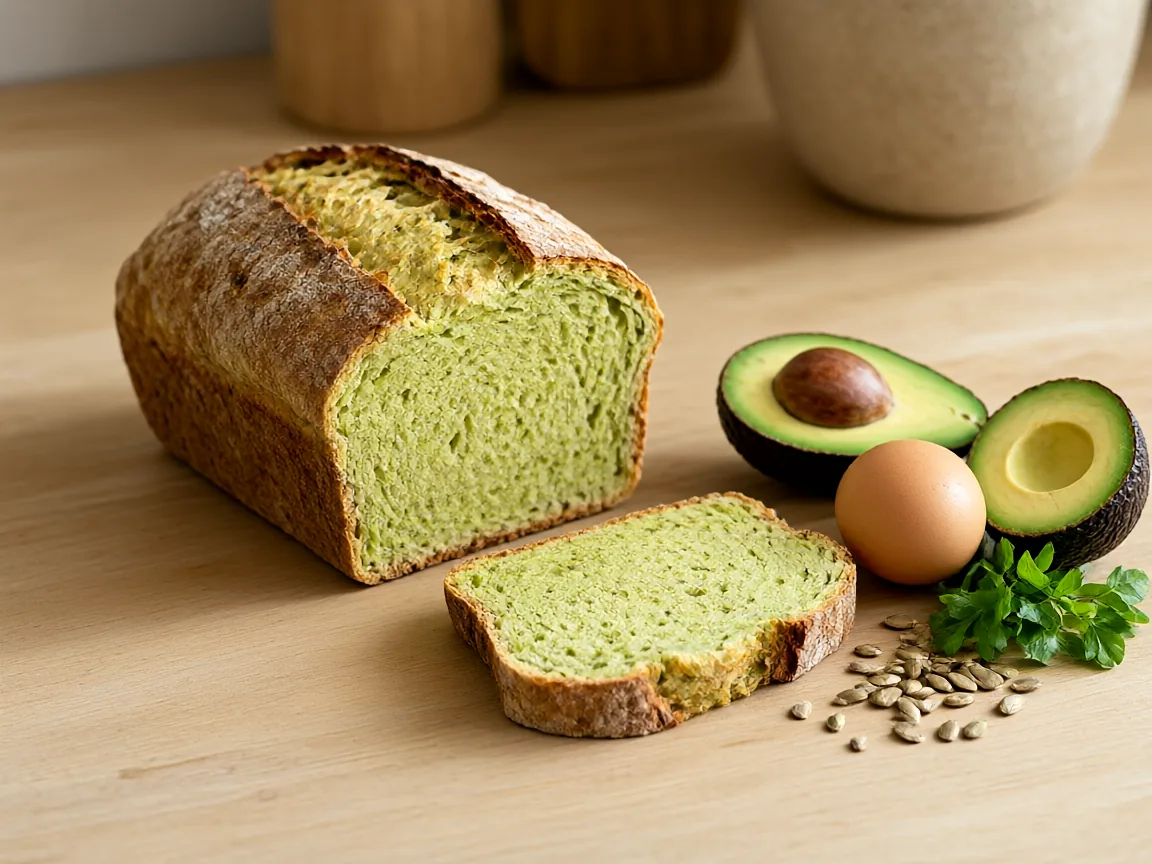
Ingredients and their roles
Avocado
Use a ripe avocado with no brown, watery patches. Mash it until mostly smooth. A few tiny pieces are fine, but large chunks can create wet pockets. The avocado should be measured after removing the skin and pit.
Eggs
Eggs bind the batter and help the loaf rise slightly. Use room-temperature eggs when possible. Cold eggs can make melted butter seize and create an uneven batter.
Low-carb flour
Fine almond flour creates a tender texture. If you need keto bread without almond flour, use a tested sunflower-seed or commercial low-carb blend that is designed for baking. Coconut flour is not a direct replacement because it absorbs much more liquid.
Leavening and acid
Baking powder provides lift. Lemon juice adds a small amount of acidity and keeps the avocado flavor bright. The loaf is not meant to rise like a yeast bread, so avoid judging it by height alone.
Keto avocado bread recipe
Yield and equipment
This recipe makes one small 8-by-4-inch loaf, or about 10 slices. You need a loaf pan, parchment, a mixing bowl, a fork or masher, a whisk, and a spatula.
Ingredients
- 1 medium ripe avocado, about 5 ounces flesh
- 3 large eggs, room temperature
- 2 tablespoons melted unsalted butter or olive oil
- 1 tablespoon lemon juice
- 1 1/2 cups fine almond flour
- 1 teaspoon baking powder
- 1/2 teaspoon fine salt
- 1/2 teaspoon garlic powder
- 1 tablespoon chopped parsley or chives
- 1 tablespoon pumpkin seeds, optional
Instructions
- Heat the oven to 325°F. Line an 8-by-4-inch loaf pan with parchment, leaving paper over the long sides.
- Mash the avocado until smooth. Stir in eggs, melted butter, lemon juice, salt, garlic powder, and herbs.
- In another bowl, whisk almond flour and baking powder.
- Fold the dry ingredients into the avocado mixture until no dry pockets remain. Do not overmix.
- Scrape the batter into the pan and smooth the top. Add pumpkin seeds if using.
- Bake for 38 to 48 minutes, until the center is set and a skewer comes out with a few moist crumbs.
- Cool in the pan for 20 minutes. Lift out and cool completely on a rack before slicing.
The loaf may look soft when it first comes out of the oven. Letting it cool is part of the cooking process because the eggs and flour continue to set. If the top browns quickly, cover it loosely with foil for the final 10 minutes.
How to avoid a wet or gummy crumb
The most common problem with avocado bread is excess moisture. Avocados vary in size, so “one avocado” is not a precise measurement. Use the amount listed and reserve extra avocado for serving. If your puree looks watery, place it in a fine strainer for a few minutes before mixing.
Do not replace the flour with extra avocado. More fruit will not make the loaf softer in a useful way; it will make the center harder to set. Do not add a second egg unless the recipe has been tested with that change. A higher egg-to-flour ratio can create a custardy middle.
Bake until the center is set, but do not rely on the edges alone. A toothpick inserted near the center should come out with crumbs rather than liquid batter. If the top is done and the middle is not, reduce the oven temperature slightly, cover the surface, and continue baking in five-minute intervals.
Flavor variations
Herb and seed bread
Add parsley, chives, dill, pumpkin seeds, and a pinch of black pepper. This version is useful with eggs, chicken salad, or soup. Keep wet herbs modest; pat them dry before chopping.
Jalapeño cheddar bread
Fold in 1/4 cup shredded cheddar and one tablespoon finely diced jalapeño. Drain the jalapeño well. Cheese adds salt and fat, so taste the batter before adding extra salt.
Lemon herb breakfast loaf
Use lemon zest, parsley, and a little extra black pepper. Serve toasted with scrambled eggs or smoked salmon. Avoid adding enough lemon juice to make the batter runny.
Seeded sandwich slices
Top the batter with sesame, sunflower, or pumpkin seeds. Toast the seeds lightly if you want more flavor, but let them cool before adding them. Check for allergies when serving guests.
Keto toast and sandwich ideas
The loaf is tender, so toast slices gently. Use a medium setting and watch the edges. A thin slice can become crisp outside while staying soft inside. If the bread is fresh and delicate, chill it for 30 minutes before toasting.
For avocado toast keto bread, top one toasted slice with a measured amount of avocado, lemon, chili flakes, and a poached or fried egg. The avocado topping is additional food, so count it separately. For a breakfast sandwich, add egg, turkey, tomato, and greens. For lunch, use chicken salad, tuna, cucumber, or leftover salmon.
A warm sandwich can be made in a skillet with a little butter. Cook over medium-low heat so the bread browns before the filling becomes hot. If the slice breaks, use it as a base for a bowl rather than trying to force it into a sandwich.
Storage and freezing
Cool the loaf completely before placing it in a container. Store slices in the refrigerator for up to four days with parchment between them. The avocado color may darken slightly over time, but a strong sour smell or visible mold means the bread should be discarded.
To freeze, wrap individual slices and place them in a freezer-safe bag or container for up to two months. Toast directly from frozen on a low setting, or thaw overnight in the refrigerator. Keep the slices flat until frozen so they do not stick together.
Do not leave egg-based bread at room temperature for a long period. Label the container with the baking date. If you add cheese, meat, or a dairy spread, follow the storage needs of the filling rather than the bread alone.
Substitutions
For dairy-free bread, use olive oil instead of butter. The loaf may taste more savory and have a slightly different crumb. For nut-free baking, use a tested sunflower-seed flour blend. Do not use coconut flour as an equal replacement.
For an egg-free experiment, a commercial egg replacer may work, but the loaf will be more fragile. Because eggs provide much of the structure, this is not the first substitution to make. If you need an egg-free loaf, use a recipe developed specifically for that purpose.
If you dislike garlic, use onion powder, dried herbs, or smoked paprika. If you want a neutral loaf, omit the garlic and herbs and add a little extra salt. The avocado flavor is subtle, especially after toasting.
Troubleshooting
The loaf collapses after cooling
It may have been underbaked or cut too soon. Return the uncut loaf to the oven in five-minute increments if you notice the issue immediately. Next time, use a skewer in the center and cool it fully before slicing.
The bread is too crumbly
The flour may have been overmeasured, or the loaf may have been sliced while warm. Spoon flour into a measuring cup and level it. Store the cooled loaf in a sealed container so it does not dry out.
The bread tastes too much like avocado
Add garlic, herbs, lemon zest, or a little cheese. Toasting also reduces the perception of raw avocado. Do not add a large amount of sweetener; the recipe is designed as a savory bread.
The top is dark before the center is ready
Cover the loaf loosely with foil and continue baking. An oven thermometer can help if your oven runs hot. Use a light-colored pan when possible.
The loaf sticks to the pan
Use parchment with overhanging sides and lightly grease the uncovered ends. Let the bread cool before lifting it. If it still sticks, run a thin knife along the short edges.
Nutrition and label checks
The nutrition of this bread depends on the exact avocado, flour, and number of slices. A medium avocado can vary in weight, so measuring the flesh gives a more useful estimate than counting the fruit by name. Almond flour and seeds add fat and energy even when the recipe is low in carbohydrate. If you are watching total calories, a smaller slice may be a more practical serving than a large café-style piece.
Check the flour label for added tapioca, rice flour, potato starch, or other ingredients that may change the carbohydrate content. Some “keto” blends use a mixture of fibers and starches, and their texture can vary. Follow the package conversion if you make a substitution. Do not assume that a product marked low-carb will behave like almond flour.
If you use olive oil instead of butter, the bread remains dairy-free but the flavor becomes more savory. If you add cheese, meat, or a spread, count that food separately. The bread can be part of a balanced meal, but it does not replace the need for protein, vegetables, fluids, and other foods that meet your individual needs.
People with diabetes, kidney disease, allergies, digestive sensitivity, or a history of disordered eating may need individualized guidance. A lower-carbohydrate recipe can be useful for one person and inappropriate for another. When health decisions are involved, use professional advice rather than a general internet recipe.
For the most reliable batch, keep the avocado, eggs, and flour at roughly the same temperature. Mix the batter only until it comes together, then move it to the pan promptly. Letting a wet batter stand can change how the flour absorbs liquid. These small details are not about perfection; they simply make the result easier to repeat from one week to the next.
Meal-prep uses
Bake the loaf on a weekend and slice it once cool. Keep two slices in the refrigerator and freeze the rest. This creates a simple breakfast option without requiring daily baking. Pair it with eggs, cottage cheese, chicken salad, or a vegetable soup to make a more complete meal.
Use the bread as a controlled side rather than building every meal around it. One slice with a protein and vegetables may be enough. If you are hungry soon after eating, look at the full meal and add a satisfying protein or vegetable portion instead of simply adding more bread.
The loaf also works as a planning tool. If you know you will be away from home, pack one frozen slice and a sealed topping such as egg salad or tuna. If you are serving soup, toast one slice just before eating rather than toasting the whole loaf. Small decisions like these keep texture better and reduce food waste.
For a family breakfast, put the bread, eggs, avocado, tomato, and herbs on the table separately. People can build their own plate, and anyone who wants a higher-carbohydrate side can add fruit or regular toast without changing the base recipe. This approach makes one loaf useful for more than one eating preference.
If you are preparing meals for work, choose fillings that are not too wet. Cucumber, greens, hard-boiled egg, and chicken salad work better than a loose sauce. Wrap the bread in parchment and keep it in a rigid container so the slices do not bend or crumble during transport.
For lunches, pack frozen slices with a separate filling. They can thaw in a lunch bag and be toasted or assembled later. Keep wet fillings separate until serving so the bread does not become soggy.
For a quick breakfast plate, toast one slice and add a soft-boiled egg, a spoonful of plain Greek yogurt, or leftover roasted vegetables. For a portable snack, use two thin slices with a firm filling and wrap the sandwich after it has cooled. If the loaf feels delicate, toast it lightly first; the gentle heat firms the surface without drying the center. These serving choices make the recipe practical for different schedules while keeping the bread as one component of the meal rather than the only source of nourishment.
FAQ
Is avocado bread keto-friendly?
It can fit a lower-carbohydrate plan, but avocado bread is not automatically carbohydrate-free. Flour, avocado size, and serving count determine the final amount. Check labels and divide the loaf consistently.
Can I make this keto bread without almond flour?
Yes, but use a tested nut-free low-carb flour blend or sunflower-seed flour formula. Coconut flour is not a one-to-one replacement because it absorbs much more liquid.
Does avocado make the bread sweet?
No. The loaf is lightly savory. Avocado adds moisture and richness rather than a strong sweet flavor. Garlic, herbs, lemon, or cheese can make the flavor more clearly savory.
Can I use frozen avocado?
Thaw it completely and drain excess water before measuring. Frozen avocado can work, but its texture may be wetter. Fresh ripe avocado usually gives a more predictable crumb.
How thin should I slice it?
Slices about 1/2 inch thick are a practical starting point. Thin slices toast more quickly, while thicker slices are softer for sandwiches. Let the loaf cool before cutting so the slices hold together.
Can I use this in keto diet bread recipes for meal prep?
Yes. Slice and freeze the loaf, then toast pieces as needed. Store toppings separately and label the date. This makes the bread more useful than leaving a whole loaf in the refrigerator until it becomes dry.
Does this recipe guarantee weight loss?
No. A single bread recipe cannot guarantee a health or weight outcome. Use it as one food in a pattern that includes protein, vegetables, hydration, activity, and a portion that fits your needs.
A simple baking routine
Keep the pan, parchment, and dry ingredients together. When an avocado becomes ripe, bake the loaf or mash the fruit into a measured container for later use. Preparing the wet and dry ingredients before mixing reduces the chance of forgotten baking powder or an uneven batter.
Make one loaf first and note the slice count, bake time, and flour brand. If you change the pan size, calculate that the batter depth will change. A shallow pan will bake faster, while a smaller deep pan may need more time and careful covering.
The most useful keto bread is not the one that imitates wheat perfectly. It is the one that gives you a reliable base for a satisfying meal. With measured avocado, careful cooling, and realistic storage, this loaf can become a flexible part of breakfast and lunch planning.
Nutrition information varies by brand, serving size, and substitutions. This article is general education, not individualized medical advice. It does not diagnose, treat, cure, or prevent disease. Consult a qualified healthcare professional for advice related to diabetes, kidney disease, allergies, pregnancy, medications, or other health needs.
Save the ideas that fit your routine and adapt the rest. Consistency is built through repeatable choices, not perfect days.