
This collection of keto beef and broccoli recipes is built around a quick skillet meal that tastes rich, savory, and fresh without relying on sugar-heavy stir-fry sauce. Thin slices of beef are seared in batches, broccoli is cooked until bright and tender-crisp, and a simple sauce brings everything together. The result is a practical low-carb dinner that works on a weeknight and can be packed for lunch the next day.
The recipe below is intentionally flexible. Use flank steak, sirloin, or another tender cut; choose fresh or frozen broccoli; and adjust the sauce to your preference. The main technique is more important than a single brand or ingredient: keep the pan hot, avoid crowding the beef, and add the sauce only after the meat and vegetables have been cooked.
Quick answer: what makes beef and broccoli keto?
Traditional takeout beef and broccoli can contain sugar, sweetened oyster sauce, cornstarch, and a large serving of white rice. A lower-carbohydrate version uses an unsweetened soy sauce or coconut aminos, beef broth, garlic, ginger, sesame oil, and a small amount of a baking sweetener if desired. Broccoli supplies texture and fiber while the beef provides protein.
The final nutrition depends on the cut of beef, sauce brands, sweetener, and serving size. If exact carbohydrate numbers matter for your plan, use the labels of the ingredients you actually buy and divide the finished recipe by the number of servings. Treat the recipe as a flexible cooking template rather than a medical prescription.
The best cut of beef for a quick skillet
Flank steak
Flank steak has a strong beef flavor and cooks quickly when sliced thinly. Cut across the grain into strips about one-quarter inch thick. If the steak is difficult to slice, place it in the freezer for 20 to 30 minutes first. It should be firm, not frozen solid.
Sirloin
Top sirloin is usually easy to find and works well for meal prep. It is leaner than some other cuts, so avoid overcooking it. A short sear over high heat followed by a quick toss with sauce keeps the strips more tender.
Thin-sliced beef
Some stores sell pre-sliced beef for stir-fry. This is convenient, but inspect the label for added sugar or a marinade. Pat the slices dry before cooking so they sear instead of steaming.
Ground beef variation
Ground beef is not the same texture as sliced beef, but it makes an easy weeknight version. Brown it fully, drain excess fat if needed, then add the broccoli and sauce. The cooking time is shorter, and the finished bowl is especially useful for meal prep.
Ingredients for four servings
- 1 1/4 pounds flank steak or sirloin, thinly sliced across the grain
- 5 cups broccoli florets, fresh or frozen
- 2 tablespoons avocado oil or another high-heat cooking oil
- 3 cloves garlic, finely minced
- 1 tablespoon grated fresh ginger
- 1/3 cup unsalted beef broth
- 1/4 cup reduced-sodium soy sauce, or coconut aminos for a soy-free option
- 1 tablespoon rice vinegar
- 1 teaspoon toasted sesame oil
- 1 to 2 teaspoons allulose or another sweetener you use successfully, optional
- 1/2 teaspoon red pepper flakes, optional
- 1 teaspoon xanthan gum, optional and used only if a thicker sauce is desired
- 2 scallions, thinly sliced
- 1 tablespoon toasted sesame seeds, optional
- Black pepper, to taste
For a less salty sauce, use half soy sauce and half beef broth. For a stronger savory flavor, add a small amount of mushroom powder or a splash of gluten-free tamari. Read labels carefully if you need to avoid gluten, soy, or added sugar.
How to prepare keto beef and broccoli
1. Slice and season the beef
Pat the beef dry with paper towels. Slice it across the grain into thin strips. Season lightly with black pepper. Hold back on salt until you taste the finished sauce because soy sauce and broth can vary in sodium.
If the beef is wet, it will release liquid as it cooks. That liquid lowers the pan temperature and makes the meat gray rather than browned. Drying the slices is a small step with a large effect on flavor.
2. Mix the sauce
Whisk beef broth, soy sauce or coconut aminos, rice vinegar, sesame oil, optional sweetener, garlic, ginger, and red pepper flakes in a bowl. If using xanthan gum, do not add it directly to the dry powder in one lump. Sprinkle it slowly while whisking, or reserve it for the pan later.
Taste a tiny amount of the uncooked mixture. It should be savory, tangy, and slightly sweet if you use sweetener. It may taste stronger than you want because it will be distributed over the beef and broccoli.
3. Cook the broccoli
Heat a large skillet or wok over medium-high heat. Add one tablespoon of oil. Add fresh broccoli and cook for 3 to 5 minutes, stirring often, until it is bright green with some bite. If using frozen broccoli, cook until the extra water evaporates and the florets are hot.
For softer broccoli, add two tablespoons of water and cover the pan for one minute. Remove the lid and let the steam escape. Transfer the broccoli to a plate before cooking the beef.
4. Sear the beef in batches
Add the remaining oil to the hot pan. Arrange the beef in a single layer. Cook for about 60 to 90 seconds per side, depending on thickness. Transfer the browned strips to the plate with the broccoli and repeat with the remaining beef.
Crowding is the most common reason a stir-fry fails. If the meat touches in a thick pile, it steams. Two quick batches are usually better than one crowded batch.
5. Finish the sauce
Lower the heat to medium. Pour the sauce into the empty pan and scrape up browned bits with a wooden spoon. Simmer for 1 to 2 minutes. If you want a thicker sauce, sprinkle in the xanthan gum a tiny amount at a time while whisking. Stop when the sauce lightly coats a spoon; it will thicken further as it cools.
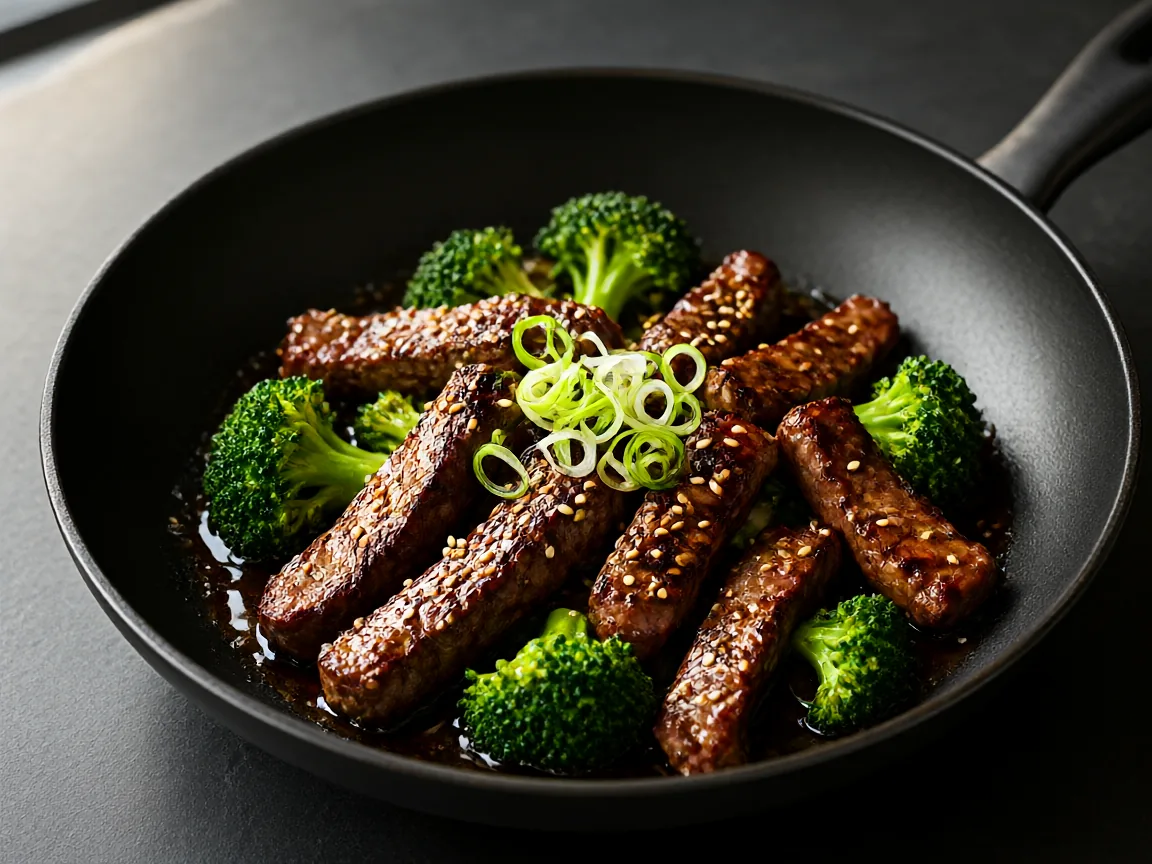
Return the beef and broccoli to the pan. Toss for 30 to 60 seconds, just long enough to coat everything. Turn off the heat. Finish with scallions, sesame seeds, and extra red pepper flakes if desired.
Sauce options for different preferences
Classic savory sauce
Use soy sauce, beef broth, garlic, ginger, sesame oil, and a small amount of sweetener. This is the closest option to a familiar takeout-style flavor while keeping the ingredients simple.
Soy-free sauce
Use coconut aminos in place of soy sauce. Coconut aminos are often sweeter and less salty, so taste the mixture before adding sweetener. If the sauce tastes too mild, add more ginger, rice vinegar, or a pinch of salt.
Creamy sesame sauce
After the pan is off the heat, whisk in one tablespoon of unsweetened tahini. Add a splash of broth if the sauce becomes too thick. The result is nutty and rich, but tahini can make the dish feel heavier, so start with a small amount.
Spicy chili sauce
Add chili flakes, a small amount of sambal without added sugar, or a few drops of hot sauce. Check the label of prepared sauces because many contain sugar or starch. Serve the spicy sauce on the side if you are feeding a mixed household.
Ginger-lime sauce
Replace half of the rice vinegar with fresh lime juice and add extra grated ginger. Add the lime at the end rather than simmering it for a long time. This keeps the flavor bright.
Vegetable swaps and add-ins
Broccoli is the classic vegetable, but you can add other low-carb vegetables without changing the method. Try sliced mushrooms, shredded cabbage, snap peas in a measured portion, zucchini half-moons, or thin strips of bell pepper. Cook watery vegetables separately so they do not dilute the sauce.
Cauliflower florets can replace some of the broccoli, especially when you want a more substantial bowl. Green beans are another option, but they may need a few extra minutes in the pan. Avoid adding a large amount of vegetables at once because the pan temperature can drop and create a watery stir-fry.
For extra texture, finish with chopped peanuts, cashews, or toasted sunflower seeds. Nuts add calories and carbohydrate in different amounts, so measure them if you are tracking nutrition. Fresh cilantro, scallions, or thinly sliced radish can add contrast without changing the cooking process.
Serving ideas without rice
Serve the beef and broccoli over cauliflower rice, shirataki rice, or sauteed cabbage. If you use packaged cauliflower rice, cook it separately and season it lightly. A wet base can make the finished bowl seem bland because it thins the sauce.
Zucchini noodles are another option. Quickly saute them in a clean pan and keep them slightly firm. Spoon the beef and broccoli over the noodles at the table rather than simmering everything together.
For a very simple plate, serve the skillet meal with cucumber slices, leafy greens, or a small side salad. If you include a regular rice or noodle side for other diners, keep it in a separate serving bowl so each person can build a plate that fits their preferences.
Meal-prep instructions
Let the cooked meal cool for a short time before packing. Divide it into four containers and add the scallions or sesame seeds after reheating if you want a fresher finish. Keep cauliflower rice in a separate container when possible so it does not absorb all of the sauce.
Refrigerate leftovers promptly and use them within three to four days. Reheat in a skillet over medium heat or in the microwave in short intervals. Add a teaspoon of broth or water if the sauce has tightened in the refrigerator. Heat until the center is steaming hot, then let the container stand briefly before eating.
Freezing is possible, but broccoli may become softer and release water when thawed. For the best texture, freeze the cooked beef and sauce separately from freshly cooked broccoli. Thaw overnight in the refrigerator and reheat gently. Discard leftovers that smell sour, show mold, or have been held at room temperature for an unsafe length of time.
How to keep the beef tender
Slice across the grain. This shortens the muscle fibers and makes the bite easier to chew. Slice the meat thinly and keep the knife angle consistent so the strips cook at the same speed.
Use a hot pan and short cooking times. Beef continues to cook from residual heat, especially when it is returned to a hot sauce. It is better to pull the first batch a little early than to let it cook through while you wait for the broccoli.
Avoid adding salt too early if the sauce is salty. Salt can draw moisture to the surface, making it harder to brown the meat. Black pepper and aromatics provide flavor while the beef sears.
Finally, do not simmer the finished beef for several minutes. The final toss should be quick. If you are using a tougher cut, choose a thin cut or use a different recipe method designed for slow cooking.
Common mistakes and fixes
The sauce is too salty
Add more unsalted broth and a little rice vinegar. If the dish is already combined, add extra plain broccoli or cauliflower rice to distribute the sauce. Next time, use reduced-sodium soy sauce and season at the end.
The broccoli is mushy
Cook it in a single layer and remove it from the pan before the sauce is added. Frozen broccoli may need less water than fresh broccoli. Leave the lid off after steaming so excess moisture can escape.
The beef is tough
Check the direction of the grain and slice more thinly. Cook in smaller batches and reduce the final simmer. Sirloin and flank steak are both best when cooked quickly rather than held in a hot sauce.
The sauce is watery
The broccoli or beef may have released water. Remove the solid ingredients and simmer the sauce alone for a few minutes. If you use xanthan gum, sprinkle it slowly while whisking instead of adding a full teaspoon at once.
The sauce tastes flat
Add acid first: rice vinegar or lime juice. Then adjust ginger, garlic, chili, and sesame oil. A small amount of salt may help, but taste before adding more soy sauce.
The dish tastes too sweet
Skip the added sweetener next time and use coconut aminos carefully because they are naturally sweeter than soy sauce. Add more vinegar and a little chili to restore balance.
Food and nutrition notes
The recipe is designed as a lower-carbohydrate dinner, but the exact nutrition depends on the ingredients and portions. Broccoli, sauces, nuts, and sweeteners all contribute different amounts of carbohydrate. Products marketed as sugar-free or keto can still contain ingredients that affect some people differently.
If you manage diabetes, kidney disease, food allergies, pregnancy nutrition, or medication-related food restrictions, ask a qualified healthcare professional how this recipe fits your personal plan. Check soy, sesame, and gluten labels if those ingredients are concerns. Use a food thermometer and ordinary food-safety practices for handling raw beef.
No single recipe guarantees weight loss or a specific health outcome. A satisfying meal can fit into many eating patterns when the portion, ingredients, and overall day match your needs.
FAQ
Can I use frozen broccoli?
Yes. Cook it until the extra water has evaporated, then transfer it out of the pan before searing the beef. Frozen florets may be softer, so avoid overcooking them.
Is this the same as a keto broccoli beef recipe?
Yes. Beef and broccoli and broccoli beef describe the same general combination. The sauce and cooking technique matter more than the order of the words. This version keeps the sauce unsweetened or lightly sweetened and avoids conventional starch.
Can I make keto beef and broccoli recipes with ground beef?
Yes. Brown one pound of ground beef, drain if needed, then cook the broccoli and add the sauce. The texture is different from sliced steak, but the flavor works well and the meal is easy to portion.
Can I use cauliflower instead of broccoli?
Yes. Use cauliflower florets or a mixture of cauliflower and broccoli. Cook cauliflower until tender-crisp and let excess water evaporate before adding sauce.
How can I make this dairy-free?
The base recipe is dairy-free. Check packaged broth, sauces, and prepared chili products for any added dairy or allergen statement. Use oil rather than butter for the pan.
What can I use instead of xanthan gum?
You can simply reduce the sauce by simmering it longer. If you use another thickener, choose one that fits your dietary needs and remember that starch-based thickeners add carbohydrate. Do not add a large amount without testing the texture.
Can I make it ahead?
Yes. Cook the beef and broccoli, cool them promptly, and refrigerate in sealed containers. Reheat gently and add fresh scallions after warming. For the best broccoli texture, prepare the vegetables the same day you plan to eat them.
How many servings should I eat?
Use the portion that fits your hunger, eating pattern, and nutrition needs. If you are tracking macros, calculate the complete batch with your ingredient labels and divide by the actual number of servings.
Can I add eggs or another protein?
You can turn the skillet into a larger meal by serving it with a fried egg, a small portion of tofu if soy fits your plan, or extra cooked beef. Add any additional protein separately rather than overcrowding the pan. That keeps the beef from steaming and makes it easier to calculate the serving size.
What should I do with leftover sauce?
If you have extra sauce, refrigerate it in a small covered container and use it within a few days. Warm it in a skillet with a splash of broth before serving. Do not taste or store a sauce that has been in contact with raw beef unless it has been thoroughly cooked first.
Can I change the sauce after cooking?
Yes. Taste one serving before adjusting the full skillet. Add vinegar for brightness, broth to soften a salty flavor, sesame oil for nuttiness, or chili for heat. Make small changes and stir thoroughly between each one. This is especially useful when ingredient brands differ in saltiness. Keeping the base sauce fairly simple also lets you use the leftovers in lettuce cups, over cauliflower rice, or with a fresh vegetable side without making every meal taste exactly the same.
Final takeaways
These keto beef and broccoli recipes are easiest when you treat the skillet as three short stages: cook the broccoli, sear the beef, and finish with sauce. Thin slices, a hot pan, and a quick final toss create better texture than simmering every ingredient together.
Start with the classic savory sauce, then try the soy-free, spicy, creamy sesame, or ginger-lime variations. Pack leftovers with cauliflower rice or cabbage, refrigerate them promptly, and refresh the finished bowl with scallions or lime. The recipe is general education and practical cooking guidance, not individualized medical advice, and it does not diagnose, treat, cure, or prevent disease.
Save the ideas that fit your routine and adapt the rest. Consistency is built through repeatable choices, not perfect days.