
If dinner is the meal where your low-carb routine usually falls apart, a short list of dependable, protein-centered recipes can make the evening easier. These keto high protein dinner recipes use recognizable ingredients, plenty of non-starchy vegetables, and a measured amount of fat for flavor. They are designed as flexible meal ideas rather than a medical diet or a promise of a particular weight-loss result.
The seven dinners below include chicken, salmon, turkey, beef, shrimp, eggs, and tofu. Most can be cooked in one pan or prepared in batches. Portion examples are starting points for generally healthy adults; your needs vary with body size, activity, appetite, preferences, and health conditions.
Quick answer: what makes a keto dinner high in protein?
A high-protein keto dinner usually begins with a clear serving of protein, such as 4 to 6 ounces of cooked chicken, fish, lean beef, turkey, shrimp, tofu, or a combination of eggs and Greek yogurt. Add one or two cups of non-starchy vegetables, then use a small amount of olive oil, avocado, cheese, pesto, or another flavorful fat. The meal remains low in carbohydrate by limiting large portions of bread, pasta, rice, potatoes, sugary sauces, and flour-based coatings.
Low carb does not mean zero carb. Vegetables, dairy, nuts, seeds, and sauces can contribute carbohydrates and fiber. If you have kidney disease, are pregnant or breastfeeding, use glucose-lowering medication, or have a history of an eating disorder, ask a clinician or registered dietitian before making a major change to protein or carbohydrate intake.
A simple formula for high-protein keto dinner recipes
Use this four-part formula when you want to improvise:
- Protein: choose poultry, seafood, lean meat, eggs, tofu, tempeh, or a dairy-based option.
- Vegetables: fill at least half the plate with broccoli, cauliflower, zucchini, cabbage, mushrooms, leafy greens, green beans, or peppers.
- Flavor: use garlic, lemon, herbs, salsa without added sugar, mustard, spices, or a modest amount of cheese.
- Measured fat: add olive oil, avocado, nuts, seeds, or cream in a portion that fits your overall energy needs.
This approach keeps dinner satisfying without forcing every meal to use the same ingredients. For more meal-prep ideas, see our high-protein low-carb meal prep recipes and high-protein low-carb meal prep for weight loss.
1. Lemon garlic chicken with broccoli
This is a weeknight-friendly option when you want a high-protein keto dinner with a bright flavor. Pat two boneless, skinless chicken breasts dry and season with salt, pepper, paprika, and dried oregano. Sear them in a skillet with a teaspoon of olive oil until browned, then lower the heat and cook until the thickest part reaches 165°F. Remove the chicken and add broccoli florets with a splash of water. Cover for three to five minutes, then uncover and add minced garlic, lemon zest, lemon juice, and another small drizzle of oil.
Slice the chicken and return it to the pan. If you want a creamy finish, stir in a tablespoon of plain Greek yogurt after the pan has cooled slightly. Serve with the broccoli and pan juices. A typical portion provides roughly 35 to 45 grams of protein depending on the chicken size. Use boneless turkey cutlets as a swap, but check them with a thermometer because thickness changes cooking time.
2. Sheet-pan salmon with cauliflower and green beans
Arrange salmon fillets, cauliflower florets, and trimmed green beans on a lined baking sheet. Brush the vegetables with olive oil, garlic, and smoked paprika. Season the salmon with lemon pepper and dill. Roast at 425°F until the fish flakes easily and the center reaches 145°F, usually 10 to 15 minutes depending on thickness. Finish with lemon juice and chopped parsley.
Salmon brings protein and a source of omega-3 fats, while the vegetables add volume and fiber without relying on a starch-heavy side. If salmon is outside your budget, use canned salmon cakes made with egg and crushed pork rinds, or substitute trout. Keep any sauce separate if you are meal prepping so the vegetables do not become soggy.
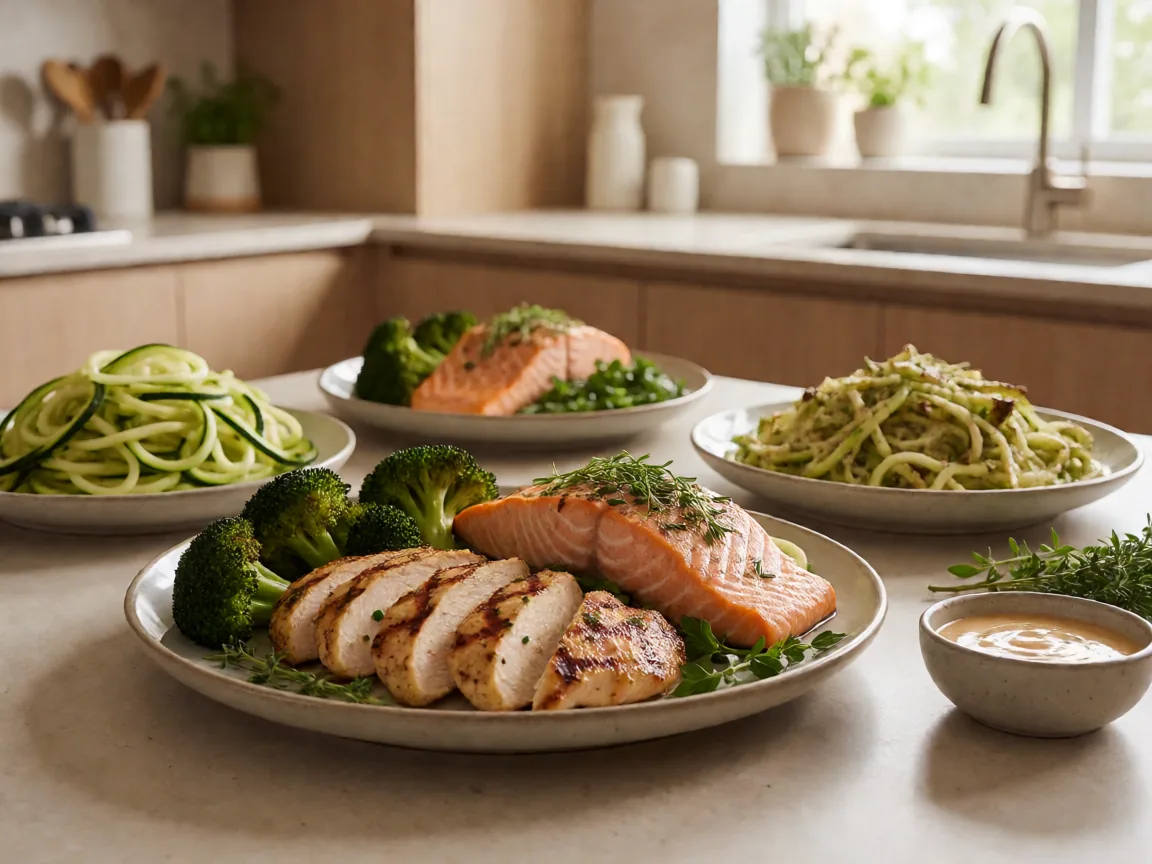
3. Turkey taco cauliflower bowls
Brown 93% lean ground turkey in a skillet with onion powder, cumin, chili powder, smoked paprika, and a pinch of salt. Stir in chopped zucchini or riced cauliflower and cook until tender. Use a no-sugar-added salsa for moisture. Build bowls with the turkey mixture, shredded lettuce, avocado, cilantro, and a spoonful of plain Greek yogurt. A little shredded cheddar is optional.
For a higher-protein bowl, add extra turkey rather than piling on cheese. For a vegetarian version, replace half or all of the turkey with crumbled extra-firm tofu, but press the tofu first and cook it until the edges are golden. Check the salsa label because some bottled varieties contain added sugar. Leftovers reheat well in a microwave-safe bowl; add fresh lettuce and avocado after heating.
4. Shrimp and zucchini noodle skillet
Use a spiralizer or buy refrigerated zucchini noodles. Pat peeled shrimp dry, then season with garlic powder, pepper, and red pepper flakes. Cook the shrimp in a hot skillet with a teaspoon of olive oil for about two minutes per side, until pink and opaque. Transfer them to a plate. Add the zucchini noodles to the same skillet for one to two minutes, just until softened. Toss with lemon, parsley, and a tablespoon of grated parmesan.
The key is to avoid overcooking the zucchini, which can release too much water. If you need more energy or flavor, add a measured spoonful of pesto. If shrimp is not available, use cooked chicken or canned tuna, adding it at the end so it does not dry out. This dinner is quick but is best eaten fresh rather than stored for several days.
5. Beef and mushroom skillet with cabbage
Cook lean ground beef with sliced mushrooms, garlic, and black pepper. Add thinly sliced green cabbage and a splash of low-sodium broth. Cover until the cabbage is tender-crisp, then season with mustard, paprika, and a small amount of tamari or soy sauce. Use coconut aminos if you prefer, but still check the label because sodium and carbohydrate levels vary.
Lean beef supplies protein and iron, while mushrooms and cabbage make the dish bulky and economical. Drain excess fat if the beef is not lean. Serve in a bowl with chopped scallions and sesame seeds. For a different profile, replace the mustard with tomato paste, oregano, and chili flakes. Cooked leftovers keep in a sealed container in the refrigerator for three to four days when cooled promptly.
6. Chicken, spinach, and cottage cheese bake
Combine cooked shredded chicken, chopped spinach, cottage cheese, one egg, garlic, Italian seasoning, and a small amount of mozzarella. Spoon into a greased baking dish and bake at 375°F until hot and set in the center. Let it rest for five minutes before serving. The cottage cheese adds moisture and protein without requiring a heavy cream sauce.
Use plain Greek yogurt in place of part of the cottage cheese if you prefer a tangier texture. Frozen spinach works well; squeeze out excess water first. Add mushrooms or chopped broccoli for more vegetables. Because this is a baked dish, it is useful for meal prep. Divide it into portions after cooling and reheat until steaming hot.
7. Tofu and egg stir-fry with sesame greens
Press extra-firm tofu, cube it, and sear in a nonstick skillet until golden. Add two beaten eggs and scramble gently around the tofu. Stir in chopped bok choy, spinach, or cabbage. Finish with grated ginger, garlic, sesame oil, and a small amount of reduced-sodium soy sauce. The egg-and-tofu combination can provide a satisfying protein base without meat.
For strict vegan eating, omit the eggs and use additional tofu or tempeh, but the protein and calorie totals will change. Use cauliflower rice as an optional base, or eat the stir-fry directly from the bowl. Keep the sauce measured: oils and nut-based sauces are flavorful but energy dense. Add chili crisp only after checking its ingredient and sugar label.
How to make portions work for your goals
The same recipe can serve different needs by changing the plate rather than rewriting the recipe. Start with a palm-sized protein portion and adjust it if you need more or less food. Add extra non-starchy vegetables when you want more volume. Measure cheese, oil, nuts, avocado, and creamy sauces because small amounts can contribute significant calories. If you are very active, a larger serving or an additional carbohydrate source may be appropriate; if you are following a prescribed plan, follow that plan.
Protein targets are individual. A general recipe should not be treated as a personalized prescription. A registered dietitian can help you account for kidney function, medications, training, age, and dietary preferences. NIDDK emphasizes choosing an eating pattern that can be maintained over time rather than relying on an extreme short-term promise.
Low-carb side ideas that do not feel repetitive
Rotate the vegetable method to keep dinner interesting. Roast cauliflower with curry powder, sauté cabbage with vinegar, steam broccoli and finish with lemon, or turn cucumber and herbs into a quick salad. Frozen vegetables are a practical option when fresh produce is expensive or unavailable. A small portion of berries with unsweetened Greek yogurt can work as a dessert-style finish if it fits your carbohydrate target.
Avoid assuming that a food is low carb because it is labeled keto. Read the Nutrition Facts panel for serving size, total carbohydrate, fiber, and added sugars. Bottled sauces, marinades, breaded proteins, and restaurant dressings are common sources of unexpected carbohydrate and sodium.
Meal-prep and storage guide
Cook two proteins and two vegetables at the beginning of the week, then combine them in different ways. For example, pair roasted chicken with broccoli one night, turn it into a taco bowl the next, and serve it over greens later. Store proteins and sauces separately when possible. Refrigerate cooked food in shallow containers within two hours, and reheat leftovers until hot throughout. Seafood is often best within one to two days, while cooked poultry and beef are commonly used within three to four days when stored safely.
Freeze portions that you will not eat in that window. Label the date and keep fresh toppings such as lettuce, avocado, herbs, and cucumber separate. If food smells off, has changed texture unexpectedly, or has been left at room temperature too long, discard it rather than trying to rescue it.
FAQ
Can a keto dinner also be high in fiber?
Yes. Non-starchy vegetables, avocado, chia, flax, nuts, seeds, and some berries can contribute fiber while keeping carbohydrate moderate. Increase fiber gradually and drink enough fluid for your needs.
Do I need to eat meat to make a high-protein keto dinner?
No. Eggs, tofu, tempeh, cottage cheese, Greek yogurt, seafood, and combinations of plant foods can work. Plant-based options may contain more carbohydrate, so portions and labels matter.
Are these recipes suitable for weight loss?
They can fit a weight-management pattern, but no recipe guarantees weight loss. Total intake, hunger, activity, sleep, medications, and health conditions all matter. Portion the energy-dense ingredients and choose an amount that is appropriate for you.
What if I am still hungry after dinner?
Check whether the meal included enough protein and vegetables, then consider sleep, stress, hydration, and the timing of earlier meals. Persistent or intense hunger deserves individualized support from a clinician or dietitian.
Can I use an air fryer?
Yes. Chicken, salmon, tofu, and vegetables can be air-fried, but time varies by appliance and food thickness. Use a food thermometer for poultry and follow safe cooking temperatures.
How many grams of protein should dinner contain?
There is no single dinner number for everyone. Use your overall daily plan and distribute protein across meals. A dietitian can help set a target if you are managing a medical condition or training heavily.
What should I do if low-carb eating makes me feel unwell?
Stop and seek advice, especially if you have diabetes or take glucose-lowering medication. Dizziness, fainting, severe weakness, or persistent symptoms warrant prompt medical attention.
Where can I find more low-carb dinner ideas?
Start with our quick and easy low-carb dinner recipes, then use the Keto Recipes hub to mix soups, baked meals, vegetables, and breakfast options.
A practical flavor map for the same ingredients
One reason dinner plans fail is that the ingredients are technically convenient but the meals taste too similar. You can keep the protein and vegetables constant while changing the seasoning family. For a Mediterranean profile, use lemon, oregano, parsley, garlic, and a small amount of feta. For a taco bowl, use cumin, chili powder, smoked paprika, lime, salsa, and cilantro. For an Asian-inspired skillet, use ginger, garlic, scallions, sesame seeds, and a measured amount of reduced-sodium soy sauce. For a simple comfort-food plate, use mushrooms, thyme, Dijon mustard, and a spoonful of plain yogurt.
Keep a small “finishing shelf” rather than buying a new sauce for every recipe. Lemon juice, vinegar, mustard, hot sauce, dried herbs, garlic powder, and a no-sugar-added salsa can change a meal quickly. When using bottled sauces, look at the serving size and added sugar. A sauce that seems small can become several servings when poured freely over a bowl.
Making these dinners work for families
You do not need to make a separate dinner for every person. Cook the protein and vegetables with mild seasoning, then let each person add a sauce or topping. Family members who want more carbohydrate can add beans, a small serving of rice, a corn tortilla, or fruit. Someone following a lower-carb pattern can use extra vegetables or salad. This approach reduces the pressure to label a food as “good” or “bad” and makes shared meals easier.
For children, older adults, or anyone with a different energy need, do not shrink portions automatically. Offer a balanced plate and let appetite guide the amount when appropriate. If a family member has a medical diet, allergy, or swallowing concern, follow their care team’s advice rather than adapting a general recipe casually.
A five-minute dinner decision tree
When you arrive home tired, ask three questions. First, do you already have cooked protein? If yes, reheat it with frozen vegetables or put it over greens. Second, do you have a raw protein that can cook quickly? Shrimp, thin chicken cutlets, eggs, tofu, and canned fish can become dinner in minutes. Third, do you have no protein ready? Use a backup meal such as eggs with spinach, tuna with cucumber, or cottage cheese with chopped vegetables while you plan a larger grocery trip.
This decision tree is more useful than trying to remember seven recipes perfectly. The plan succeeds when it lowers friction at the moment you are hungry. Keep a thermometer, a nonstick skillet, microwave-safe containers, and a few shelf-stable seasonings available so the mechanics do not become a barrier.
On especially busy nights, simplify the recipe instead of skipping the meal. A bag of steamed broccoli, a can of tuna, and a yogurt-mustard dressing can be a complete plate. Pre-cooked chicken can be warmed with frozen cauliflower and salsa. Eggs can be scrambled with leftover vegetables in one pan. These choices may look basic, but a dependable basic dinner is often more useful than an ambitious recipe that never gets started.
Keep seasoning and texture in mind when reheating. Add herbs, lemon, crunchy cucumber, or fresh greens after warming instead of cooking everything together. A small finishing ingredient can make yesterday’s chicken feel like a new meal and can reduce the temptation to order a high-cost dinner simply because leftovers look dull.
That small adjustment also helps with appetite: meals that look and taste fresh are easier to enjoy slowly and notice.
Bottom line
The most useful keto high protein dinner recipes are the ones you can repeat without excessive effort. Choose a clear protein source, build volume with vegetables, measure concentrated fats and sauces, and keep a few cooked components ready. Use the seven ideas above as a starting point, then adjust ingredients and portions to your preferences and professional guidance.
Nutrition note: This article is general educational information, not medical advice. Nutrition values vary with brands, preparation, and portion size. Ask a qualified health professional for personalized guidance, particularly if you are pregnant, breastfeeding, managing kidney or metabolic disease, taking medication, or changing your diet substantially.
Sources
Save the ideas that fit your routine and adapt the rest. Consistency is built through repeatable choices, not perfect days.