
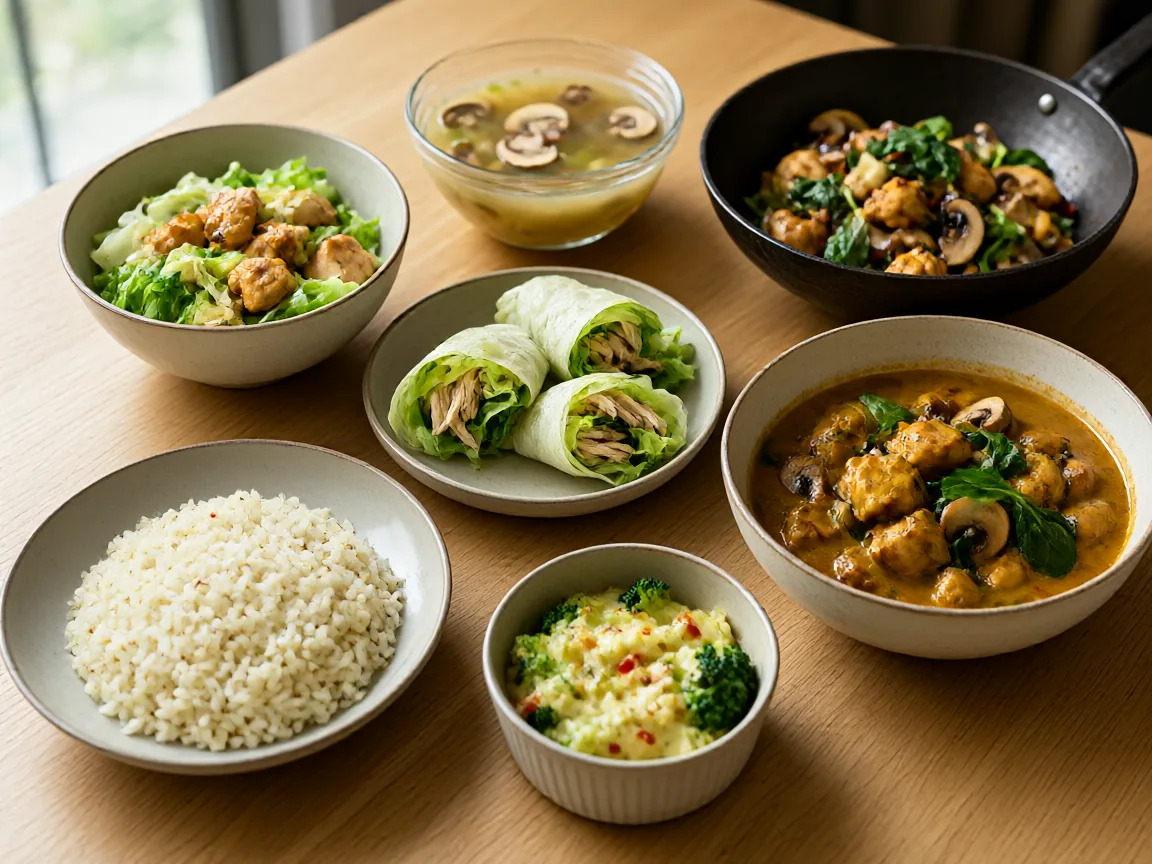
These keto Asian chicken recipes are built for busy weeknights when you want bold flavor without a sugary sauce or a complicated shopping list. The seven ideas use chicken thighs, breasts, or leftover cooked chicken with ingredients such as ginger, garlic, sesame, mushrooms, cabbage, curry spices, and crunchy lettuce. Each recipe is written as a flexible template, so you can adjust the vegetables and heat level to suit your household.
Asian-inspired cooking covers many different cuisines, so these recipes do not claim to reproduce one traditional dish exactly. They use familiar flavor combinations in a lower-carbohydrate format. The biggest practical lesson is to measure sauces. Soy sauce, coconut aminos, curry paste, and prepared marinades vary in sugar and sodium, even when the front label sounds low-carb.
Quick answer: what makes Asian chicken keto-friendly?
A lower-carb Asian-style chicken dinner usually starts with plain chicken, non-starchy vegetables, aromatics, and a measured sauce. Garlic, ginger, scallions, chili, lime, rice vinegar, sesame oil, and herbs add flavor without requiring much sugar. Use cauliflower rice, shredded cabbage, mushrooms, zucchini, or lettuce instead of a large portion of noodles or white rice.
The chicken itself is not the difficult part. Hidden carbohydrates usually come from bottled teriyaki sauce, sweet chili sauce, hoisin sauce, breading, or a large serving of rice. Read the ingredient list and choose an unsweetened or reduced-sugar alternative when it fits your plan. If you are managing diabetes or another condition affected by carbohydrate intake, calculate the recipe with your exact products.
The recipes also work well for different schedules. A skillet is best when dinner needs to be on the table quickly. Soup and casserole are useful when you want leftovers. Lettuce wraps and lemon chicken give a lighter texture, while curry and sesame dishes provide a richer meal. Keeping the flavor profile varied makes it easier to repeat a lower-carbohydrate routine without relying on the same plain chicken every night.
The low-carb Asian flavor pantry
Keep a small set of ingredients instead of buying a different sauce for every recipe. Fresh garlic and ginger can be grated into almost any skillet. Rice vinegar adds brightness. Toasted sesame oil provides a strong finishing aroma, so a teaspoon often goes further than a large pour. Soy sauce or coconut aminos can supply salt and umami, but compare labels for sodium and added sugar.
If you do not use an ingredient often, buy the smallest practical container and write the opening date on it. Fresh ginger keeps well when wrapped and refrigerated, while minced garlic is best used promptly. You can freeze peeled ginger in a small bag and grate it while frozen. This is a simple way to keep the main flavor ingredients available without letting them become forgotten items at the back of the refrigerator.
For heat, use chili flakes, sambal without added sugar, fresh jalapeño, or a small amount of chili oil. Lime juice, cilantro, scallions, and Thai basil make a finished plate taste fresh. If you use curry paste, check the label because some brands contain sugar. A little allulose or another preferred sweetener can balance a sauce, but it should not be used to hide a large amount of added sugar.
Recipe 1: ginger-garlic chicken and cabbage skillet
This is one of the easiest keto chicken recipes for dinner. Cabbage cooks quickly, provides volume, and holds up well as leftovers.
Ingredients
- 1 pound boneless, skinless chicken thighs, thinly sliced
- 1 tablespoon avocado oil
- 2 cups finely sliced green cabbage
- 2 garlic cloves, minced
- 1 tablespoon grated fresh ginger
- 1 tablespoon low-sodium soy sauce or coconut aminos
- 1 tablespoon rice vinegar
- 1 teaspoon toasted sesame oil
- 2 sliced scallions
- Chili flakes and black pepper, to taste
Method
- Pat the chicken dry and season lightly with pepper.
- Heat avocado oil in a wide skillet over medium-high heat. Cook chicken in a single layer until browned and cooked through.
- Add garlic and ginger for 30 seconds. Stir in cabbage and cook until slightly tender but not soft.
- Add soy sauce and vinegar. Turn off the heat, add sesame oil, and finish with scallions and chili.
If the pan is crowded, cook the chicken in two batches. Overcrowding releases water and prevents browning. For meal prep, keep the scallions and sesame oil separate until reheating.
Recipe 2: keto chicken garlic soup
This keto chicken garlic soup recipe is warming and simple. It uses broth, shredded chicken, greens, and mushrooms instead of noodles.
Ingredients
- 1 tablespoon olive oil
- 8 ounces sliced mushrooms
- 4 garlic cloves, thinly sliced
- 4 cups low-sodium chicken broth
- 2 cups cooked shredded chicken
- 2 cups chopped bok choy or spinach
- 1 teaspoon grated ginger
- 1 tablespoon soy sauce or coconut aminos
- 1 teaspoon rice vinegar
- Scallions and cilantro, for serving
Method
- Warm oil in a pot and sauté mushrooms until their moisture evaporates.
- Add garlic and ginger for 30 seconds, then pour in the broth.
- Simmer for 10 minutes. Add chicken and greens and cook until hot and wilted.
- Stir in soy sauce and vinegar. Taste before adding salt.
Use homemade or store-bought broth, but compare sodium. If you are sensitive to garlic, reduce it and add extra ginger or scallions. Store the greens separately if you want them to remain bright when reheated.
Recipe 3: sesame chicken lettuce wraps
Lettuce wraps provide crunch without a flour tortilla. Use ground chicken or finely chopped chicken for a fast filling.
Ingredients
- 1 pound ground chicken
- 1 teaspoon avocado oil
- 1 cup finely diced mushrooms
- 1/2 cup shredded cabbage
- 2 garlic cloves, minced
- 1 teaspoon grated ginger
- 1 tablespoon soy sauce
- 1 tablespoon rice vinegar
- 1 teaspoon sesame oil
- Butter lettuce leaves
- Chopped peanuts or sesame seeds, optional
Method
- Cook chicken in oil until no longer pink. Break it into small pieces.
- Add mushrooms, cabbage, garlic, and ginger. Cook until vegetables soften.
- Stir in soy sauce and vinegar. Remove from heat and add sesame oil.
- Spoon into lettuce leaves and top with seeds or peanuts.
For a nut-free version, use sunflower seeds. Keep the filling warm but not steaming hot when assembling so the lettuce stays crisp.
Recipe 4: coconut curry chicken with spinach
This keto chicken curry recipe uses coconut milk, curry powder, and spinach. Choose full-fat unsweetened coconut milk and check the can for added sugar.
Ingredients
- 1 pound chicken breast or thighs, cubed
- 1 tablespoon coconut oil
- 1/2 small onion, thinly sliced, optional
- 2 teaspoons curry powder
- 1/2 teaspoon turmeric
- 1 teaspoon grated ginger
- 1 cup unsweetened full-fat coconut milk
- 2 cups baby spinach
- 1 tablespoon lime juice
- Cilantro and chili, for serving
Method
- Heat oil in a deep skillet. Brown chicken on all sides.
- Add onion, curry powder, turmeric, and ginger. Cook for one minute.
- Add coconut milk and simmer until chicken reaches a safe internal temperature and the sauce thickens slightly.
- Stir in spinach and lime juice. Finish with cilantro and chili.
Cauliflower rice is a common side, but sautéed cabbage or roasted zucchini works too. If the sauce is thin, simmer uncovered rather than adding flour or starch.
Recipe 5: chicken and mushroom stir-fry
This option is ideal when you have a hot pan and a few vegetables. Slice everything before cooking because the stir-fry moves quickly.
Ingredients
- 1 pound chicken breast, thinly sliced
- 1 tablespoon avocado oil
- 2 cups sliced mushrooms
- 1 cup broccoli florets, cut small
- 1 bell pepper, sliced
- 2 garlic cloves, minced
- 1 teaspoon ginger
- 2 tablespoons low-sodium soy sauce
- 1 tablespoon rice vinegar
- 1 teaspoon sesame oil
Method
- Heat oil in a large skillet or wok.
- Cook chicken until browned and cooked through. Transfer to a plate.
- Stir-fry mushrooms, broccoli, and pepper until crisp-tender.
- Add chicken, garlic, ginger, soy sauce, and vinegar. Toss until coated.
- Turn off the heat and add sesame oil.
This is a practical keto chicken and mushroom recipe because the mushrooms provide a savory texture and the broccoli adds volume. Avoid boiling the sauce in the pan for too long, which can make it salty.
The order of cooking matters. Mushrooms need enough space to release their water and brown. Broccoli cooks more evenly when it is cut into small florets. If you add the sauce before the vegetables have finished cooking, the liquid can steam everything and leave the dish soft. A hot pan, dry vegetables, and a short final toss usually produce a better texture than a long simmer.
Recipe 6: lemon-chili chicken with cauliflower rice
This recipe is bright rather than sweet. It works with leftover chicken and frozen cauliflower rice.
Ingredients
- 2 cups cooked chopped chicken
- 1 tablespoon olive oil
- 2 cups cauliflower rice
- 1 garlic clove, minced
- 1/2 teaspoon chili flakes
- Zest and juice of 1/2 lemon
- 1 teaspoon soy sauce, optional
- Parsley or cilantro
Method
- Sauté cauliflower rice in oil for four to five minutes until hot and lightly browned.
- Add garlic and chili for 30 seconds.
- Stir in chicken and warm thoroughly.
- Add lemon zest, lemon juice, and soy sauce if using. Finish with herbs.
If the cauliflower rice is frozen, cook until excess water evaporates before adding chicken. This prevents a watery plate. Add a spoonful of butter at the end if you want a richer texture.
Recipe 7: baked chicken divan-style casserole
This is a lower-carb interpretation of a creamy chicken and broccoli bake. It can be assembled ahead and reheated in portions.
Ingredients
- 3 cups cooked chopped chicken
- 3 cups steamed broccoli
- 1/2 cup sour cream
- 1/2 cup mayonnaise or plain Greek yogurt
- 1 teaspoon Dijon mustard
- 1/2 teaspoon garlic powder
- 1/2 cup shredded cheddar
- 2 tablespoons grated Parmesan
- Black pepper and paprika
Method
- Heat the oven to 375°F and grease a medium baking dish.
- Mix sour cream, mayonnaise, mustard, garlic powder, and pepper.
- Fold in chicken and broccoli. Spread in the dish.
- Top with cheddar, Parmesan, and paprika.
- Bake for 20 to 25 minutes until hot and lightly browned.
This keto chicken divan casserole is convenient, but creamy ingredients can be energy-dense. Serve with a simple salad or extra vegetables rather than a large starchy side.
Sauce swaps without hidden sugar
Traditional teriyaki and sweet chili sauces can contain a meaningful amount of sugar. For a quick substitute, combine soy sauce, rice vinegar, ginger, garlic, sesame oil, and a small amount of preferred sweetener. Taste before adding more. A sauce should make the chicken more enjoyable, not cover up the flavor of overcooked meat.
Coconut aminos can taste sweeter than soy sauce and may not always be lower in carbohydrate. Read the label. Prepared curry sauces vary even more, so use a small amount and add unsweetened coconut milk or broth to stretch the flavor.
For a thick glaze, reduce a sauce in a small pan or use a small amount of xanthan gum according to the package directions. Avoid adding flour or cornstarch automatically. If you need a glossy finish, a little butter or sesame oil at the end can provide it without extra starch.
Chicken cooking and food-safety basics
Use a food thermometer to check chicken rather than relying only on color. Cut thick pieces into even sizes so they cook at the same rate. Let cooked chicken rest briefly before slicing, which helps retain moisture.
For leftovers, cool food promptly in shallow containers and refrigerate. Keep sauces and crunchy toppings separate when possible. Reheat cooked chicken until steaming hot, and do not repeatedly cool and reheat the same container. If food smells sour, feels slimy, or has visible mold, discard it.
Wash cutting boards and utensils after raw chicken touches them. Keep raw poultry separate from lettuce, herbs, and cooked food. These steps matter whether the recipe is keto, low-carb, or part of another eating pattern.
Meal-prep strategy for Asian-inspired chicken
Cook a neutral batch of chicken with salt and pepper, then turn portions into different meals with separate sauces. One portion can become ginger cabbage skillet, another can become curry, and a third can become soup. This gives variety without cooking several full recipes in one evening.
Write the name of the sauce on each container. Ginger-garlic sauce, curry sauce, and lemon-chili seasoning can look similar in the refrigerator, but they produce very different dinners. Labeling also helps anyone else in the household understand whether a container includes dairy, nuts, soy, or coconut. Clear labels are especially useful when meals are being packed for work or shared with guests.
Prepare aromatics in advance: mince garlic, grate ginger, slice scallions, and wash greens. Store them in separate containers so the flavors stay fresh. Keep lettuce leaves and herbs dry. Make sauce mixtures in small jars and label them with the date and intended recipe.
For work lunches, pack cooked chicken, vegetables, and sauce separately. Reheat the chicken and vegetables, then add sauce after heating. This keeps the sauce from becoming overly salty and prevents delicate vegetables from collapsing.
If you are cooking for one, freeze half of the neutral chicken before adding sauce. Thaw it in the refrigerator and use a fresh flavor profile later in the week. This is often more appealing than eating one large batch with the same seasoning every day.
For a family meal, serve sauces and toppings separately when possible. Children or other family members may prefer plain chicken, while adults can add chili, sesame, herbs, or extra vinegar. This keeps one cooking session useful for several preferences and makes the meal feel like a shared dinner rather than a separate diet plate.
Substitutions for different needs
Use chicken thighs for a richer, more forgiving texture or chicken breast for a leaner option. Ground chicken works well in lettuce wraps and skillet bowls. Tofu can replace chicken in the cabbage skillet if you want a vegetarian variation, though the protein and carbohydrate values will change.
For dairy-free meals, use coconut milk in curry and skip cheese in the casserole, replacing it with a small amount of olive oil and herbs. For nut-free meals, use sunflower seeds instead of peanuts. For a lower-sodium approach, use less soy sauce and increase vinegar, ginger, garlic, chili, and lime.
FAQ
Are all Asian chicken recipes keto-friendly?
No. Many recipes use sugar, honey, sweet sauces, breading, or rice. Check the ingredient list and choose sauces carefully. The chicken and vegetables may be low in carbohydrate, while the finished sauce is not.
Can I use frozen vegetables?
Yes. Frozen broccoli, cauliflower rice, and spinach are convenient. Cook off excess water before adding sauce or chicken. Frozen vegetables may soften more quickly, so add them later in the cooking process when possible.
What chicken cut is best for stir-fry?
Boneless chicken thigh is forgiving and flavorful. Thinly sliced breast can also work if it is cooked quickly and not left in the pan too long. A food thermometer is the best way to confirm doneness.
How can I thicken a keto sauce?
Reduce it gently, add a little cream or coconut milk when appropriate, or use a tested low-carb thickener according to its label. Do not add starch automatically. A sauce does not need to be very thick to coat chicken well.
What is a good keto chicken recipe for meal prep?
The ginger-garlic cabbage skillet, chicken and mushroom stir-fry, soup, and casserole all store well. Keep fresh herbs, lettuce, and crunchy toppings separate and reheat only the portion you plan to eat.
Can I make these recipes without soy?
Use coconut aminos, a soy-free seasoning sauce, or salt plus vinegar, ginger, garlic, and sesame oil. Check the replacement label because coconut aminos are not automatically lower in carbohydrate.
Do these recipes help with weight loss?
They can be part of a balanced weight-management pattern, but no individual recipe guarantees weight loss. Portions, total energy intake, food quality, activity, sleep, and consistency all matter.
A simple weekly rotation
Make the soup on Sunday for two lunches. Cook the cabbage skillet on Monday night. Use curry on Tuesday, lettuce wraps on Wednesday, stir-fry on Thursday, lemon chicken on Friday, and casserole when you have time on the weekend. You do not need to follow the order; the point is to keep the flavors different while the core ingredients overlap.
If seven recipes feel like too much, start with three: one skillet, one soup, and one casserole. Build your shopping list around those recipes and buy only the vegetables you will use. A small rotation is easier to maintain than a long list of recipes that never make it into the kitchen.
Nutrition information varies by brand, serving size, and substitutions. This article is general education and recipe planning, not individualized medical advice. It does not diagnose, treat, cure, or prevent disease. Consult a qualified healthcare professional for advice related to diabetes, kidney disease, allergies, pregnancy, medications, or other health needs.
Save the ideas that fit your routine and adapt the rest. Consistency is built through repeatable choices, not perfect days.