
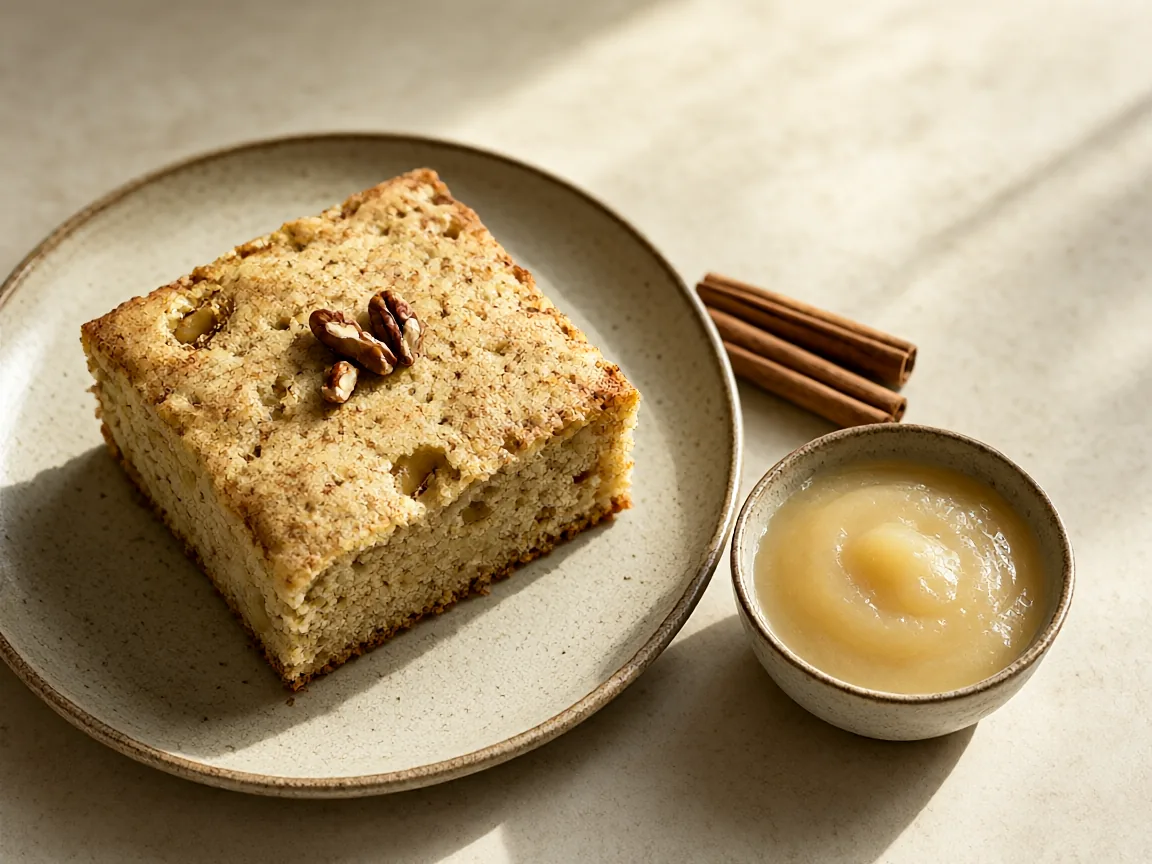
This keto applesauce cake recipe is designed for the kind of afternoon when you want a tender, warmly spiced cake without baking a large layer cake. It uses a small, measured amount of unsweetened applesauce for moisture and apple flavor, while almond flour, eggs, and a little butter give the crumb structure. Cinnamon, vanilla, and nutmeg make the kitchen smell like a classic fall bake.
The result is not identical to a wheat-flour cake. Almond flour creates a more delicate, moist crumb, and the fruit contributes some carbohydrate even when the applesauce has no added sugar. That is why the serving size and product label matter. Use the recipe as a practical low-carb option, not as a promise of ketosis or weight loss.
This recipe is also useful as a bridge between everyday baking and special occasions. It has enough spice to feel festive, but the process is simple enough for a weekday. You do not need a stand mixer, a complicated frosting, or a long list of specialty ingredients. The batter comes together in two bowls, and the finished cake can be divided into individual pieces before anyone starts tasting.
Before baking, decide what “low carb” means for your household. Some people count total carbohydrate, while others use a net-carbohydrate estimate. Some prefer a small dessert after dinner, while others use a piece as part of an afternoon snack. The same cake can fit differently depending on the rest of the day. Planning the serving count first keeps the recipe flexible without pretending that all portions have the same effect for every person.
Quick answer: can applesauce fit a keto cake?
A small amount of unsweetened applesauce can fit some lower-carbohydrate cake recipes, but it is not carbohydrate-free. Apples contain natural sugar, and applesauce is concentrated compared with eating a few bites of whole fruit. Measure it carefully, check the label, and divide the finished cake into the planned number of servings.
For a lower-carb texture, combine applesauce with almond flour rather than using it as the only wet ingredient. Eggs, butter, and a little sour cream help keep the cake tender. Cinnamon and vanilla make the apple note seem stronger, so you do not need a large amount of fruit or sweetener.
If you are baking for people who do not follow a lower-carbohydrate pattern, serve the cake with toppings on the side. A guest can add powdered sugar, whipped cream, or fruit to their own slice while you keep your piece plain. This is often easier than trying to make one large cake meet several different dietary preferences.
Ingredients and what each one does
Unsweetened applesauce
Use plain unsweetened applesauce with no syrup, juice concentrate, or added sugar. Read the Nutrition Facts panel because brands vary. If your applesauce is homemade, weigh or measure the final cooled sauce rather than estimating from the number of apples used.
Almond flour
Fine blanched almond flour gives the cake a soft, slightly nutty crumb. Almond meal is coarser and can make the cake heavier. If you have a nut allergy, use a tested nut-free low-carb baking blend according to its package instructions rather than swapping coconut flour cup for cup.
Eggs and butter
Eggs bind the batter and help it set. Melted butter adds flavor and richness. Let the eggs come close to room temperature so the batter mixes evenly. If the butter is hot, cool it for a few minutes before adding it to the eggs.
Sweetener and spice
Use a powdered sweetener that you already tolerate. Allulose usually dissolves smoothly, while erythritol can create a cooling sensation or a slightly crisp edge after chilling. Cinnamon, vanilla, nutmeg, and salt provide most of the dessert character. Start with less sweetener and adjust the next batch based on your taste.
Keto applesauce cake recipe
Yield and equipment
This recipe makes 12 small squares in an 8-inch square pan. You will need parchment paper, two mixing bowls, a whisk, a spatula, and a toothpick or thin skewer for checking the center.
Ingredients
- 1 1/2 cups fine almond flour
- 1/4 cup unsweetened applesauce
- 3 large eggs
- 4 tablespoons unsalted butter, melted and cooled
- 1/3 cup powdered allulose or another preferred sweetener
- 1/4 cup plain sour cream or full-fat Greek yogurt
- 1 teaspoon vanilla extract
- 1 teaspoon ground cinnamon
- 1/4 teaspoon ground nutmeg
- 1/2 teaspoon baking powder
- 1/4 teaspoon fine salt
- 2 tablespoons chopped pecans, optional
Instructions
- Heat the oven to 325°F. Line an 8-inch square pan with parchment, leaving enough paper over two sides to lift the cake out later.
- In a medium bowl, whisk almond flour, cinnamon, nutmeg, baking powder, and salt. Break up any compacted flour.
- In a second bowl, whisk eggs, melted butter, applesauce, sour cream, vanilla, and sweetener until smooth.
- Pour the wet mixture into the dry ingredients. Fold with a spatula just until no dry pockets remain. Do not beat the batter for a long time.
- Spread the batter evenly in the pan. Sprinkle pecans over the top if using.
- Bake for 28 to 36 minutes. The center should look set, and a toothpick should come out with a few moist crumbs rather than wet batter.
- Cool in the pan for 20 minutes, then lift out with the parchment. Cool completely before slicing into 12 squares.
The cake firms as it cools. Cutting it while hot can make the middle appear underbaked even when it is properly cooked. If the top browns early, loosely cover the pan with foil for the final 10 minutes.
Let the oven finish preheating before the pan goes in. A partially heated oven can extend the cooking time and cause the edges to dry before the middle has set. If your oven has hot spots, rotate the pan once after the first 20 minutes, but do it quickly so the cake does not lose too much heat. Avoid opening the door repeatedly because almond-flour cakes need steady heat to set.
For consistent results, write down the brand of applesauce, almond flour, and sweetener used in your first batch. If the cake is excellent, repeat those products. If it is too wet or too dry, change only one ingredient at a time. This kind of small test is more useful than making several substitutions at once and then not knowing which change affected the crumb.
How to keep the crumb moist without making it heavy
The biggest risk with low-carb cakes is adding too much liquid in an attempt to copy a wheat cake. Applesauce, sour cream, eggs, and butter all contribute moisture. Measure each one carefully and allow the cake to cool before judging its texture.
Another important detail is the flour. Almond flour behaves differently from wheat flour because it has no gluten network. Stir only until combined. Overmixing can make the cake compact, while under-mixing can leave dry pockets that crumble after baking.
Use a light-colored metal pan if possible. Dark pans absorb more heat and may brown the edges before the center is set. Glass pans can require a small adjustment in baking time. The toothpick test is more helpful than the clock alone.
Flavor variations
Cinnamon coffee cake style
For a keto cinnamon coffee cake recipe variation, mix 2 tablespoons almond flour, 1 tablespoon chopped pecans, 1 teaspoon cinnamon, and 1 teaspoon powdered sweetener. Sprinkle it over the batter before baking. Keep the topping thin so the center cooks evenly.
Butter cake style
For a richer keto butter cake recipe, replace the sour cream with 2 additional tablespoons of softened butter and add 1/4 teaspoon extra vanilla. The cake will be richer and slightly less tangy. Because the fat content changes, use small pieces and keep the storage container cool.
Carrot-cake inspired style
If you are looking at keto carrot cake recipes, add 2 tablespoons of finely grated carrot, 1/2 teaspoon cinnamon, and a pinch of ginger. Carrot contains carbohydrate, so count it as part of the recipe. Avoid adding raisins unless you have intentionally included their carbohydrate in the serving calculation.
Nut-free version
Use a certified nut-free low-carb baking mix if your household needs to avoid tree nuts. Do not assume coconut flour is a direct substitute for almond flour. Coconut flour absorbs much more liquid and usually requires additional eggs or another tested formula.
Optional cream cheese swirl
The cake is flavorful without frosting, but a small cream cheese swirl can make it feel more like a celebration dessert.
Mix 3 ounces softened cream cheese with 1 tablespoon powdered sweetener, 1/2 teaspoon vanilla, and 1 teaspoon sour cream. Drop small spoonfuls over the batter and swirl lightly with a knife before baking. Keep the swirl shallow so the cake cooks evenly.
If you add a cream cheese topping after baking, wait until the cake is completely cool. A topping made with dairy should be refrigerated. For a simple glaze, thin a tablespoon of powdered allulose with a few drops of water and vanilla, then drizzle a small amount over each portion.
Serving ideas and portion planning
Cut the cake into 12 squares before serving. This gives you a clear serving size and makes it easier to store the remainder. A square can be served with coffee, tea, plain Greek yogurt, or a spoonful of unsweetened whipped cream. If you want more apple flavor, add a small spoon of warmed unsweetened applesauce at serving time and count it separately.
For a holiday table, place the cake on a platter with cinnamon and a few pecans rather than covering the whole batch with a sweet frosting. Guests can choose their own portion. If you serve the cake with fruit, berries are easier to measure than a large bowl of mixed fruit.
Remember that low carbohydrate does not mean low calorie. Almond flour, butter, nuts, and cream cheese are concentrated ingredients. A smaller square may be satisfying, especially when eaten slowly after a balanced meal.
Storage and freezing
Let the cake cool completely before covering it. Store unfrosted squares in an airtight container in the refrigerator for up to four days. Place parchment between layers if the surface is moist. If you added cream cheese swirl or frosting, keep the cake refrigerated and use a clean utensil for serving.
To freeze, wrap individual squares in parchment and place them in a freezer-safe container for up to two months. Thaw overnight in the refrigerator or for a short time at room temperature. The texture may be slightly softer after freezing, but a few minutes in a 300°F oven can restore some of the edge texture.
Do not leave dairy- or egg-based cake at room temperature for a long period. If the cake develops mold, an unusual smell, or excessive watery separation, discard it. Label the container with the baking date and number of servings.
Troubleshooting
The cake is wet in the center
The pan may be smaller, the applesauce may contain more water, or the cake may have been sliced before cooling. Return it to the oven for five-minute increments, covering the top if it is already brown. Use a toothpick in the exact center rather than near the edge.
The cake is dry or crumbly
It may have baked too long or been measured with too much almond flour. Spoon flour into the measuring cup and level it, or weigh it if your recipe routine allows. Keep the cake covered after cooling, and consider adding a little sour cream in the next batch.
The applesauce flavor is weak
Use a stronger cinnamon and vanilla profile, or add a small amount of lemon zest. Increasing the applesauce can make the cake wetter and raise the carbohydrate content, so change the flavor before changing the fruit amount.
The sweetener tastes cool or bitter
Different sweeteners behave differently. Try a blend you already enjoy, use less, or add vanilla and salt to balance the flavor. Sugar alcohols can cause digestive symptoms for some people, so do not force a large serving.
The top cracks
A small crack is normal in a moist almond-flour cake. It can happen when the oven is hot, the pan is shallow, or the cake cools quickly. Let it cool gradually and cover it with a thin swirl if appearance matters.
FAQ
Is applesauce keto-friendly?
Applesauce is not carbohydrate-free. A small measured amount of unsweetened applesauce may fit some lower-carbohydrate recipes, but the exact amount depends on your total daily plan. Check the product label and divide the recipe into consistent servings.
Can I use sweetened applesauce?
Sweetened applesauce will increase the sugar and carbohydrate content and may make the cake too sweet. If it is the only product available, recalculate the recipe and reduce the added sweetener. Unsweetened applesauce is easier to control.
Can I replace almond flour with coconut flour?
Not one for one. Coconut flour absorbs much more moisture and needs a different ratio of eggs and liquid. Use a tested coconut-flour cake recipe rather than improvising a direct swap.
Can I make this recipe dairy-free?
You can test dairy-free butter and an unsweetened dairy-free yogurt, but the flavor and texture may change. Choose products with similar moisture and fat content, and read labels for added sugars. If you have allergies, prevent cross-contact in the kitchen.
Is this a good keto cinnamon coffee cake recipe?
The base can be adapted into a cinnamon coffee cake with a thin pecan-cinnamon topping. Keep the topping measured and include it in the nutrition estimate. The cake is moist, so a thin topping usually gives enough contrast.
How should I calculate the carbohydrates?
Add the carbohydrate values for every ingredient, subtract fiber only if that matches the labeling convention you use, and divide by the number of servings. Brands differ, especially for applesauce, yogurt, sweetener blends, and almond flour. When carbohydrate accuracy matters medically, ask a registered dietitian for help.
Can I eat this cake for weight loss?
No single recipe guarantees weight loss. This cake can be included in a weight-management pattern when the portion fits your energy and carbohydrate needs. Consider the whole day, including protein, vegetables, fluids, activity, sleep, and enjoyment.
A simple baking routine
Keep one small baking pan, parchment, almond flour, cinnamon, and a preferred sweetener together. When you buy applesauce, freeze extra portions in tablespoon-size containers so you can use a measured amount later. This reduces waste and makes the recipe easier to repeat.
For the best result, prepare the pan and measure all ingredients before mixing. Low-carb baking is less forgiving than simply stirring ingredients into a skillet. A calm setup prevents forgotten baking powder, overheated butter, or an unlined pan that sticks.
Bake the cake when you can let it cool fully. The resting time is part of the recipe, not an optional extra. Once it is cool, slice it, label the container, and freeze or refrigerate the portions you will not eat soon.
This approach makes a homemade dessert more useful than a complicated project. You can make the same base with cinnamon, pecan, lemon, or cream cheese variations and keep the serving size familiar.
Nutrition information varies by brand, serving size, and substitutions. This article is for general education and recipe planning, not individualized medical advice. It does not diagnose, treat, cure, or prevent disease. Consult a qualified healthcare professional for advice related to diabetes, kidney disease, allergies, pregnancy, medications, or other health needs.
Nutrition and ingredient-label notes
Because this cake uses almond flour, butter, nuts, and applesauce, the nutrition profile depends heavily on the brands and the final number of pieces. A twelve-piece batch will have a different per-piece estimate from a nine-piece batch, even though the total recipe is unchanged. Count the pecans and any swirl or glaze as part of the recipe rather than treating them as decoration.
When comparing applesauce, look for an ingredient list that starts with apples and water, with no added cane sugar, corn syrup, or fruit concentrate. Check flavored yogurt and sour cream for added sweeteners. Some powdered sweeteners contain fillers that add carbohydrate or change the measuring volume. If you are using a blend, follow the package’s conversion guidance instead of assuming it measures like sugar.
Almond flour is calorie-dense, and some people find large amounts of nuts difficult to digest. Smaller pieces may be more comfortable. If you have a nut allergy, do not use almond flour merely because the recipe is labeled keto. Choose a tested alternative and account for the way its protein, fiber, and moisture differ.
If you manage diabetes, use glucose readings and professional guidance rather than relying on a recipe label. If you have kidney disease, a nut allergy, digestive sensitivity, or a history of disordered eating, discuss whether this style of baking is appropriate for you. A lower-carbohydrate dessert is still a dessert, and it should support—not replace—your broader nutrition needs.
Save the ideas that fit your routine and adapt the rest. Consistency is built through repeatable choices, not perfect days.