
Busy mornings do not need to mean skipping breakfast or grabbing the first sweet pastry you see. The best quick keto breakfast recipes are simple enough for a weekday, flexible enough for substitutions, and portioned so you know what to take with you. This guide gives you seven low-carb ideas: a skillet bowl, a make-ahead chia pudding, an egg-roll-inspired sauté, a cottage cheese bowl, a breakfast salad, deviled eggs, and a sheet-pan egg bake.
These recipes are not a promise of weight loss or a substitute for medical advice. They are practical meal ideas for people who prefer a lower-carbohydrate pattern. Check labels for yogurt, sauces, deli meats, nuts, and prepared seasonings because carbohydrate counts can vary between brands. If you track carbohydrates for diabetes or another medical reason, use the nutrition information from the exact products you purchase.
Quick answer: what is a good keto breakfast?
A useful keto breakfast usually combines a protein source with vegetables, healthy fats, or fiber-rich ingredients. Eggs, cottage cheese, plain Greek yogurt, salmon, chicken, and tofu can provide the foundation. Avocado, olives, seeds, nuts, and olive oil add richness. Spinach, mushrooms, peppers, cucumber, and cauliflower add volume and texture without requiring a large amount of starch.
There is no rule that breakfast must include eggs. If you prefer a cold meal, use a chia pudding or cottage cheese bowl. If you have ten minutes, a skillet or sheet-pan egg bake may be easier. A breakfast that fits your time and appetite is usually more repeatable than a complicated recipe you only make on weekends.
Build-your-own breakfast combinations
The recipes below are templates, so you can make a breakfast from what is already in the refrigerator. Start with a protein serving. Eggs, cottage cheese, plain Greek yogurt, cooked chicken, salmon, tuna, tofu, and turkey sausage all work differently, but each can anchor a meal. Next add one or two vegetables or a small fruit portion. Greens, cucumbers, mushrooms, cabbage, broccoli, peppers, avocado, and berries give you options across the week.
Then choose one flavor direction. Lemon and dill suit salmon, cucumber, and cottage cheese. Ginger, sesame, chili, and green onion suit cabbage and eggs. Cinnamon, vanilla, and berries suit chia or yogurt. Salsa, cilantro, cumin, and avocado can turn eggs or chicken into a taco-style bowl. A consistent flavor direction makes a meal feel intentional without requiring a separate recipe every morning.
If the breakfast still feels incomplete, add a measured topping: olive oil, pumpkin seeds, walnuts, feta, cheddar, or a small amount of mayonnaise. Measuring matters because calorie-dense toppings are easy to underestimate. The goal is not to make breakfast as small as possible; it is to make the amount clear enough that you can decide whether it matches your hunger and daily plan.
For family breakfasts, keep the base ingredients separate. Put eggs, vegetables, cheese, salsa, and avocado on the table so each person can build a bowl. This approach also helps if only one person wants a lower-carbohydrate meal. You can prepare the same vegetables and protein for everyone, then add bread, fruit, or another side according to each person’s needs.
Morning timing matters too. If you have only five minutes, choose a no-cook bowl and assemble it the night before. If you have ten minutes, use the skillet or egg-roll bowl. If you need breakfast in the car, use a prepared egg bake, deviled eggs, or a chilled jar with a secure lid. Matching the recipe to the available time reduces rushed decisions and makes the lower-carb option feel normal rather than restrictive.
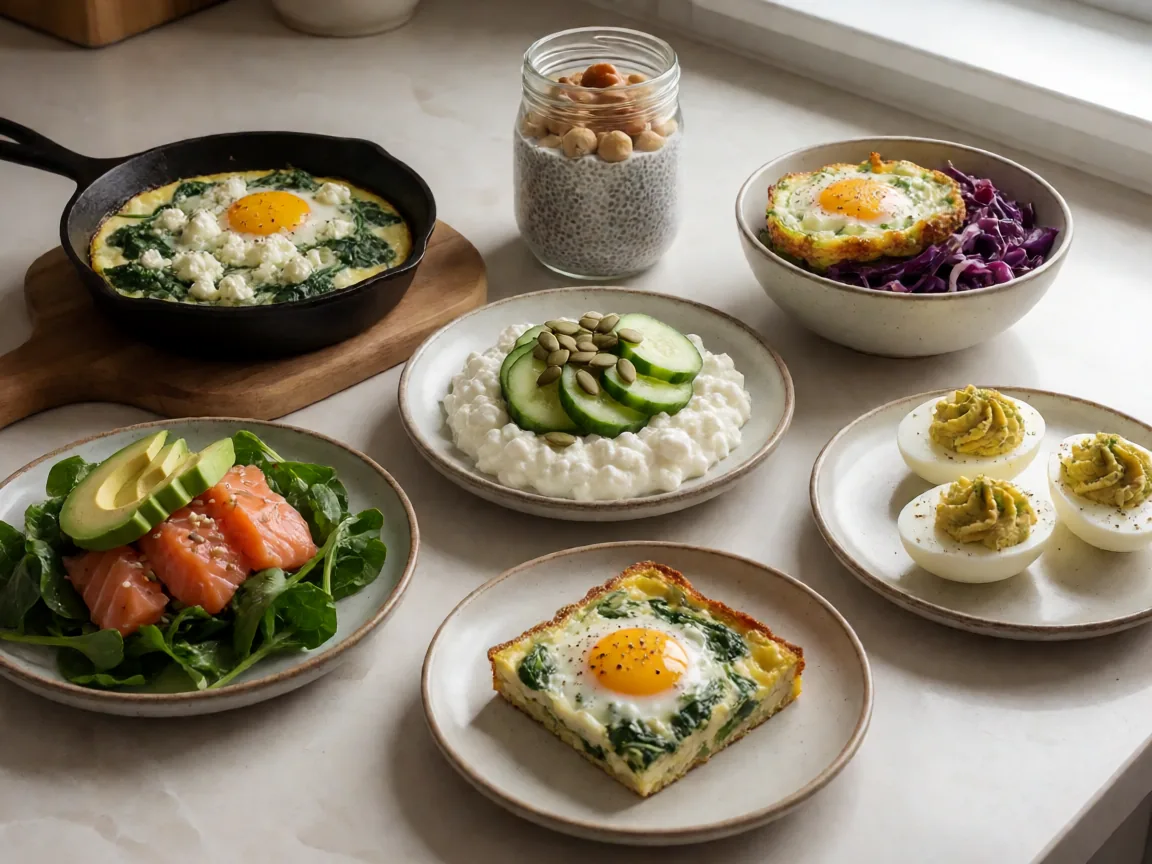
A 10-minute breakfast framework
When you do not want to follow a full recipe, use a simple formula. Pick one protein, one or two low-carb vegetables or fruits, one flavor booster, and a portion of fat if needed. For example, scrambled eggs with spinach, feta, and avocado takes only a few minutes. Cottage cheese with cucumber, pumpkin seeds, and herbs is even faster and does not require cooking.
Keep a short list of emergency ingredients: hard-boiled eggs, plain Greek yogurt, canned tuna or salmon, frozen spinach, prewashed greens, avocado, cottage cheese, and a jar of salsa with no added sugar. These ingredients can be combined in different ways, which helps prevent breakfast fatigue.
Recipe 1: spinach and feta keto breakfast skillet
This warm skillet is one of the fastest keto diet easy breakfast options. It can be made as one serving in a small pan and adapted to the vegetables you already have.
Ingredients
- 2 large eggs
- 1 teaspoon olive oil or butter
- 1 cup baby spinach
- 1/4 cup sliced mushrooms
- 2 tablespoons crumbled feta
- 1 tablespoon chopped avocado
- Salt, pepper, and a pinch of smoked paprika
Method
- Warm the oil in a nonstick skillet over medium heat.
- Add mushrooms and cook for two minutes. Add spinach and stir until just wilted.
- Beat the eggs with salt, pepper, and paprika. Pour them into the pan.
- Stir gently until the eggs are mostly set, then turn off the heat.
- Finish with feta and avocado.
For extra protein, add leftover chicken or turkey. If you use a salty meat or cheese, taste before adding more salt. Keep the avocado separate if you plan to reheat the skillet later.
Recipe 2: chia and cinnamon breakfast pudding
Chia pudding is a make-ahead option for people who prefer a cold breakfast. It takes only a few minutes to mix, but it needs time to thicken.
Ingredients
- 3 tablespoons chia seeds
- 3/4 cup unsweetened almond milk or another unsweetened milk
- 2 tablespoons plain Greek yogurt
- 1/2 teaspoon cinnamon
- 1/2 teaspoon vanilla
- Sweetener to taste
- 1 tablespoon chopped pecans
Method
- Stir the chia seeds, milk, yogurt, cinnamon, vanilla, and sweetener in a jar.
- Wait five minutes, stir again, and refrigerate overnight.
- Add pecans just before eating. Add a few berries if they fit your plan.
If the pudding is too thick, loosen it with a tablespoon of milk. If it is too thin, add another teaspoon of chia and wait 20 minutes. For a chocolate version, replace the cinnamon with one teaspoon of unsweetened cocoa powder.
Recipe 3: keto egg roll bowl breakfast sauté
This keto egg roll bowl recipe uses cabbage, eggs, and a savory sauce for a fast meal that feels different from standard scrambled eggs. It is also a convenient way to use leftover cooked meat.
Ingredients
- 1 teaspoon avocado or olive oil
- 1 cup finely shredded cabbage or slaw mix without dressing
- 1/4 cup cooked ground pork, chicken, or tofu
- 1 egg, beaten
- 1 teaspoon coconut aminos or a lower-sodium soy sauce
- 1/2 teaspoon grated ginger
- 1 tablespoon sliced green onion
- Optional: chili flakes or sesame seeds
Method
- Heat the oil in a skillet. Add cabbage and cook for three to four minutes.
- Stir in the cooked meat, ginger, and coconut aminos.
- Push the mixture to one side. Add the egg and scramble it until set.
- Mix everything together and top with green onion and sesame seeds.
Sauces are concentrated, so measure them rather than pouring freely. For a breakfast that travels well, cool the bowl quickly, refrigerate it in a shallow container, and reheat until steaming hot.
Recipe 4: cottage cheese breakfast bowl
This no-cook bowl is a helpful answer when you want a keto diet breakfast recipe without eggs. Cottage cheese provides a creamy base, while seeds and cucumber add contrast.
Ingredients
- 3/4 cup plain cottage cheese
- 1/2 small cucumber, diced
- 1 tablespoon pumpkin seeds
- 1 tablespoon chopped walnuts
- 1 teaspoon olive oil
- 1 teaspoon lemon juice
- Dill, black pepper, and a pinch of salt
Method
- Spoon the cottage cheese into a bowl.
- Add cucumber, pumpkin seeds, walnuts, olive oil, lemon juice, dill, and pepper.
- Stir lightly or leave layered for a more textured bite.
For a sweet version, omit the cucumber, oil, and dill. Add cinnamon, vanilla, and a few raspberries instead. Check the label on cottage cheese because some brands have more carbohydrate than others.
Recipe 5: avocado, salmon, and greens breakfast salad
A breakfast salad can be prepared in less time than a cooked meal, especially when the greens are already washed. It is a good option for people who want a savory meal first thing in the morning.
Ingredients
- 2 cups mixed greens
- 3 ounces cooked salmon or canned salmon
- 1/4 avocado, sliced
- 1 tablespoon pumpkin seeds
- 1 tablespoon crumbled feta, optional
- 1 teaspoon olive oil
- 1 teaspoon lemon juice
- Black pepper and dried dill
Method
- Add greens to a wide bowl.
- Top with salmon, avocado, pumpkin seeds, and feta.
- Mix olive oil, lemon juice, dill, and pepper in a small cup.
- Drizzle the dressing over the salad just before eating.
Use leftover roasted salmon or canned salmon packed in water. If you use smoked salmon, reduce added salt. For a budget-friendly version, swap in canned tuna or leftover chicken.
Recipe 6: keto friendly deviled egg plate
Deviled eggs can be made ahead and paired with crunchy vegetables for a portable breakfast. This recipe keeps the filling simple so you can adjust the flavor.
Ingredients
- 3 hard-boiled eggs
- 1 tablespoon mayonnaise or plain Greek yogurt
- 1 teaspoon Dijon mustard
- 1 teaspoon pickle juice
- Paprika and black pepper
- Cucumber, celery, or radish for serving
Method
- Peel the eggs and cut them in half.
- Remove the yolks and mash them with mayonnaise, mustard, pickle juice, and pepper.
- Spoon or pipe the filling back into the whites.
- Sprinkle with paprika and serve with vegetables.
For an herby version, add chopped chives or dill. For a little heat, add hot sauce. A keto friendly deviled egg recipe is easy to portion because the number of halves is visible before serving.
Recipe 7: sheet-pan egg and vegetable bake
This bake is useful for meal prep. Make it on the weekend, cut it into portions, and reheat one piece on busy mornings.
Ingredients
- 6 large eggs
- 1/3 cup unsweetened almond milk
- 1 cup chopped broccoli florets
- 1/2 cup sliced bell pepper
- 1/2 cup cooked turkey sausage or diced chicken
- 1/3 cup shredded cheddar
- 1 tablespoon chopped parsley
- Salt, pepper, and garlic powder
Method
- Heat the oven to 375°F. Line an 8-inch square pan with parchment.
- Steam or microwave the broccoli for two minutes, then drain well.
- Whisk eggs, almond milk, salt, pepper, and garlic powder.
- Add vegetables, meat, cheese, and parsley to the pan. Pour the egg mixture over the top.
- Bake for 22 to 28 minutes, until the center is set.
- Rest for five minutes before slicing into four portions.
The vegetables should be fairly dry before they go into the pan. Excess water can make the bake soft or cause separation. Reheat gently so the eggs stay tender.
How to choose among these keto breakfast bowl recipes
Choose the skillet when you have five to ten minutes and want a hot meal. Choose chia pudding or the cottage cheese bowl when you need breakfast with no morning cooking. Choose the egg roll bowl when you want a savory, high-volume meal. The salmon salad works well when you enjoy fresh, crunchy food, while deviled eggs are useful for grab-and-go portions. The sheet-pan bake is best when you can prep once and eat several times.
The right choice can change from day to day. Appetite, sleep, schedule, and activity all affect what feels satisfying. A smaller breakfast may be enough on one morning, while a more substantial meal may work better on another. Use the recipes as templates rather than strict rules.
Meal prep and storage tips
Hard-boiled eggs, sheet-pan bakes, and cooked meat should be cooled and refrigerated in covered containers. Keep salad greens and dressing separate until serving. Store avocado with a little lemon juice and use it promptly because the texture and color change over time.
Chia pudding and cottage cheese bowls are best prepared in individual jars. Add nuts and seeds shortly before eating if you prefer them crisp. For cooked egg dishes, make enough for a few days rather than a large batch that may sit too long. Follow the storage instructions on packaged ingredients and discard food that smells off, shows mold, or has an unsafe texture.
Use a label with the preparation date and serving count. This small habit helps you see what is ready and reduces the temptation to guess whether an older container is still suitable.
For a smoother week, choose two recipes on Sunday, not seven. Make one cold option and one cooked option, then repeat them with different toppings. This keeps prep realistic and leaves room for leftovers, restaurant meals, or a morning when your appetite is different.
Easy substitutions for common ingredients
Eggs can be replaced with tofu scramble in the skillet or egg-roll bowl. Greek yogurt can replace mayonnaise in deviled egg filling, although the flavor will be tangier. Cottage cheese can be blended smooth if you prefer a creamy texture. Salmon can be replaced with canned tuna, chicken, or a plant-based protein.
For dairy-free meals, use a plain unsweetened non-dairy yogurt or omit the cheese and add olive oil, seeds, or avocado. Check products carefully because some non-dairy milks and yogurts contain added sugars. If you have a nut allergy, use pumpkin or sunflower seeds and choose a nut-free milk.
Troubleshooting breakfast planning
The meal does not keep me full
Increase the protein portion or add more non-starchy vegetables. You can also add a measured amount of fat, such as avocado, olive oil, or seeds. If hunger is persistent, consider the full day of meals, hydration, sleep, and activity instead of changing breakfast alone.
The eggs become rubbery
Use medium heat and remove the pan while the eggs are still slightly glossy. Residual heat will finish cooking them. Reheat prepared egg dishes gently and cover them to reduce moisture loss.
The chia pudding is gritty
Stir twice during the first 15 minutes so the seeds do not clump. Use fresh chia seeds and enough liquid. Let the pudding rest overnight for the best texture.
The meal feels repetitive
Change the flavor profile rather than replacing every ingredient. Use salsa and cilantro for a Mexican-inspired bowl, ginger and sesame for the egg-roll sauté, or lemon and dill for a fish salad. Small changes can make the same base feel new.
FAQ
Do quick keto breakfast recipes have to include eggs?
No. Chia pudding, cottage cheese bowls, Greek yogurt with seeds, and leftover protein with vegetables can all work. Eggs are convenient, but they are not required for a lower-carbohydrate breakfast.
Can I prepare breakfast the night before?
Yes. Chia pudding, deviled eggs, cottage cheese bowls, sheet-pan bakes, and cooked meat can be prepared ahead. Keep crisp toppings and dressing separate when possible.
What can I eat if I do not have time to cook?
Try cottage cheese with cucumber and seeds, a hard-boiled egg plate, or leftover chicken with avocado and greens. Prewashed vegetables and ready-to-eat proteins make the no-cook option easier.
How many carbohydrates should breakfast contain?
There is no universal number. Your target depends on your overall plan, health, medications, and personal response. Use the labels for your exact ingredients and ask a qualified professional for individualized guidance, especially if you manage diabetes or another condition affected by carbohydrate intake.
Are keto breakfast recipes good for weight loss?
They can be part of a weight-management pattern, but no single breakfast guarantees weight loss. Overall energy intake, food quality, activity, sleep, and consistency matter. Focus on meals that are satisfying and practical enough to repeat.
Can I use frozen vegetables?
Yes. Frozen spinach, broccoli, and cauliflower are convenient. Cook them first and drain excess water so the finished meal does not become watery. Frozen vegetables can be a useful way to keep low-carb ingredients available without frequent shopping.
A realistic weekday breakfast routine
On Sunday, boil eggs and bake one sheet-pan meal. Prepare two jars of chia pudding and wash a container of greens. During the week, rotate the skillet, cottage cheese bowl, salad, and prepared portions. Keep sauces and toppings separate so textures stay fresh.
This approach gives you a choice without requiring seven different recipes. It also makes it easier to notice what you actually enjoy. If a breakfast feels too small, enlarge it with another serving of protein or vegetables. If it feels too heavy, use a smaller portion and move some ingredients to lunch.
Lower-carbohydrate eating does not require perfect timing or complicated recipes. The most useful breakfast is the one you can prepare safely, eat with enjoyment, and fit into your normal day.
Nutrition information varies by brand, serving size, and substitutions. This article is general education, not individualized medical advice. These recipes are not intended to diagnose, treat, cure, or prevent disease. Consult a qualified healthcare professional for advice related to allergies, medications, pregnancy, diabetes, kidney disease, or other health needs.
Save the ideas that fit your routine and adapt the rest. Consistency is built through repeatable choices, not perfect days.