
Editorial note: Nutrition numbers are estimates and vary by brand, portion size, and preparation method. This recipe is general food education, not medical advice. If you need a medically prescribed carbohydrate target, use the labels for your ingredients and follow advice from your healthcare professional.
Keto Broccoli Cheese Soup Net Carbs Per Serving: Easy Recipe
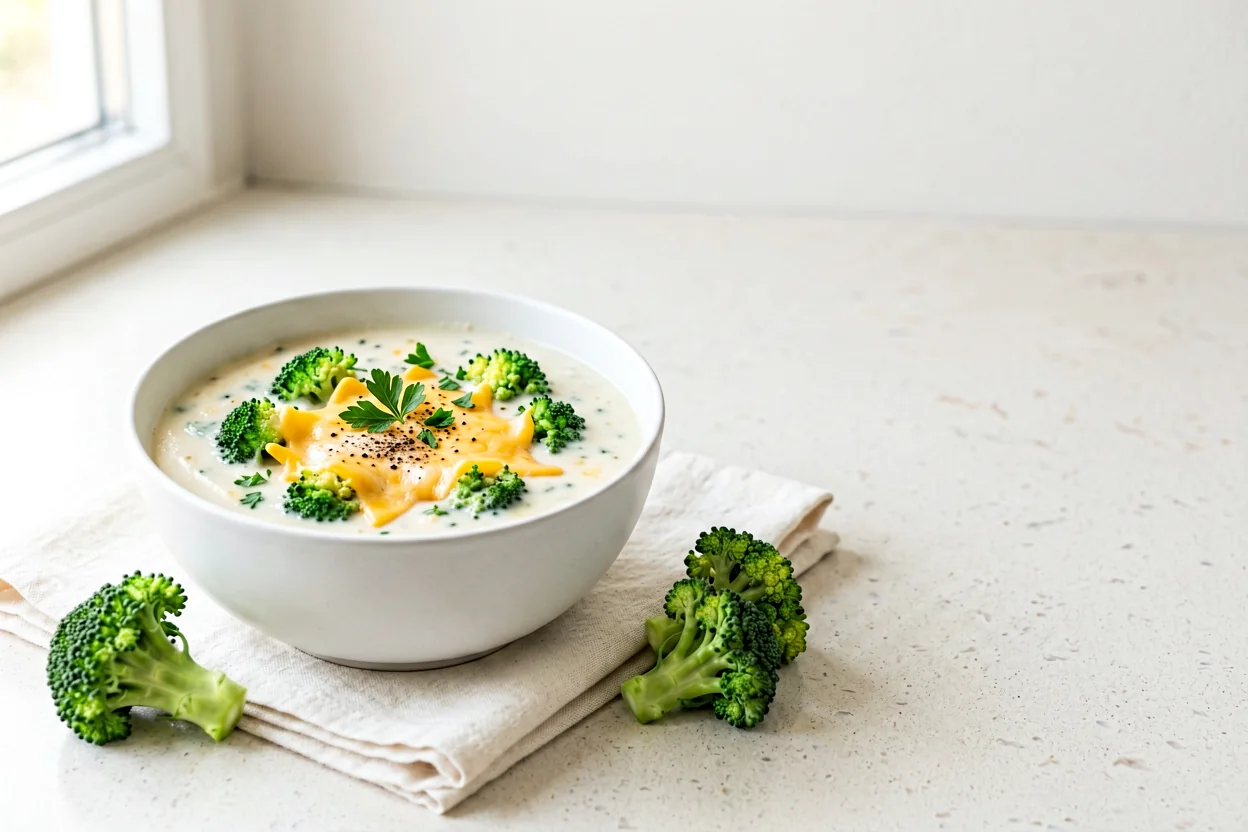
This creamy keto broccoli cheese soup is designed for a simple weeknight meal. It uses broccoli, broth, cream cheese, cheddar, and a small amount of onion and garlic for flavor. The soup is rich and filling, but you can keep the texture lighter by blending only part of the vegetables and using broth to adjust the consistency.
For the recipe below, the estimated net carbs are about 6 grams per serving when the pot is divided into six servings and toppings are not included. This is an estimate rather than a laboratory result. Brand labels, the size of the broccoli florets, the amount of onion, and the type of dairy product can change the final number.
What are the keto broccoli cheese soup net carbs?
Net carbohydrates are commonly estimated by subtracting dietary fiber from total carbohydrate. For this recipe, most of the carbohydrates come from broccoli, onion, garlic, cream cheese, and broth. Cheddar contributes very little carbohydrate, but labels still vary.
| Ingredient group | Estimated total carbs | Estimated fiber | Estimated net carbs |
|---|---|---|---|
| Broccoli | 36 g | 18 g | 18 g |
| Onion and garlic | 12 g | 2 g | 10 g |
| Cream cheese | 6 g | 0 g | 6 g |
| Broth and seasonings | 3 g | 0 g | 3 g |
| Estimated pot total | 57 g | 20 g | 37 g |
About 37 grams of net carbs divided by six servings equals roughly 6 grams per serving. If you use more onion, add potatoes, or serve the soup with crackers, the number will increase. If you use fewer vegetables or a lower-carbohydrate dairy product, it may decrease.
Ingredients
- 6 cups broccoli florets, fresh or frozen.
- 5 cups lower-sodium chicken or vegetable broth.
- 1/2 small onion, finely diced.
- 2 cloves garlic, minced.
- 4 ounces cream cheese, softened.
- 1 1/2 cups shredded cheddar cheese.
- 1 tablespoon olive oil or butter.
- 1/2 teaspoon mustard powder.
- 1/2 teaspoon smoked paprika.
- Black pepper and salt to taste.
- Optional: a small amount of heavy cream, chopped parsley, or extra cheddar.
Use a broth with no added sugar and check the sodium level. If you use frozen broccoli, it may cook slightly faster and produce a softer texture. Fresh broccoli gives more bite and can be added in stages if you prefer some pieces to remain firm.
How to make keto broccoli cheese soup
- Warm the oil or butter in a large pot over medium heat.
- Add the onion and cook until softened. Stir in the garlic, mustard powder, paprika, and black pepper.
- Add the broccoli and broth. Bring to a gentle simmer and cook until the broccoli is tender.
- Remove about one third of the broccoli and set it aside if you want a chunky texture.
- Blend the remaining soup with an immersion blender until mostly smooth. You can also blend in batches using a heat-safe blender.
- Lower the heat. Add the softened cream cheese and stir until it is fully incorporated.
- Add cheddar a small handful at a time. Stir between additions and avoid boiling the soup after the cheese is added.
- Return the reserved broccoli to the pot. Adjust the thickness with broth or a small amount of cream.
- Taste before adding salt because broth and cheese may already be salty.
How to get a smooth cheese texture
Cheese can become grainy when it is exposed to high heat or added too quickly. Use lower heat after blending the broccoli, soften the cream cheese first, and add shredded cheddar gradually. Buying a block and shredding it yourself may produce a smoother result because some pre-shredded cheeses contain anti-caking ingredients.
If the soup looks separated, remove the pot from the heat and whisk in a tablespoon of warm broth. Do not keep boiling it. A small amount of cream can help, but it also changes the nutrition value, so include it in your estimate if you use it.
Easy lower-carb adjustments
- Use half the onion and add extra broccoli, celery, or spinach for flavor and volume.
- Choose plain cream cheese and check the label for added sugars.
- Use broth instead of flour or cornstarch as a thickener.
- Blend part of the broccoli instead of adding potatoes.
- Use measured toppings rather than pouring cream into the whole pot.
- Check the nutrition label of packaged broth and seasoning blends.
Lower carbohydrate is not automatically better for every person. Some readers may prefer to add beans, potatoes, or whole-grain bread for energy and fiber. The recipe can be adapted to your eating pattern without treating one version as the only healthy option.
Optional toppings
Top each bowl with chopped parsley, a small amount of cheddar, black pepper, crispy roasted seeds, or plain Greek yogurt. Avoid adding all toppings to the pot if you are tracking keto broccoli cheese soup net carbs per serving. Individual portions make the estimate easier to manage.
Storage and reheating
Cool the soup promptly and divide it into containers. Refrigerate portions you will eat soon and freeze the rest if appropriate. Reheat gently over low or medium heat, stirring often. Do not bring the soup to a hard boil because the dairy and cheese may separate. Add a little broth if the texture becomes too thick.
For meal prep, store toppings separately. Broccoli cheese soup often tastes even better after the flavors rest overnight, but the texture may change slightly after chilling. Stirring during reheating usually helps restore the creamy consistency.
Ways to serve the soup
- Pair it with a chicken salad for a higher-protein meal.
- Add shredded chicken or turkey directly to the bowl.
- Serve with cucumber, cabbage slaw, or a green salad.
- Use a small portion as an appetizer before a balanced dinner.
- Add a flexible carbohydrate side if you need more energy.
Common mistakes
Using too much onion
Onion adds excellent flavor, but it contributes more carbohydrate than many people expect. Measure the amount if the soup is part of a strict carbohydrate plan.
Counting the recipe but not the toppings
Extra cheese, cream, croutons, and bread all change the nutrition value. Include them when calculating your own bowl.
Boiling after adding cheese
High heat can make the soup grainy or separated. Keep the heat low and add cheese slowly.
Assuming all broccoli is identical
Fresh, frozen, chopped, and packed broccoli can have different weights. Use the quantity and label that match the ingredients in your kitchen.
Frequently asked questions
How many net carbs are in keto broccoli cheese soup per serving?
This version provides an estimated 6 grams of net carbs per serving when divided into six servings before optional toppings. Check your own labels for a more precise estimate.
Can I use frozen broccoli?
Yes. Frozen broccoli is convenient and works well in blended soup. Add it directly or thaw it first, then adjust the cooking time.
Can I make this soup without cream cheese?
Yes. You can blend more broccoli for thickness or use a plain unsweetened dairy-free alternative. The texture and nutrition will change.
Can I make it in a slow cooker?
Cook the broccoli, broth, onion, garlic, and seasonings until tender. Blend if desired, then stir in cream cheese and cheddar near the end. Avoid prolonged boiling after adding dairy.
Bottom line
The estimated keto broccoli cheese soup net carbs per serving are about 6 grams in this six-serving recipe. Count total carbohydrate, subtract fiber, divide the finished pot into equal servings, and include any toppings or substitutions in your calculation.
Explore more ideas in our Keto Recipes and Keto Weight Loss Guides sections.
Save the ideas that fit your routine and adapt the rest. Consistency is built through repeatable choices, not perfect days.